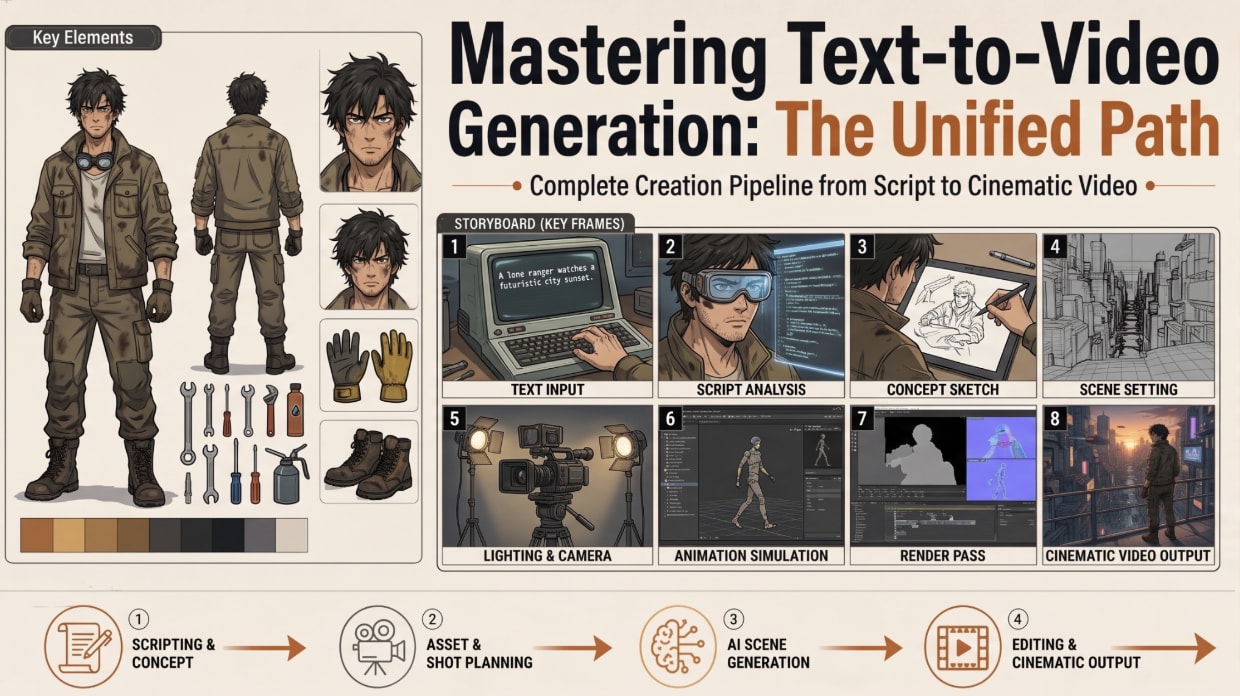
In the nascent stages of generative media, crafting a cohesive visual narrative was essentially a roll of the dice. Digital artists and developers would feed complex, paragraph-long instructions into an algorithm, crossing their fingers that the output would miraculously align with their vision. Sometimes, the result was breathtaking. More often, it was a disjointed mess—a protagonist's outfit would radically change between frames, environmental lighting would inexplicably shift, and the core emotional resonance of the scene would be lost in a blur of AI hallucinations.
This scattershot approach was perfectly fine when the industry was merely testing the boundaries of artificial intelligence. However, the paradigm has shifted. Today’s digital landscape demands professional consistency. Independent creators, indie hackers, and marketing teams are no longer just experimenting; they are producing episodic animated web series, developing continuous lore for social media influencers, and launching dynamic brand campaigns.
To achieve this level of commercial-grade storytelling, relying on a single, lucky generation is a recipe for failure. What the modern creator truly needs is a systematic, repeatable architecture. They need a multi-modal pipeline where text, image, and motion seamlessly interact.
This necessity is precisely what drives the architecture of APOB, an all-in-one AI content engine designed to eliminate the friction of fragmented workflows. By unifying distinct generative phases into a single ecosystem, APOB allows creators to transition from unpredictable "prompt engineering" to structured, deliberate digital filmmaking.
The Problem with Fragmented Tech Stacks
Before exploring the solution, we must acknowledge the bottleneck of traditional AI production. Historically, creators operated in a fractured ecosystem. You might use one language model to draft a script, jump to a separate diffusion model to generate concept art, and then migrate those static images to a third-party video generator.
This "app-hopping" introduces massive degradation in continuity. Because these platforms do not share a unified memory or underlying data structure, the creator is forced to constantly re-explain the character and the world to each new tool. The result? Warped faces, inconsistent physics, and hours of wasted rendering time.
A true multi-modal pipeline solves this by allowing data to flow seamlessly from one modality (text) to the next (image), and finally into motion (video), all while retaining the core identity of the subject.
Architecting a Repeatable Production System with APOB
To illustrate how a unified workflow transforms the creative process, let us conceptualize a hypothetical animated sci-fi project: The Mechanic of Neon-City. The premise involves a rogue engineer discovering a glowing, ancient AI core within a dystopian scrapyard.
Instead of typing a desperate prompt like "cyberpunk mechanic finds glowing core, cinematic video, highly detailed" and hoping for the best, a professional creator using APOB's ecosystem approaches the task like a studio showrunner.
Phase 1: Establishing the Digital DNA
Any compelling episodic content relies on a recognizable protagonist. The audience must be able to identify the character instantly, regardless of the camera angle or lighting conditions.
Within the APOB pipeline, this begins with the AI Influencer Generator. Rather than generating a disposable image, the goal here is to forge a persistent character identity. The system locks in the protagonist’s facial geometry, signature attire, and specific visual traits. This established "Digital DNA" acts as the foundational layer. From this moment on, the creator does not need to constantly describe the mechanic’s appearance; the system inherently knows who the actor is.
Phase 2: Forging the Visual Blueprint
With the protagonist's identity secured, the workflow shifts into pre-production using GPT Image 2.0 integrated within Chat to Generate.
At this stage, the creator builds a comprehensive character reference sheet and a visual story bible. The character sheet defines how the mechanic looks when expressing different emotions—surprise, determination, or fear. Simultaneously, the story bible establishes the environmental aesthetic, cementing the gritty, neon-drenched atmosphere of the scrapyard.
This step is critical because it creates a locked visual language. The AI is no longer guessing what the world looks like; it is actively referencing an established set of rules.
Phase 3: Sequencing the Narrative
A story is a sequence of events, not an isolated snapshot. Using the established visual bible, the creator utilizes the Chat to Generate function to draft a logical storyboard.
Because the pipeline is integrated, the system generates sequential panels that maintain strict continuity. Panel one might show a wide shot of the scrapyard; panel two pushes into a medium shot of the mechanic digging; panel three reveals a close-up of the glowing AI core. This sequential mapping guarantees that the narrative escalation makes logical sense before a single frame of video is rendered.
Phase 4: Breathing Life Through Motion
Only after the pre-production phases are complete does the creator move to animation. This is where the Image to Video Ultra S powered by Seedance 2.0 comes into play.
Because the AI already understands the character's precise geometry and the scene's lighting from the storyboard panels, all computational bandwidth is dedicated to physics and motion. Instead of writing a generic prompt, the creator feeds the locked storyboard image into Seedance 2.0 and applies precise, time-coded directorial instructions. You can dictate exactly when the camera should pan, how the character's hair should react to the wind, and the exact millisecond the glowing core should pulse.
Phase 5: The Iterative Director's Cut
In a fragmented workflow, a failed video generation means starting completely over from scratch. In a unified pipeline, the creator has surgical control.
If a specific sequence doesn't feel right—perhaps the camera movement was too aggressive or the emotional beat was missed—the creator evaluates the output like a film director. Using APOB’s Chat to Edit capability, they can isolate the specific point of failure. They can slightly adjust the text of the time-code, tweak a single keyframe's continuity, and rerender just that specific element without destroying the entire project. This iterative capability is what transforms AI generation from a gamble into a controllable craft.
The Future of Storytelling is Pre-Production
The most profound realization for digital creators and developers is that the future of generative AI is not about finding a magical, all-knowing prompt. The secret lies in rigorous pre-production.
By leveraging an ecosystem like APOB—where the AI Influencer Generator, GPT Image 2.0, and Seedance 2.0 operate in perfect harmony—creators are empowered to construct their visions layer by layer.
The methodology of the future is clear: Do not attempt to generate a masterpiece in a single click. Establish the identity. Define the environment. Map the sequence. Refine the details. And finally, direct the motion. By adopting this structured, multi-modal pipeline, creators can finally stop rolling the dice and start building scalable, breathtaking digital worlds.
Further Reading
Discover more articles on similar topics across our network
Top 6 AI Agents for Building Workflow Automations in 2027
Stackademic



Comments
Loading comments…