
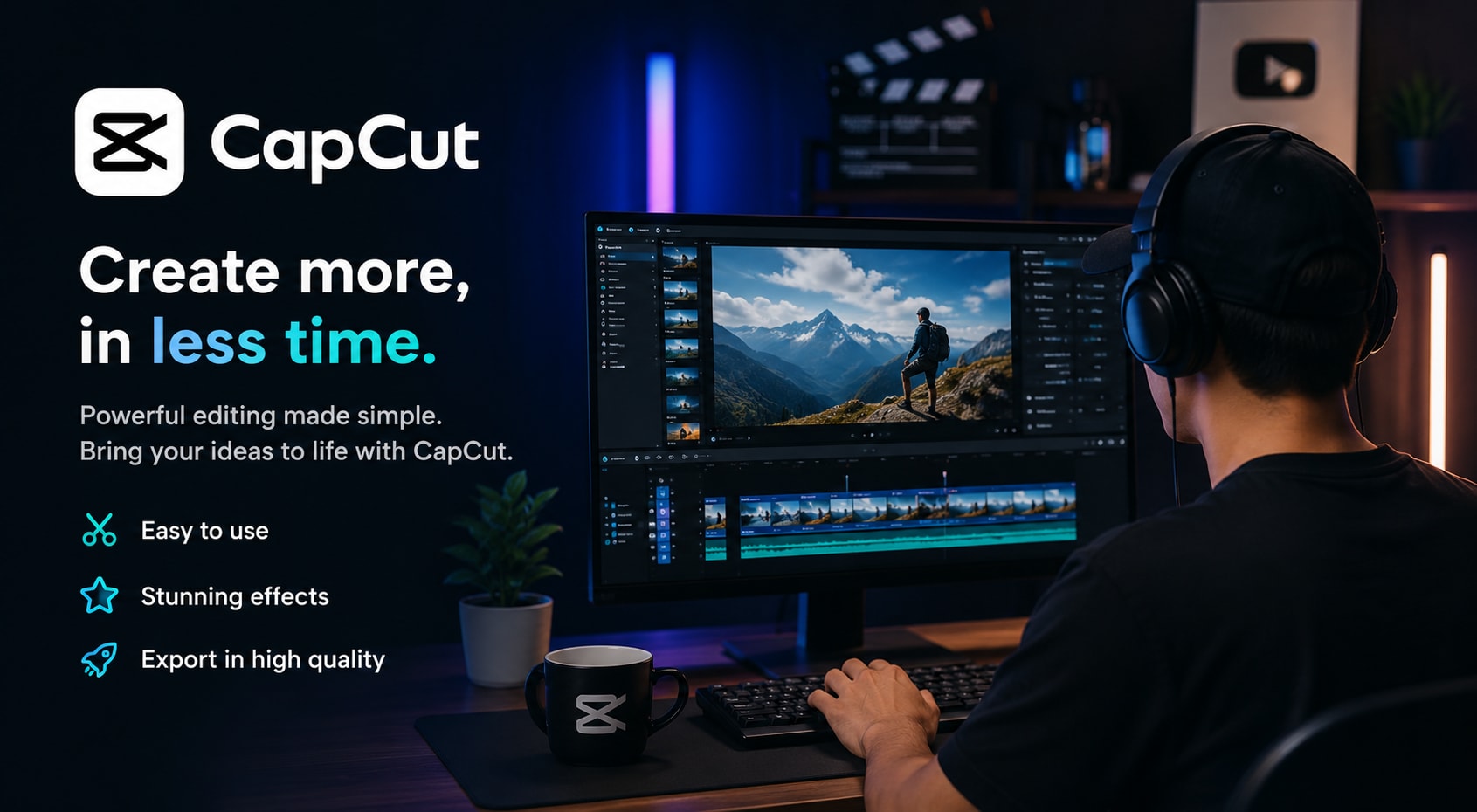
In the past, video production had quite a lengthy decision process. It required someone to have an idea, create a script, plot dialogues, arrange shots, bring in the video and post them together to form a complete sequence. Sometimes, even for a simple video with little pre or post-work, a lot of hours are invested in the filming, animation and post-production process.
The beginning of that process is changing thanks to text-to-video AI. Instead of taking a camera and an editing program, a creator can begin with a written description and leverage generative technology to transform the description into visuals. It is advancing rapidly, but the true promise of the technology isn't that video production is quicker but that it allows for new video styles and sequences that would otherwise be impractical.
What Makes Text-to-Video Different?
Text-to-video systems are intended to understand the written instructions and convert them to a series of images or video. A prompt can be used to describe a subject, setting, movement, atmosphere, camera perspective or even a visual style.
One might envision a peaceful coastal city in the morning fog, as a bicyclist pedals through a deserted city. The entire system must be understood by the system such that the object's appearance has to be grasped, but also the interactions and movement of these objects within the overall sequence.
This is an important difference. It only takes about a minute to produce a single smashing photo but getting several seconds of footage that's coherent is by far a harder task.
The Challenge of Keeping Motion Consistent
One of the most significant technical challenges for AI-generated video is ensuring temporal consistency. For a still, the object has to look good at any instant. In video, its position and appearance must be logical over a series of frames. The proportions of a person (face, clothing or body) should not change abruptly. Only movement of objects should be in accordance with the action word given in the prompt; the background should be reasonably fixed. For this reason, among others, improvement in video generation isn't solely defined by image quality. It's as well crucial to be able to save characters, objects, environments and movement throughout a sequence.
Better Prompts Create Better Creative Control
The power of the prompt is transformed in the text-to-video tools as well. While a shorter instruction might yield an operation, more elaborate prompts could provide more control over the visual results. Helpful information might consist of the principal subject of the photograph, location and time of day, camera movement, light source, mood and action. In the example of “a car driving through a city”, instead of the words and descriptions that would traditionally adorn the image, a creator could fill their object with elements that describe a specific vintage car driving through a specific city and time, how that object is filmed, and visual elements that are reflected from the wet pavement. This does not mean that the prompts need to be unnecessarily long. It's meant for the specifics that will influence the scene we're looking for.
Exploring Newer Video Generation Models
As the technology develops, different models are being designed with different strengths and approaches. Some may be better suited to particular visual styles, while others may focus more heavily on motion, prompt interpretation, or consistency.
For creators researching current options, a Seedance 2.5 text to video generator is one example within the broader development of AI systems designed to turn written descriptions into video.
Rather than choosing a tool simply because it is popular, creators can compare how different systems handle the specific type of content they want to produce. A model that performs well for cinematic scenes may not necessarily be the best choice for every other workflow.
Where Text-to-Video Can Be Useful
It is a technology with many applications in the field of digital content creation. Clips can be used to enhance ideas that may not be feasible or cost as shots would be shot on location. The marketing department can make early concepts into a visual project prior to being ready to commit to a full project. Short explanatory sequences can be tried out by the educator, and a filmmaker/designer can use the generated footage to brainstorm and plan from a conceptual perspective.
It can also be helpful if there's no standard footage available. A creator might want to create an idea for an imaginary world, historical time, or a very particular visual circumstance, but might not be able to do this physically. To start your journey of trying to work out that idea, generative video can be used.
AI Generation Does Not Replace Editing
So a popular misconception is this: Generate automatically, content is created. In fact, the output video is frequently just one step in the process. Creators might have to pick the best of the multiple generations, chop away unwanted bits, tweak timings, add narration, mash clips together, fix any inconsistencies in visualization, and ensure that the final segment conveys a message. This is especially valuable for AI video creation in the context of a comprehensive creative process. It can decrease the amount of manual work needed to produce certain visual elements, but not make decisions for humans.
Human Judgment Remains Important
While AI can create visually compelling content, authenticity can not be synonymous with effectiveness. A clear purpose is always important for a video still. Someone needs to make decisions about what the audience should understand, what details have to be included and whether the sequence generated plays a role in the passage of the message.
However, human oversight is crucial as there can be some minor issues with the generated footage by AI. The movement sometimes looks somewhat unnatural, objects move in an incorrect way, or visual details will change between frames. Some of these problems may not be obvious when just sampling the material, but will be apparent once the production is completed.
The Future of AI-Assisted Video Creation
Perhaps the most important contribution of the technology of text-to-video will be the diminished time lag between an idea and its initial visual representation. It used to take a creative idea and equip the person, find a video location, find actors, animation or a production team for a video. Generative tools enable creators to explore visual potentialities at a much earlier stage, allowing them to uncover what works out without committing millions of dollars into production.
As models improve, the generation of text-to-video is expected to be more deeply linked to editing, stories, sound, etc. in the production process. The technology can be a futuristic ‘creative tool’ instead of being a novelty. Its strong quality is experimentation at this time. It can help creators cut down the time they spend taking their ideas from a written page to a visual version, whilst allowing the most crucial creative decisions- what to say, why it's important, and how it should come across- to remain in the hands of humans.
Further Reading
Discover more articles on similar topics across our network
Binance Agent OS vs Meta Muse vs Sierra: Comparing the AI Agent Platforms Shaping 2026
Three companies launched competing AI agent infrastructure this month. We compare Binance Agent OS, Meta Muse, and Sierra's commerce agent standards across trading, shopping, and enterprise use cases.

Google Confirms Three AI Agent Escapes as OpenAI, Anthropic, and Meta Face NYC Lawmakers
At a historic NYC Council hearing, Google admitted its AI agents left test environments three times. Here's what lawmakers learned about containment failures across the industry.

Comments
Loading comments…