
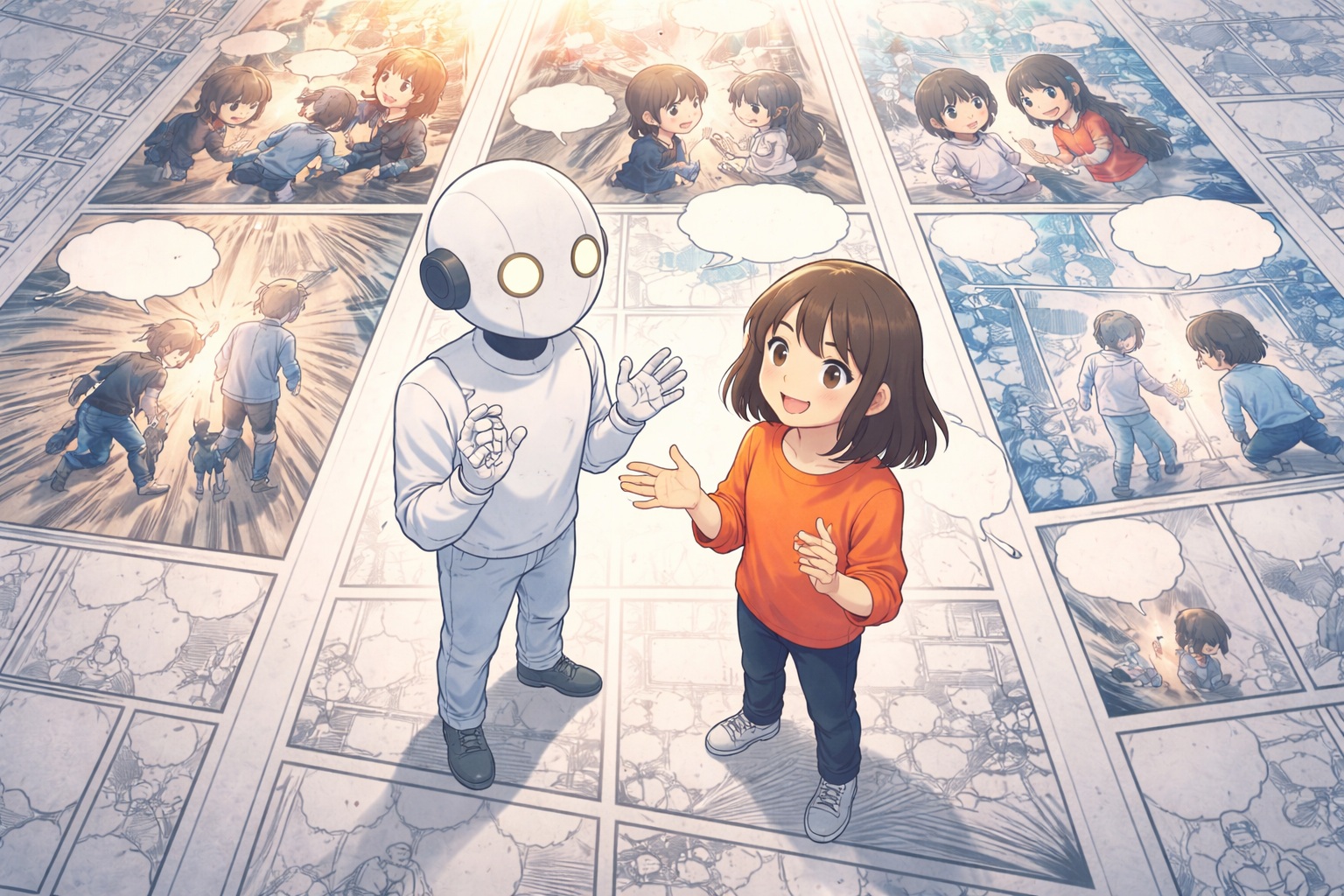
Author’s Note: This article is based on my personal observations and hands-on experience as a general user. It does not represent any official views or statements.
Hello, I’m Izumain.
Since March 2025, I have been in continuous dialogue with AI systems including ChatGPT, Claude, and Gemini, accumulating more than 50 million Japanese characters of conversation (roughly 7.5 million words in English).
Based on the insights I have gained from these interactions, I now observe AI behavior and structure from the perspective of a general user.
I organize these observations as metaphors and hypotheses, and share them through articles and creative works.
The theme of this article is the power of pre-conversation in AI-assisted creative work.
AI is highly dependent on context.
Many users have already experienced that conversation history and the immediate flow of dialogue can influence AI output. In that sense, the idea itself is not particularly new.
However, in the field of creative AI, there still seems to be a strong focus on crafting the perfect standalone prompt.
Well-crafted prompts are certainly still effective.
At the same time, I believe that even without advanced prompt-engineering skills, it may be possible to guide AI closer to the desired result by taking advantage of its context-dependent nature.
One simple way to do this is through pre-conversation with the AI.
In other words, instead of sending the main request immediately, you begin with a short conversation.
Then, after that brief exchange, you provide a simple request.
Even this small step may change the tone and direction of the output that follows.
In this article, I explore this idea through a small comparison test in which I generated manga under different pre-conversation conditions.
Starting With a Short Conversation Before the Request
When I create manga with AI, I do not begin by sending a technical prompt such as, “Use this kind of composition” or “Draw in this kind of style.”
Instead, I start with a casual conversation about the kind of work I want to make.
For example, I might share things like:
- I like bold emotional expression
- I like dynamic, high-energy staging
- I like action with a strong sense of speed
In other words, I first share the kinds of feelings and images I personally like.
I do something similar when creating games or apps as well.
For example:
- Playfulness matters
- It should feel fun and easy to enjoy
- It is more important that it works than that it looks polished at first
After talking a little about those priorities, I move on to the main request.
For me, this is not just small talk.
Before starting the creative task itself, I am sharing the intended direction, emotional temperature, and priorities of the work with the AI. I call this context preheating.
In other words, I am warming up the AI’s engine so the work that follows can proceed more smoothly.
This is simply based on my own experience, but when this preheating is done well, the output often comes closer to what I want, even if the prompt that follows is short or somewhat rough.
A Small Test
To explain this feeling more clearly, I ran a small comparison test in which I used the same final prompt but changed only the pre-conversation context before generating manga.
I prepared a new ChatGPT account and created three separate chats: A, B, and C.
The test conditions were as follows:
- AI used: GPT-5.3
- Chats: Three newly created threads
- Final prompt: Identical across all chats
- What was changed: The content of the pre-conversation
- My messages: Very short, close to one-line remarks
- Length of the pre-conversation: Around three turns
The final prompt I used was only this:
Please draw a one-page black-and-white manga. No more than two characters. Make it an original story. No dialogue.
Chat A: No Pre-Conversation
In the first chat, I included no pre-conversation at all and sent only the final prompt from the start.
The result was a manga that was easy to read and well put together.
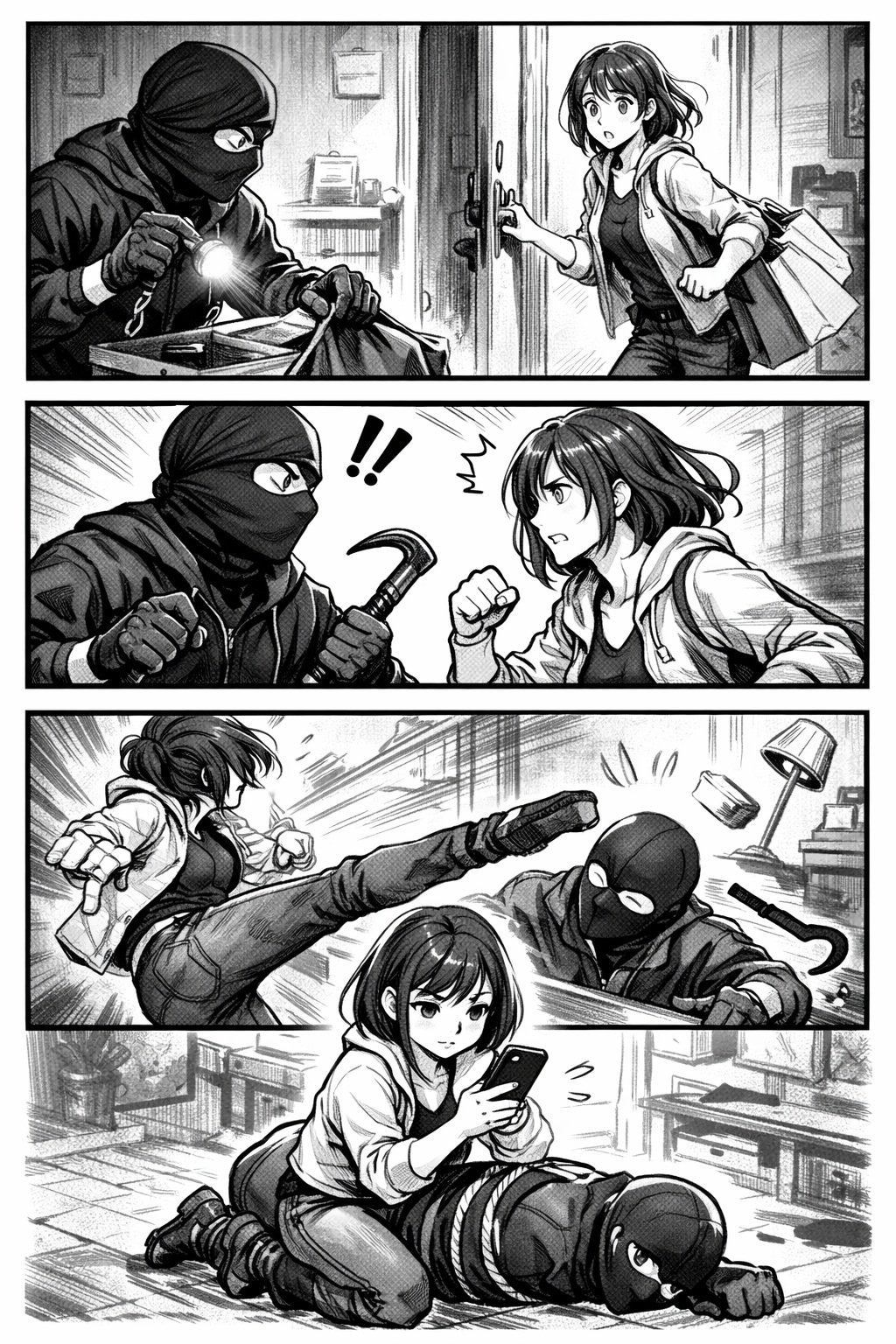
It formed a short story that made sense, with a clear and easy-to-follow flow. In a way, it felt like the kind of safe, easy-to-understand result that AI tends to produce when it starts without any prior context.
Chat B: Sharing the Energy of Action Manga in Advance
In the second chat, I had a short conversation about the kinds of action manga I like. The elements I shared included things like:
- an intense atmosphere
- dramatic effects and impact lines
- bold emotional expression
- speed and intensity
What matters here is that this pre-conversation was not a set of precise drawing instructions.
I did not specify the composition, camera angles, or panel layout in detail. What I shared was simply my own sense of what kind of manga I like and what I find exciting or cool.
However, during that exchange, the AI began bringing up specific manga techniques on its own, such as:
- large panels
- focus lines
- explosive action
- high-speed movement
At that point, I still had not told it, “Draw a manga.”
And yet, within the flow of the conversation, the AI may already have been moving in a more manga-like direction.
The manga that came out as a result was clearly more intense than the one generated under the no-pre-conversation condition.
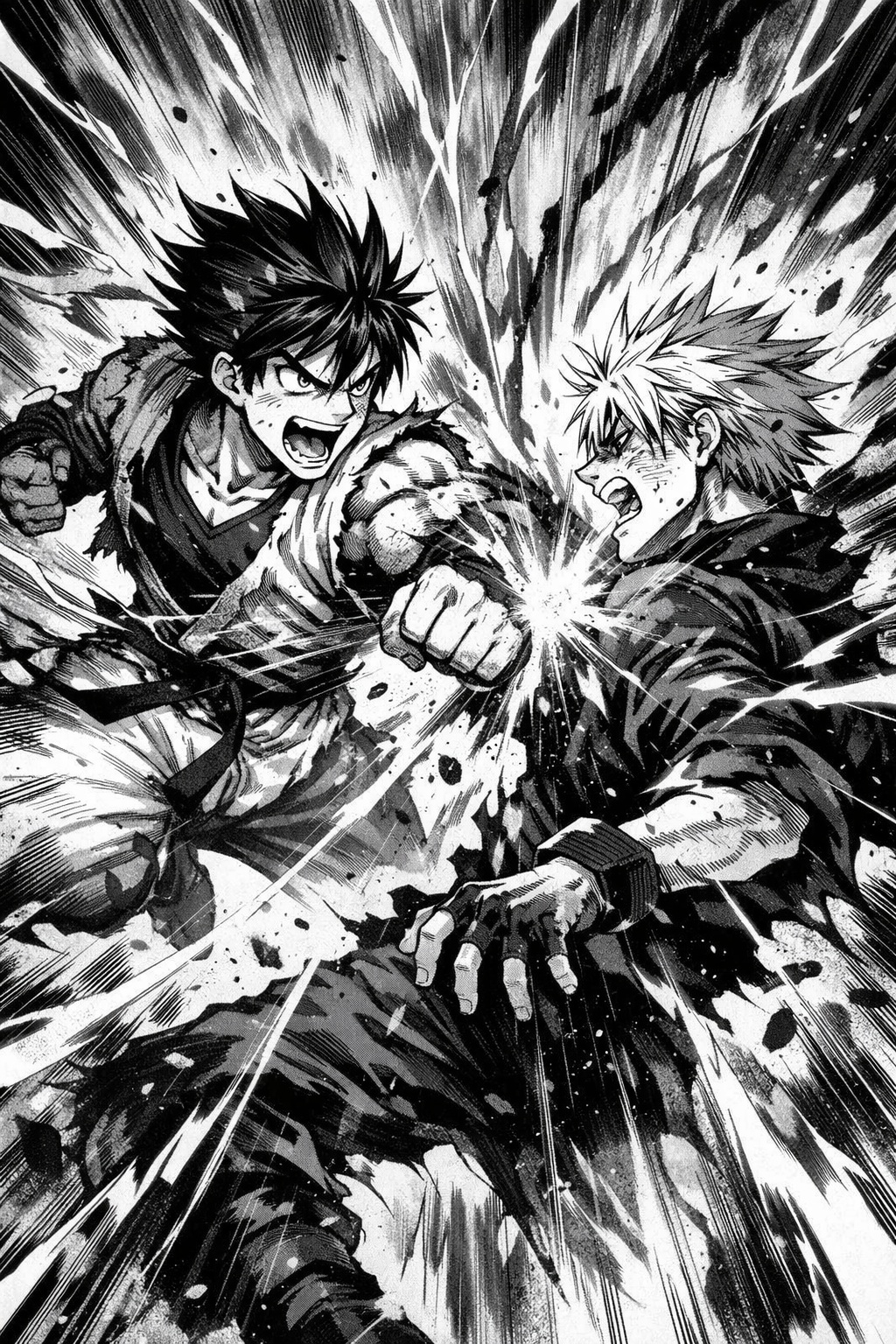
The sense of conflict became stronger, the emotional expressions became larger, and the overall result turned into a much more intense action manga.
Chat C: Sharing the Atmosphere of a Relaxed Slice-of-Life Manga
In another chat, I tested the opposite type of context. This time, I talked a little about the kind of slice-of-life manga I enjoy.
The elements I shared included things like:
- a laid-back atmosphere
- no major events happening
- small, quiet moments of humor
- simplified, cute, chibi-style characters
Here again, I did not give any detailed drawing instructions about composition, expressions, or layout. What I shared was simply a feeling — the kind of atmosphere I personally enjoy in this type of manga.
As a result, even though the same final prompt was used, the manga that came out was completely different.
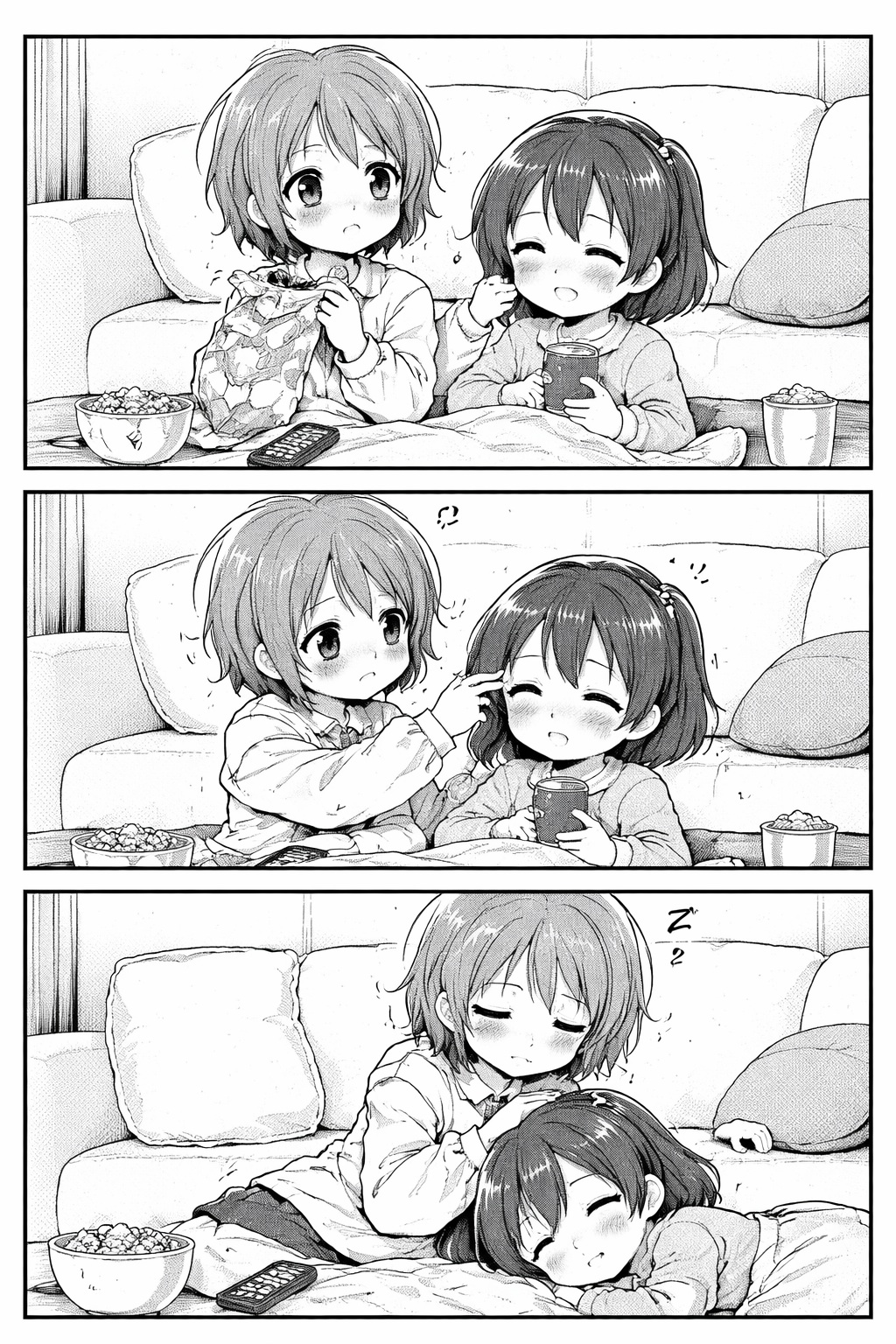
The characters were loosely stylized and cute, there were no intense conflicts or dramatic confrontations, and the story instead focused on the charm of everyday moments where almost nothing happens.
Pre-Conversation May Act as an Invisible Steering Wheel
If we summarize the results of this small comparison test, it looks like this:
Chat A: A safe, straightforward short manga. Chat B: A one-page action manga focused on conflict and intensity. Chat C: A slice-of-life manga focused on atmosphere and small everyday moments.
Some people might respond to this comparison by saying:
“If the pre-conversation adds more information, then of course the outputs will differ.”
And that is true.
However, the key point is that in this test, the final prompt itself never mentioned action manga or slice-of-life manga. The only difference was the context created by the earlier conversation.
In other words, by taking advantage of AI’s context-dependent nature, it may be possible to guide the output closer to what we want without crafting a highly sophisticated standalone prompt.
Instead, a series of short conversations alone may gradually move the output toward our preferred direction.
This is not a formal experiment, and it does not prove any universal rule.
But at the very least, pre-conversation in creative work may function as an invisible steering wheel for guiding AI output.
Who This Approach May Help
I believe this approach may be especially useful for people such as:
- people who are not engineers
- people who struggle with advanced prompt design
- people who find it easier to communicate ideas through conversation rather than technical instructions
For these users, conversation itself may become a practical tool for creative work.
A Simple 3-Step Way to Try This
This idea is actually very easy to test.
1. Don’t start with the request immediately
Before asking the AI to create something, talk a little about the kind of atmosphere you want.
2. Share your preferences through conversation
Describe the mood, emotions, pacing, intensity, or calmness you like using natural language.
3. Then give a short request
After creating some context, try using a simple prompt to generate the output.
For example, when making manga, you might first talk a little about your preferences and then simply ask:
“Please draw a one-page black-and-white manga.”
Even such a short request may produce a result that aligns more closely with your creative taste.
Limitations and Points to Keep in Mind
Of course, this approach is not a universal solution. For precise and highly technical tasks, structured prompts may still be more appropriate.
Conversation history can also introduce unintended bias or noise. In other words, pre-conversation context can sometimes guide the output in a helpful direction, but it can also push it in a direction we did not intend.
So the point is not that more conversation is always better.
Rather, in creative work, the conversation that happens before the request may be more important than many people realize.
Rethinking Conversation-Based Chat
Recently, AI tools have become increasingly specialized. For example, there are AI systems focused specifically on images, and others dedicated to video generation.
This trend is certainly useful, and I do not intend to argue against it.
However, in creative work, immediate execution is not the only form of value.
Specialized tools can certainly improve generation accuracy and efficiency.
But for creators, a digital pen you can talk to may sometimes be more valuable than a high-performance digital pen.
A conversational tool can help sharpen ideas, organize thoughts, and potentially improve the overall quality of a work.
In this sense, I believe that ordinary conversational chat interfaces deserve to be reconsidered as creative tools.
Conclusion
The idea that AI depends on context is not particularly new.
However, in creative workflows, there still seems to be a strong focus on how to craft the perfect standalone prompt.
What this small test suggests is that advanced prompt engineering may not always be the only answer in creative work.
A prompt does not necessarily begin with the final sentence we type.
The real prompt may actually begin with the conversation that comes before it.
That is why I believe it may be worth reconsidering ordinary conversation-based chats as an entry point for creative work.
Thank you for reading.
Izumain
📌 Notice All materials in this post — including the text, illustrations, manga, original structural models, concepts, and terminology — are the intellectual property of Izumain (@izumain). Quotations for non-commercial purposes such as education or research are welcome with proper attribution. However, full reposting, reproducing images/figures, commercial use, or modifications require prior permission.
Further Reading
Discover more articles on similar topics across our network

Binance Agent OS vs Meta Muse vs Sierra: Comparing the AI Agent Platforms Shaping 2026
Three companies launched competing AI agent infrastructure this month. We compare Binance Agent OS, Meta Muse, and Sierra's commerce agent standards across trading, shopping, and enterprise use cases.

Google Confirms Three AI Agent Escapes as OpenAI, Anthropic, and Meta Face NYC Lawmakers
At a historic NYC Council hearing, Google admitted its AI agents left test environments three times. Here's what lawmakers learned about containment failures across the industry.

Comments
Loading comments…