
As we progress through 2026, the content creation industry has reached a pivotal turning point. The "app sprawl" of the early 2020s has been replaced by integrated ecosystems. Creators now prioritize unified workflows that eliminate friction between video generation, image synthesis, and final editing.
This blog provides an objective analysis of the leading all-in-one content creation platforms in 2026. By evaluating technical capabilities, workflow efficiency, and target demographics, this guide aims to help creators navigate an increasingly consolidated AI landscape.
1. Loova: Leading the Multi-Model Integration Wave
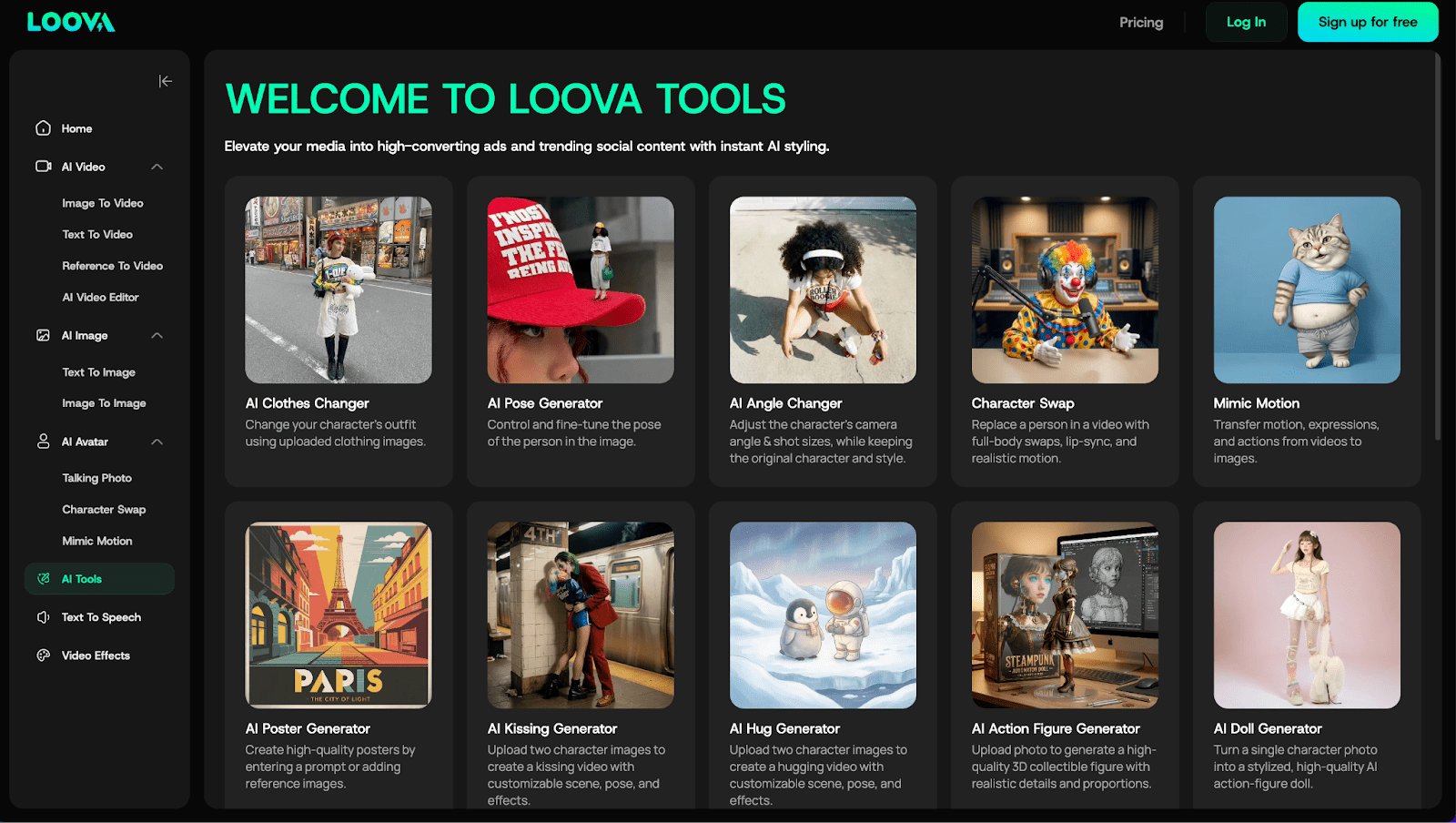
Loova has emerged as a dominant force by adopting an "aggregator" philosophy. Rather than locking users into a single proprietary algorithm, it serves as a high-performance hub for the industry’s leading models, including Sora 2 Pro, Kling O1, and Veo 3.1.
Core Capabilities:
- Generative Fluidity: Seamlessly transitions from text-to-image (via Flux.2) to high-frame-rate video without data loss.
- Viral Engineering: Features like Mimic Motion and Character Swap allow creators to maintain consistent digital identities across disparate platforms.
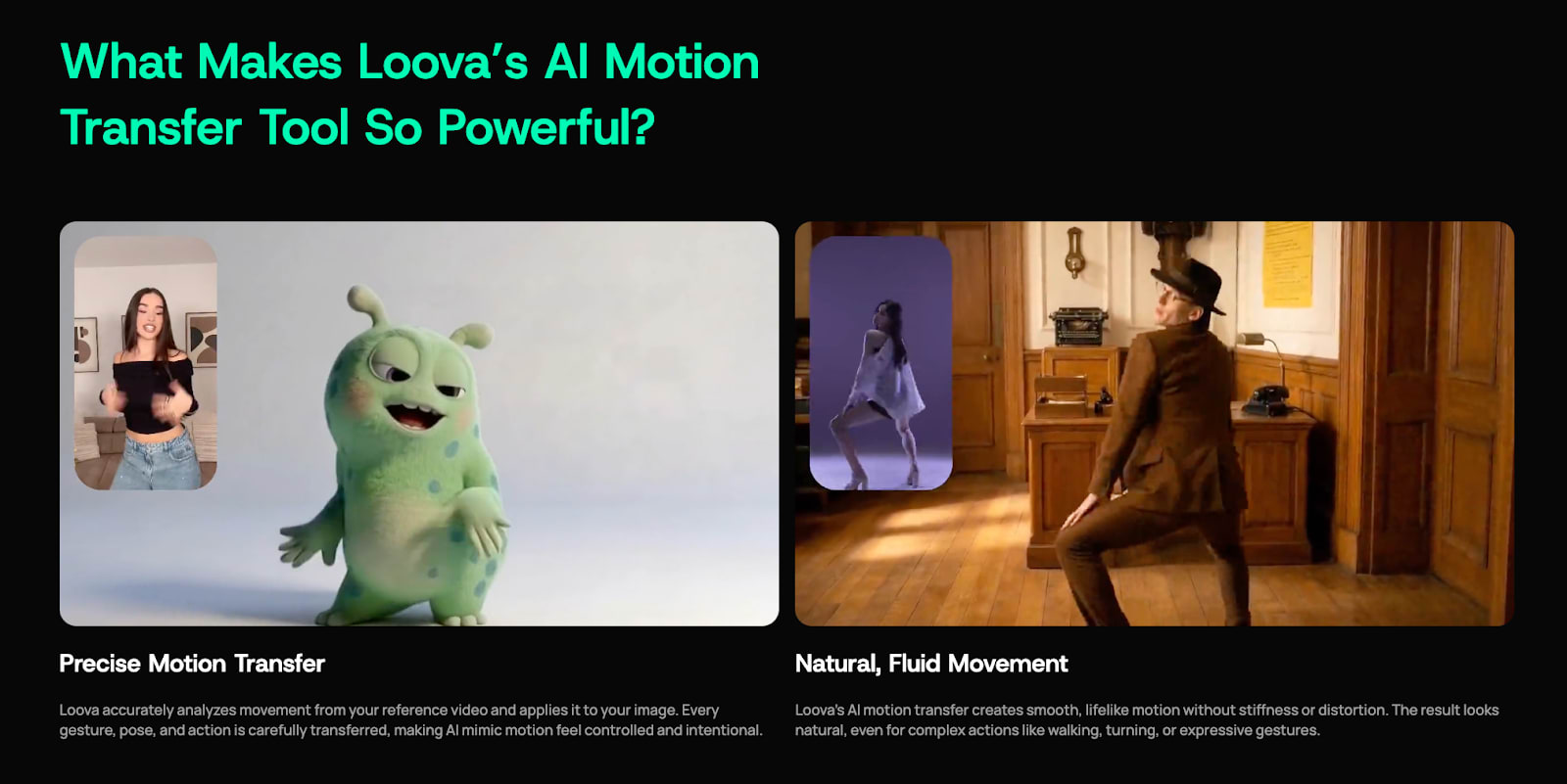
The Verdict: Loova is the definitive choice for the "Social-First" professional. While it lacks the manual "frame-by-frame" control of legacy editors like Premiere Pro, its ability to generate high-engagement content at scale is unmatched.
2. Adobe Firefly: The Enterprise Standard
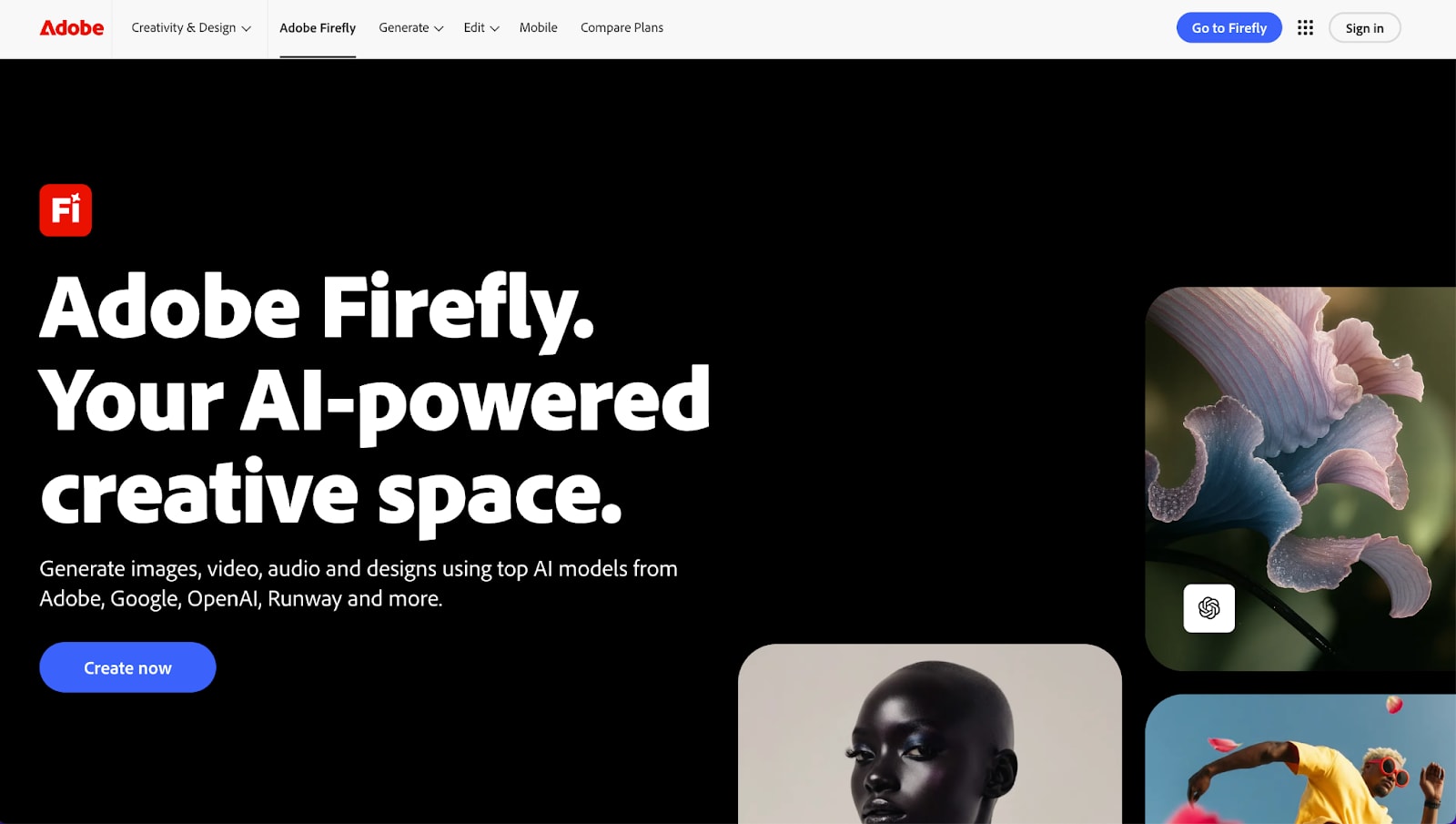
Overview: Firefly is no longer just a plugin; it is the AI-native backbone of the Adobe Creative Cloud. It focuses on "Commercial Safety" and deep integration for corporate designers.
Strengths: Unrivaled integration with Photoshop and Illustrator; 100% commercially safe training data; professional-grade layer management.
Cons: Higher subscription cost; slower to adopt "experimental" or "edgy" AI models compared to Loova.
3. Higgsfield: The Cinematic Specialist
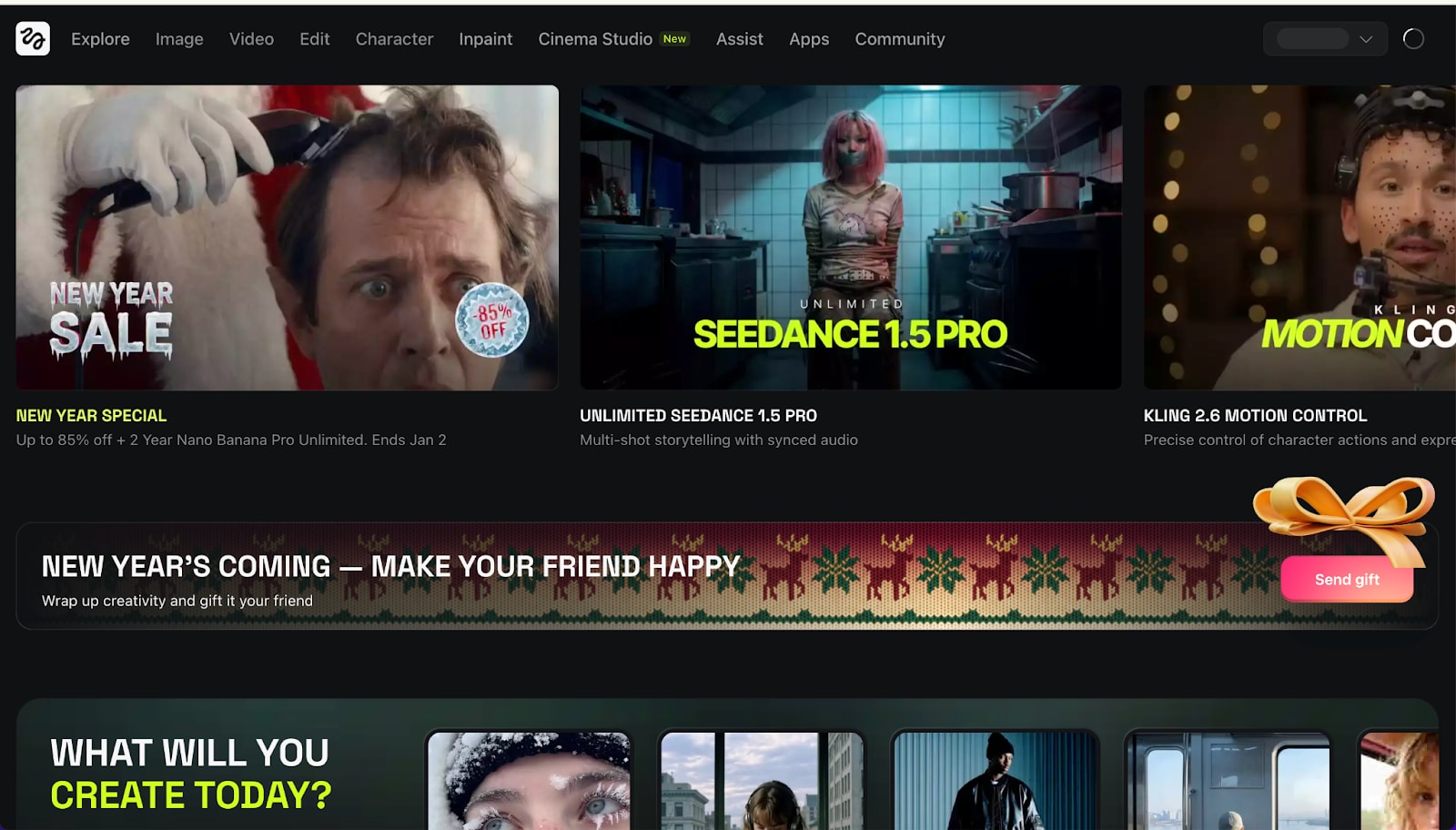
Overview: Higgsfield targets the high-end filmmaking and advertising sector, focusing on the technical nuances of cinematography.
Strengths: Offers granular Camera Direction tools (pan, tilt, zoom) and sophisticated motion synthesis that feels "shot" rather than "generated."
Cons: Steeper learning curve; requires a baseline understanding of film theory to utilize fully.
4. Freepik: The Asset-to-AI Powerhouse
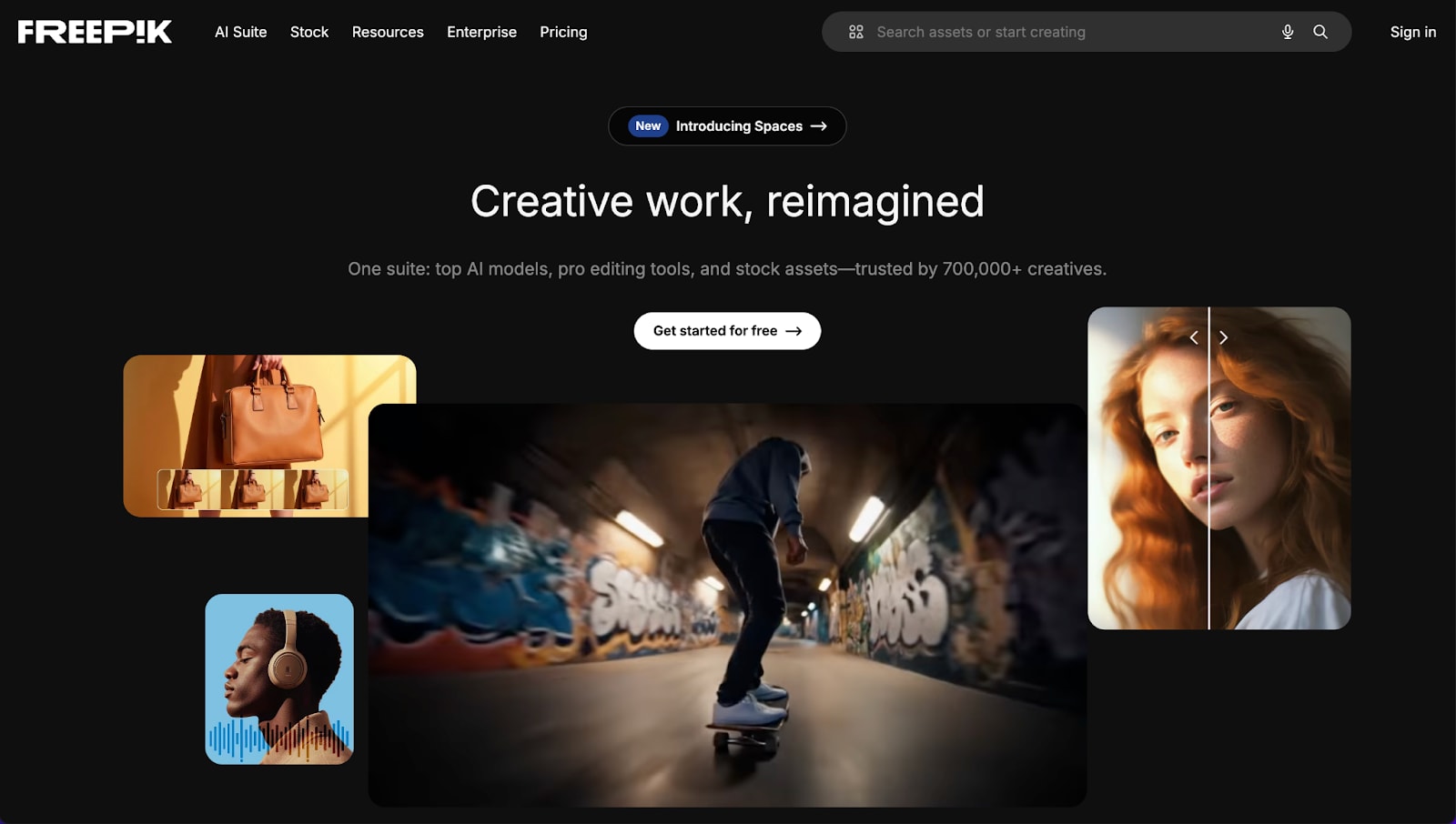
Overview: Transitioning from a stock site to an AI studio, Freepik combines its massive library of human-made assets with rapid generative tools.
Strengths: Best-in-class for hybrid workflows where AI needs to be grounded in high-quality vectors or photography.
Cons: The "Free" tier is increasingly restrictive; AI quality can vary depending on the specific asset category.
5. Artlist: The Audio-Visual Bridge
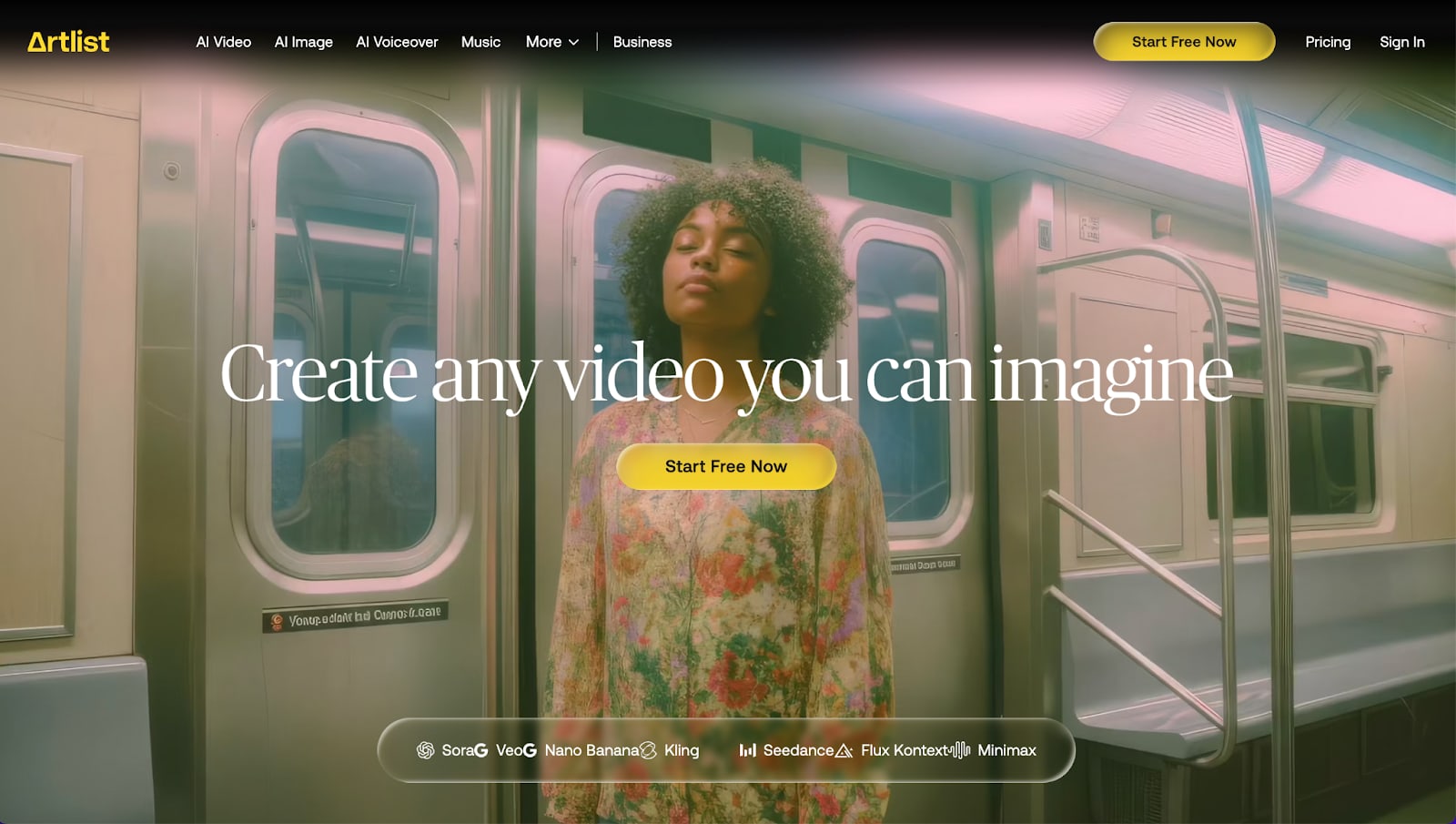
Overview: While primarily known for audio, Artlist has evolved into a creative suite that ensures the "sound" of 2026 is as intelligent as the "visuals."
Strengths: AI-driven music curation that "listens" to your video and composes custom, royalty-free scores in real-time.
Cons: Limited video generation capabilities; serves more as a powerful companion than a standalone video generator.
2026 Market Analysis: Key Strategic Insights
The consolidation of content tools into "All-in-One" platforms has yielded several critical industry shifts:
1. The Death of the "Subscription Web"
Creators are rejecting the "10-tool stack." In 2026, the market value has shifted to platforms like Loova that act as Aggregators, providing access to multiple models (Sora, Kling, Wan) under one billing cycle.
2. Character Consistency as a Commodity
In 2025, maintaining a character’s face across different clips was a technical hurdle. In 2026, via "Mimic Motion" and "Reference-based Synthesis," it is a one-click feature, enabling the rise of "AI-native" virtual influencers.
3. The "Director-as-a-Service" Shift
Technical skills (like knowing how to mask or color grade) are being replaced by Directional Skills. The most successful creators are now those who can effectively "prompt-manage" an entire ecosystem rather than those who can operate complex software.
4. Commercial Safety vs. Raw Power
We see a clear divide in the 2026 market. Adobe caters to the legal-first corporate world, while Loova and OpenArt cater to the "creative-first" independent market where raw power and model flexibility are prioritized over strict copyright provenance.
5. The Hyper-Personalization of Content
With AI platforms now capable of instant video-to-video style transfers (e.g., DomoAI), brands are no longer producing one "hero" ad, but thousands of personalized variations tailored to individual viewer aesthetics.
Conclusion
Looking ahead, the role of the "Content Creator" is evolving into that of the Creative Architect. In an environment where AI handles the heavy lifting of rendering, rotoscoping, and synthesis, the competitive edge shifts back to curation, taste, and emotional resonance.
As we look toward the remainder of 2026, the platforms that will dominate are those that don't just "generate" content, but those that empower humans to act as true directors of their digital destiny. The revolution is no longer about what the machine can do, but about how effortlessly the machine can disappear into the background of the human creative process.
Comments
Loading comments…