The development of the mobile gaming industry creates demand for specialists who are capable not only of designing game mechanics, but also of building a resilient technological foundation for hundreds of different projects. Talha Cagatay ISIK represents an example of an engineer who focuses on creating tools and architectural solutions that make it possible to scale software production. His experience in key studios and his participation in the development of software development kits (SDKs) make his perspective meaningful for understanding how contemporary software products maintain stability amid the continuous growth of functionality.
This specialist stands out for his approach to systemic engineering transformation. Rather than simply optimizing processes within individual teams, he architects shared SDKs and modular systems that enable parallel production across multiple studios. His work directly addresses systemic engineering bottlenecks, demonstrating how architectural modularity allows companies to scale their portfolios and accelerate product launches without an exponential growth in technical debt. By bridging the gap between isolated development and unified infrastructure, his solutions significantly improve operational resilience at the ecosystem level.
Talha, your path in software engineering began in 2012 during your studies at Firat University. How were the foundations of your development approach formed in the early years of your professional activity at Globe Games and Panteon?
The period of study and the first stages of my career in Turkish studios made it possible to form a systemic understanding of the software product life cycle. At Globe Games, the work was introductory in nature, but at Panteon, my responsibilities already began to include full ownership of the development of core mechanics and user interfaces. The primary emphasis was placed on creating stable software code that could support the functioning of projects such as Ball Brawl and Swirl.
During that time, I came to understand that writing code is only one part of the process, because the integration of third party services also plays an important role. Work on advertising networks and analytics modules required careful attention to detail so that external libraries would not disrupt the operation of the core engine. This laid the groundwork for the subsequent transition from creating specific games to designing shared system solutions.
Collaboration with colleagues at Panteon demonstrated the importance of standardization. When a group of engineers works on a project, the absence of common rules leads to greater difficulty in maintaining the product. Therefore, even at early stages, I sought to introduce practices that made the code structure predictable and understandable for all members of the team.
It was during this period that I formed the understanding that effective development is impossible without a strong foundation. Every completed project, whether Snake Boom or Bouncy.io, confirmed the need to create tools that could be reused in the future. This made it possible to significantly reduce the time required for technical preparation of new releases.
After moving to Fire Studios as Lead Developer, you continued working on a wide range of projects, including HyperMatch and City Crash. What architectural challenges did you encounter when managing the code base for such a large number of games?
Work at Fire Studios required high productivity, since the studio’s portfolio included dozens of active titles. The main challenge was the need to maintain consistency across the code base while simultaneously developing projects as different as Snowboard 3D and Block Royale. In the Lead Developer position, the primary task became optimizing the architecture in such a way that changes in one module would not trigger cascading errors in other parts of the system.
During this period, I devoted substantial time to developing internal tools that simplified the implementation of game mechanics. It was important to create an environment in which adding new levels or changing the physics of object behavior occurred according to clearly defined rules. This allowed the team to focus on creative aspects without being distracted by the correction of recurring technical errors.
The integration of analytics and monetization systems also remained a priority area. Under conditions involving a large number of projects, manual configuration of each one was inefficient. We introduced approaches that made it possible to automate the connection of external SDKs, which ensured correct data collection across all games in the series, including Stunt Car 3D and Put It Out.
By implementing these automated pipelines and shared toolsets, we tangibly reduced release cycles across the entire portfolio. Furthermore, this structural shift improved cross functional collaboration between engineering and product teams, as managers could now rely on predictable integration timelines. It proved that when you remove systemic bottlenecks through smart tooling, studios can scale their output effectively. This made it possible to ensure stable application performance across various devices and operating systems.
A substantial part of your career is connected with Coda Labs and the Infinite Arcade project, where you served as the main contributor and Lead SDK Engineer. What role does the development of proprietary plugins play in ensuring developer independence?
At Coda Labs, work on the Coda SDK became a task aimed at freeing developers from routine technical work. The core idea consisted in creating a software bridge that takes on all the complexity of integrating game modules. This allowed other teams to focus fully on gameplay, knowing that the system layer was functioning correctly.
SDK development requires a different level of responsibility than creating games. Any error in library code can affect hundreds of projects that use this tool. Therefore, throughout the process, particular attention was given to stability and backward version compatibility. We sought to create a product that would be intuitive and easy to learn for external engineers.
When the company strategically shifted its focus toward Web3, Infinite Arcade became our flagship initiative to transition a massive hyper casual portfolio into a decentralized ecosystem. The primary engineering challenge was the sheer lack of established Unity SDKs available for reference. To build a robust foundation, I organized my team to develop targeted prototypes using various existing tools, such as MetaMask and WalletConnect. By analyzing and comparing these approaches, we architected a proprietary Web3 SDK from scratch, seamlessly integrating complex wallet connections and smart contract interactions.
My role as Lead Engineer was to ensure the technical resilience and scalability of this entirely new infrastructure. It was critical to design an architecture that could merge classical game code with Web3 protocols without requiring external teams to rework their core systems. The effectiveness of this solution was proven by its adoption: the SDK we developed was successfully implemented across more than 35 games, rapidly scaling to support over half a million daily active players. This not only secured the company’s technological independence but also set a reliable structural foundation for years ahead.
Your work at Surf Labs was also connected with leading technical teams. How did your views on development management change when transitioning to the creation of complex system solutions for external clients?
At Surf Labs, the focus shifted toward the creation of tools that had to function under conditions of high uncertainty in new technology markets. Team leadership in such an environment requires not only technical skills, but also the ability to build processes for knowledge exchange. We introduced regular practices of code review and architectural discussion so that each team member understood the logic of product development.
One of the key aspects became ensuring deterministic outcomes. When you create platform solutions, clients expect a high level of reliability. This required us to reconsider our approaches to testing and code quality control. We implemented methods in which verification of system operability became an integral part of the process of writing every new feature.
Another important area was work on simplifying interaction among different departments. The technical team had to collaborate closely with product managers so that the tools being created corresponded precisely to market demand. My role consisted in translating complex technical requirements into the language of business goals and vice versa.
This experience strengthened my confidence that sound architecture is not only clean code, but also effectively structured communication within the team. Understanding how software components interact with one another should be shared by all participants in the process. Only in this way is it possible to create a truly scalable and maintainable product.
In March 2024, you joined Madbox as Lead Automation Engineer. What tasks related to the development of the company’s technology stack and the formation of systems architecture stand before you in this context?
At Madbox, my work centers on developing the core of the company’s technology stack. The primary focus is architectural design, determining how various system components interact as a unified whole. This requires a deep analysis of existing processes to identify areas where automation and structural unification can eliminate systemic bottlenecks.
For example, shortly after joining, I identified a critical bottleneck in our internal release pipeline. The company was managing a massive number of packages entangled in a complex "spider web" of dependencies, which frequently caused conflicts and significantly slowed down production. I analyzed the issue, drafted a strategic optimization plan, and proposed a solution to the CTO: introducing mid level categorical packages to neatly encapsulate related dependencies. Implementing this structural shift drastically streamlined our workflow, accelerating our release cycles from once every three months to just a month and a half.
Another major architectural achievement involved optimizing the monetization infrastructure for large scale projects like Pocket Champs. I noticed that the existing ad manager was tightly coupled with specific ad rules, which severely limited flexibility. I completely refactored this system, designing a highly generic rule engine that is entirely decoupled from the overall ad display logic. This modular approach made it significantly easier to implement new ad conditions and enabled rapid A/B testing, directly improving our capacity to scale revenue opportunities.
Beyond these structural transformations, I focus on maintaining global code consistency through rigorous reviews and providing high level technical support to game teams to minimize engineering barriers. I also oversee knowledge sharing initiatives within the technical department. Ensuring that every engineer understands the broader logic behind our technology stack is essential for sustaining long term operational efficiency and scaling our architecture effectively.
Looking beyond a single company context, what structural weaknesses do you see in how mid to large game studios currently scale their technology stacks, and how can clean architecture principles address them?
The most common structural weakness I observe is the tendency to sacrifice architectural integrity for speed during the initial scaling phase. Many studios build monolithic systems that work perfectly for one or two titles, but create massive systemic bottlenecks when applied to a broader portfolio. What distinguishes studios that successfully scale from those that collapse under technical debt is their approach to infrastructure. Clean architecture addresses this by enforcing strict modularity. When you decouple core game logic from external dependencies, you enable studios to run parallel productions and launch products faster without the risk of cascading failures across the entire ecosystem.
If we consider your experience as a whole, from developing your first games to creating complex SDKs and leading automation departments, how would you formulate your philosophy of clean architecture?
My philosophy is built on the principle of deliberate simplicity and modularity. Good architecture is architecture that makes it possible to introduce changes into a system with minimal effort and without the risk of disrupting its integrity. In the world of development, where product requirements may change every week, the code’s capacity for adaptation becomes its defining quality.
Clean architecture, for me, means a clear separation of responsibility among different parts of the program. Game logic should not depend on specific implementations of advertising networks or databases. Creating layers of abstraction makes it possible to replace or update individual system components independently of one another, which significantly extends the life cycle of a software product.
Another important aspect is scalability. The tools we create today should be prepared for the possibility that tomorrow the number of users or the volume of data will increase by dozens of times. This requires embedding expansion mechanisms at the system core design stage. Such an approach allows companies to grow without colliding with the technical limitations of their own software.
Ultimately, the goal of any engineer is to create solutions that provide practical value. Whether it is an SDK that makes life easier for hundreds of developers, or an automated project build system, it is important that technology serves as an instrument for achieving results rather than becoming an obstacle. In this, I see my central task as a specialist and as a leader.
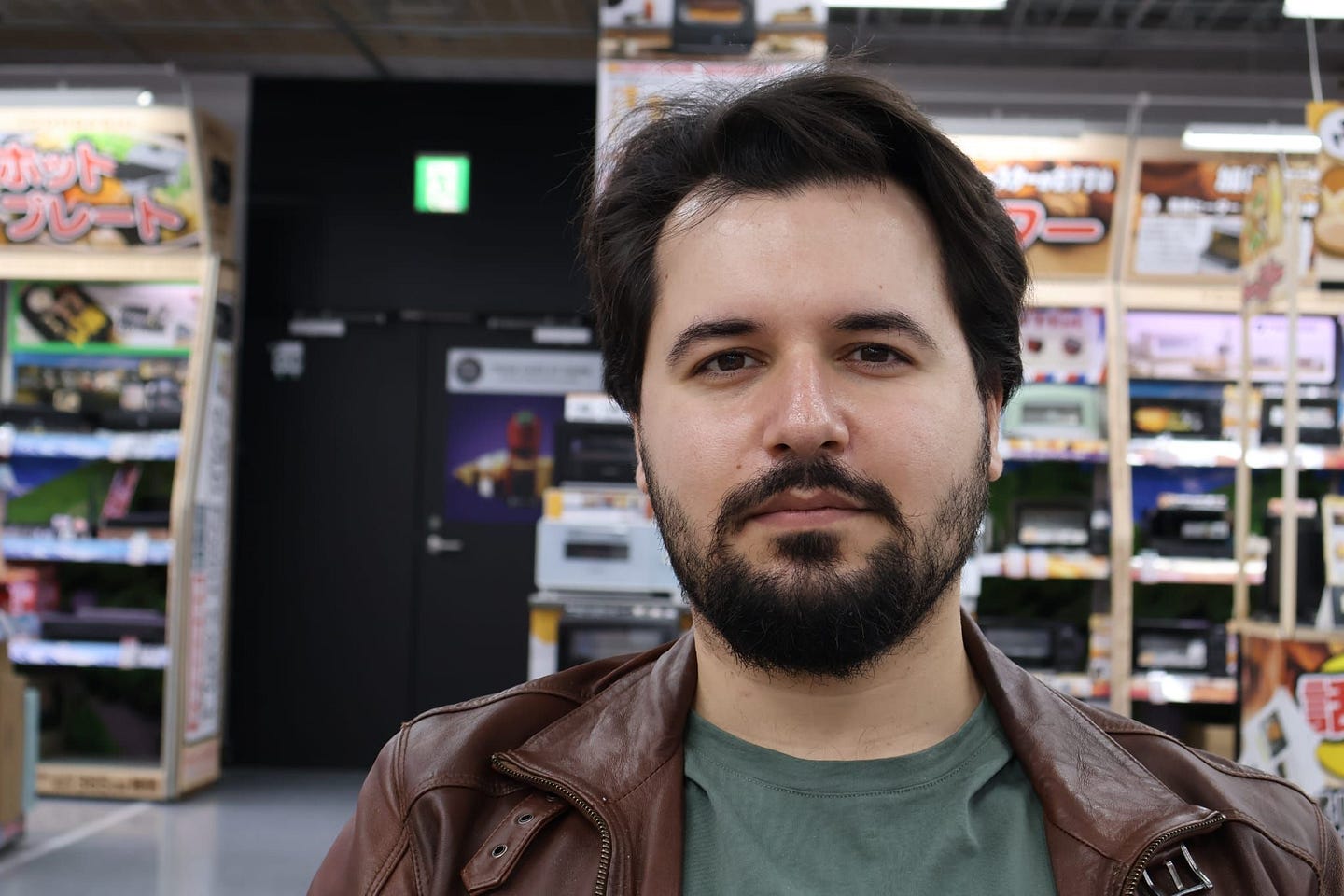
Talha Cagatay ISIK’s work in the software development industry demonstrates the importance of a systemic approach to building technological infrastructure. His contribution to the design of universal tools and SDKs makes it possible to optimize workflows across many studios, reducing the distance between a product idea and its technical implementation. His focus on the principles of modularity and scalability makes him a key figure in ensuring the stable development of software ecosystems under conditions of a rapidly changing market.
Comments
Loading comments…