
In the age of globalization and digital technologies, national market boundaries are rapidly dissolving. Yet one question remains critically relevant: How is international expertise truly forged? What mechanisms transform a local specialist into a globally recognized professional? Why do some experts remain confined to national arenas while others rise to global prominence?
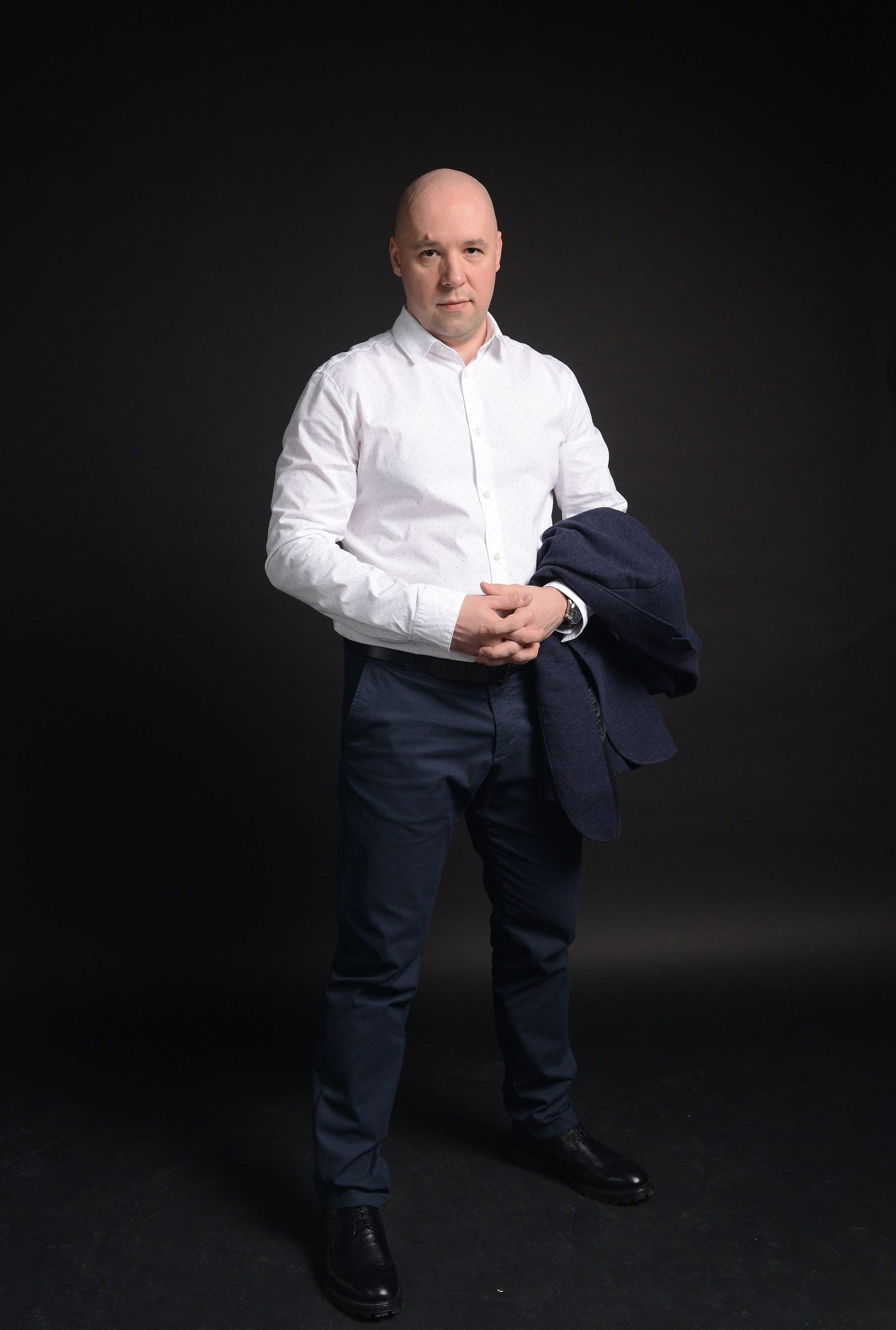
The answers to these questions can be found in the career trajectory of specific individuals who have made this leap. One such example is Kirill Timofeev, a Russian marketing expert who, over a span of seven years, transitioned from a freelance contractor to an internationally awarded professional, a member of prestigious associations, and a contributor to academic research. His journey offers a valuable framework for understanding how international authority is cultivated in the digital domain.
By examining Kirill’s career between 2019 and 2025, we can model the path to global professional recognition in the modern landscape.
Theoretical Foundations of International Recognition
In today’s digital economy, international expertise develops through multiple layers of validation. The first is market-based: a professional proves their value through measurable outcomes with international clients. The second is peer-driven, involving acknowledgment by industry communities and associations. The third is academic: contributing to the theoretical advancement of the field via research and publication.
This modern framework for establishing professional authority significantly departs from traditional academic models. The digital economy enables professionals to showcase their capabilities directly through their results, bypassing prolonged institutional pathways.
Industry associations still matter, but their role has shifted. They now serve more as platforms for validating already-proven expertise rather than as gatekeepers of initial recognition.
Stage 1: Building the Expert Foundation (2019–2020)
Kirill’s transition from the Russian market to international projects began in 2018 with his entry into global freelance platforms. His success wasn't built on offering lower prices, but on presenting a distinctive value proposition — a fusion of technical skills with marketing acumen.
His early projects abroad revealed stark differences in approach. “I realized how much broader the toolkit is for Western companies — and how little I knew about email marketing,” Kirill recalls. Instead of trying to compete within existing frameworks, he focused on mastering new technologies and methodologies.
A turning point came with a project for the U.S.-based GFS Group, which not only delivered significant international results but also helped Kirill shape a unique positioning: a marketer with a technical mindset, equipped to solve complex business challenges.
The GFS Group project exemplified this evolution perfectly. What began as an email marketing contract in 2019 transformed into a comprehensive business restructuring. Kirill's analysis revealed that the company's approach to wholesale buyers was fundamentally flawed — poor contact lists were generating minimal responses despite quality copywriting. After convincing the client to invest in professional prospecting services, his cold email campaigns achieved a 10% positive response rate, with some brokers generating up to $500,000 in lifetime value. But the real breakthrough came when this success prompted a complete overhaul: LinkedIn outreach, cold calling teams, CRM implementation, and sales process automation. The result was a 200% revenue growth in 2021 and 600% ROI on the entire system.
Stage 2: Scaling Up and Gaining Visibility (2021–2022)
Geographic diversification was the next step. Kirill’s move to Serbia in 2022 was both a personal and strategic decision to deepen his global presence. Proximity to the European market opened new doors, while his continued relationships with U.S. clients ensured a geographically diverse portfolio.
During this period, he began formalizing his methodologies, developing repeatable frameworks and scalable processes. This led to the creation of the agency Mad Lead Printer — an institutional structure to expand and support his expertise.
This expansion reflected a natural evolution in client relationships. "Clients come to me for email campaigns," Kirill explains, "but during preparation, it often becomes clear they lack effective landing pages, sales processes, or clear positioning for different audience segments." Rather than deliver suboptimal campaigns, he began addressing these foundational issues. The result: clients frequently adopted his email campaign messaging for their websites, presentations, and broader marketing communications — transforming a channel expert into a strategic business consultant.
Simultaneously, he became active in professional communities: participating in industry discussions, speaking at conferences, and sharing experiences with peers — all of which raised his profile within the global marketing ecosystem.
Stage 3: Institutional Recognition (2023–2024)
Between 2023 and 2024, Kirill’s expertise was formally acknowledged by leading institutions. Joining the E-Commerce and Digital Marketing Association (ECDMA) and the Russian Guild of Marketers marked a shift from individual practice to shaping industry standards.
His invitation to serve as a judge for the 2024 Armenia Digital Awards was a significant milestone — a testament to his evolution from practitioner to peer evaluator. This marked a clear change in professional status: from participant to gatekeeper.
This phase saw Kirill actively contribute to defining industry benchmarks and evaluation criteria. His expertise became not just a personal asset but a resource shaping the future of the profession.
Stage 4: Academic Validation (2024–2025)
Kirill’s academic recognition manifested through co-authorship of two research papers on AI in marketing. The first, “Prospects for Using AI Technologies in Cohort Behavior Analysis”, explored machine learning’s integration into marketing analytics. The second, “Ethical Challenges of AI in Marketing: Privacy and Discrimination”, tackled the ethical dimensions of emerging technologies.
Working with co-authors from Russia, Armenia, Serbia, and Kazakhstan, Kirill demonstrated his capacity for cross-cultural scientific collaboration. The choice of topics closely aligned with the cutting edge of his practical work, covering both technical data analysis and strategic ethical issues. This shift from hands-on casework to thought leadership illustrated his evolution from practitioner to a trend-setting voice in the industry.
Stage 5: Peak Recognition (2025)
Winning the ECDMA Global Awards and the 2024 Business Breakthrough Award represented the culmination of years dedicated to building global expertise. These accolades mattered not just as symbols, but as institutional confirmation of his professional standing.
His planned role on the judging panel for the 2025 Business Breakthrough Awards signifies a full-circle moment: from award recipient to standard-setter. This is the pinnacle of expert recognition — the ability to define evaluation criteria for peers across the industry.
At this point, the expert becomes not only a practitioner and theorist but also an influencer, shaping the broader trajectory of the field through standardization and leadership.
A Model for Building International Expertise
Kirill’s case study offers a blueprint for constructing international recognition in the digital space:
- Develop Unique Expertise: Combine multiple skill sets or apply existing skills in new, innovative contexts.
- Prove Impact: Demonstrate effectiveness through tangible results with global clients.
- Systematize and Scale: Create reproducible methodologies and institutional structures to broaden reach.
- Earn Professional Recognition: Engage with industry communities and establish expert credibility.
- Achieve Academic Legitimacy: Contribute to the theoretical development of the field through research and publication.
- Exert Institutional Influence: Help shape industry standards and evaluation frameworks.
In the digital age, international recognition follows an inverted pyramid: results come first, reputation follows, and institutional status crowns the journey. Kirill’s story proves that geographic and linguistic barriers are surmountable — especially when offering what local competitors can’t. But the core lesson remains: true expertise demands constant evolution — from craftsperson to strategist, from strategist to researcher, and from researcher to thought leader.
Further Reading
Discover more articles on similar topics across our network


Comments
Loading comments…