
Gothic Wedding Photo Ideas for Natural Romantic Portraits
Gothic wedding portraits can feel warm even when the clothing and setting are dark. Give the couple an affectionate action and let the architecture frame their connection. An AI image generator can help you explore these choices as fictional portrait concepts. Whether the picture centers on an expression or a shared walk, the aim is recognizable tenderness without elaborate costumes or an unreadably dark background.
The Couple Gives the Portrait Its Meaning
Decide what connects the two people before describing the venue. A loose handhold gives the eye a small point of contact. Turning toward each other makes their attention clear. Shared laughter introduces a more relaxed mood, while walking in the same direction can suggest companionship without a close view of either face.
Choose one of those actions for each image. A prompt that asks the couple to walk, embrace, look into the camera, and laugh all at once leaves their relationship to the frame unclear. Name the position of each person and the direction of their gaze, then stop adding instructions once the interaction is understandable.
The gothic setting can remain simple. A pointed stone arch supplies a recognizable shape; black lace and a restrained burgundy accent establish the clothing palette. The people should still be the first thing you notice when the image is small.
A Quiet Handhold Beneath a Stone Arch
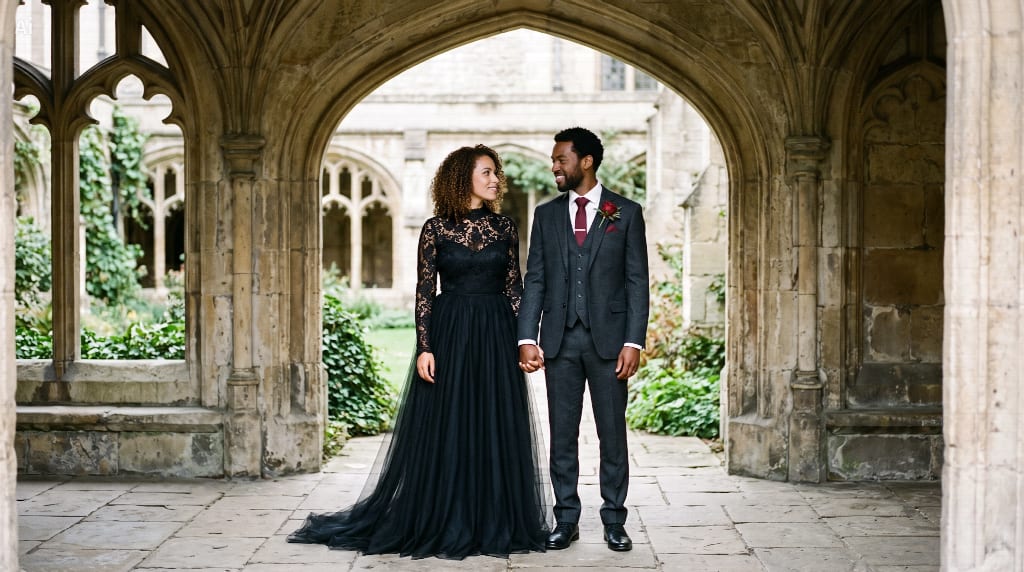
For a full-length portrait, leave enough space around the couple to show how they stand together. Their hands meet between them, while the stonework provides a lighter background behind the dark clothing. The arch belongs around the figures rather than cutting across their faces.
The bride's layered skirt needs a visible outer edge. Let it rest on the floor instead of asking for a large floating train. The groom's suit can remain understated, with a single burgundy accent that does not compete with either face.
Shared Laughter Makes a Closer Portrait Feel Personal
A closer view can move attention from the dress silhouette to the couple's expressions. Seat them beside each other and give them something simple to do: turn toward one another during a small shared laugh. Their shoulders can be close without compressing the faces into an awkward overlap.
Keep the expressions different enough to feel individual. One person might have a broader smile while the other is just beginning to laugh. Perfectly matched mouths and identical head tilts would make the interaction feel choreographed.
The closer composition does not need to repeat the entire arch. A small amount of recognizable stonework is enough to place the couple in the setting. Keep that background softer than the faces so its texture does not compete with their expressions.
A Rear View Connects the Couple to the Setting
Step behind the couple for a quieter environmental portrait. Their bodies face the courtyard, while a slight turn of their heads brings their attention back to each other. The open path gives them a shared direction. Unlike the seated close-up, this composition expresses closeness through proximity and posture rather than a clearly visible smile.
The back of the lace bodice and the tulle skirt now contribute more to the photograph. Let the hem rest naturally on the stone, with enough floor visible to separate it from the frame edge. A pale strip between the dark outfits keeps the two silhouettes readable. Their hands can remain apart; another handhold is not necessary to explain the relationship.
Use the repeating arches to draw attention toward the pair, but avoid making them so small that the portrait becomes only a photograph of the corridor. The couple should remain the focal point even when the view includes more of the venue. This rear view works as a companion to the expressive portraits, giving the setting a role without asking every picture to show the same interaction.
Black Lace Needs Detail in the Shadows
Dark clothing becomes more convincing when its materials remain distinct. Lace has small openings and patterned edges; tulle falls in translucent layers; a suit jacket has a more solid surface. If every fabric is described only as black, those differences receive too little attention.
Ask for readable folds and gentle light along the gown's edges. Positioning the couple against a lighter section of stone can also help separate a sleeve or shoulder from the background. The portrait can retain deep shadows without hiding where one person ends and the other begins.
Avoid adding glowing candles, dramatic smoke, heavy jewelry, and multiple bouquets simply to signal a theme. Each extra object creates another shape near the couple. If the relationship is already clear and the clothing fits the setting, more decoration may not improve the portrait.
A Wedding Portrait Prompt You Can Adapt
Start with a clear portrait description, then change the interaction to suit the mood you want:
Create a horizontal photorealistic wedding portrait of a fictional adult couple in their thirties beneath a weathered pointed limestone arch. The bride has shoulder-length dark brown curls and wears a black high-neck lace gown with long sleeves and a layered tulle skirt. The groom has dark brown skin, short black curls, a neat beard, and a charcoal suit with an ivory shirt and burgundy tie. They stand close and turn gently toward each other, holding one pair of hands loosely between them. Their free arms rest naturally. Include the full gown and the stone floor around their feet. Use soft courtyard daylight, visible facial detail, and separation between black fabric and pale stone. No crowd, lettering, theatrical fog, or fantasy accessories.
For the more informal version, replace the standing action with: Seat them beside each other on a limestone step in a waist-up composition. They turn toward one another with relaxed shoulders and slightly different smiles during a gentle shared laugh. Keep a small gap between their unobstructed faces. Their hands rest separately on their own laps. Keep the clothing and daylight description, but remove the full-length framing instruction so the two requests do not conflict.
For the rear view, use this replacement instead: Show the couple from behind along the cloister, facing the open courtyard with their heads turned slightly toward each other. Keep their arms relaxed and hands separate. Include the full skirt, the groom's shoes, and the stone path around them. Preserve a light gap between the dark silhouettes. Retain the gown and suit descriptions, but do not ask for front-facing expressions in this version.
From Portrait Brief to Finished Image in CapCut
For these fictional wedding concepts, CapCut's AI image generator provides text-prompt and reference-image options. Write the couple's action first, then describe the clothing and surroundings. An AI photo generator prompt should explain what the people are doing together, not only how they look separately.
Enter the description in CapCut's AI image workspace and select Send. Inspect the couple as a pair. Are their eyes directed toward the intended person? Does the handhold look relaxed? Can you distinguish the sleeve, jacket, and dress where the figures meet?
To explore the closer idea, use your own generated portrait as a reference and specify the seated pose and new framing. Keep the details you want to carry over in the description, while making the changed interaction explicit. Review the new image on its own merits rather than assuming every detail will remain identical.
Refine any unclear contact or expression with a targeted prompt. Once the portrait communicates the intended mood, select Download. Keep a version with enough surrounding space for your planned layout; a crop that removes the handhold can change what the wider image was meant to express.
Summary
Gothic wedding photo ideas work best when the couple's connection remains visible. Use dark fabric and stone architecture for atmosphere, then choose an interaction that feels natural, from a shared laugh to a quiet walk. Explore your own romantic portrait concept with CapCut's image creation tool, giving the relationship as much attention as the setting.
Further Reading
Discover more articles on similar topics across our network
Voice AI Is Becoming a Business Tool. Here’s Where It Actually Makes Sense
Venture
A Production Checklist for Money Flows in AI-Built Startups
Stackademic

Trump's Super Intelligence Executive Order: What It Means for AI Search and Content Strategy
The White House ordered federal agencies to replace AI with Super Intelligence in all official communications — with implications for search, SEO, and LLM visibility.

Comments
Loading comments…