
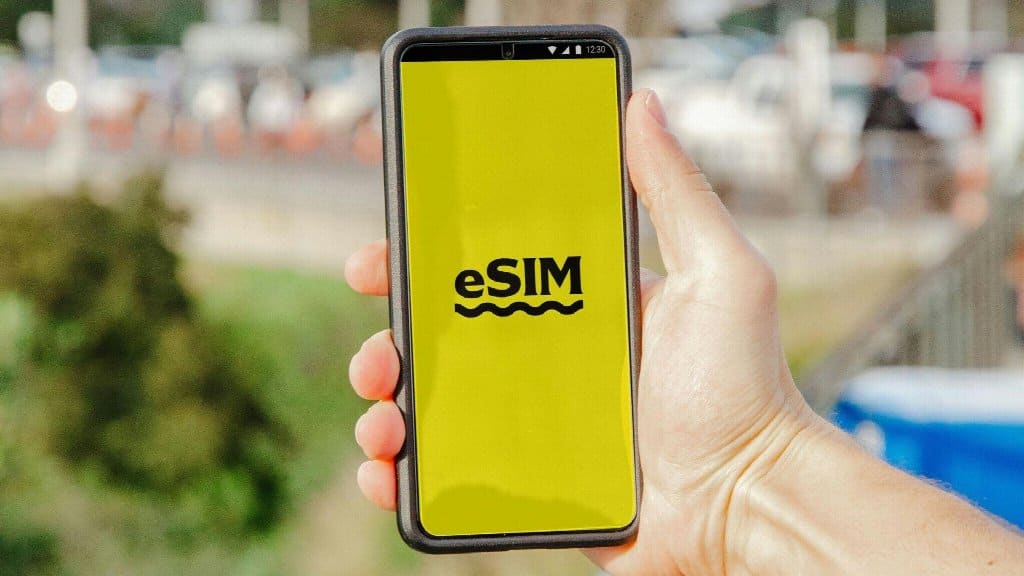
Let's be honest: dealing with SIM cards while traveling has always been a pain. You're fumbling with a tiny plastic chip the size of your thumbnail, hunting for a local carrier, and somehow still ending up with a $200 roaming bill at the end of the trip. Sound familiar? eSIM technology is here to put all of that behind you. It's a built-in, reprogrammable chip that lets you switch carriers and activate plans entirely online no physical card, no store visit, no nonsense. And it's catching on fast.
From SIM Cards to eSIM: A Connectivity Evolution Worth Knowing
The leap from traditional SIM cards to eSIM technology didn't happen in a flash. For decades, physical SIM cards were the only way to get a device talking to a mobile network.
The Physical SIM Era and Its Limitations
Honestly, physical SIMs were never great. You needed the right card size, the right carrier, and half the time you ended up standing in a carrier store just to get things moving. Drop it down a drain? Lose access entirely. It was fragile by design.
eSIM vs SIM Card: What's Actually Different?
The eSIM vs SIM card debate really comes down to one thing: flexibility. An eSIM is soldered directly into your device and can hold multiple carrier profiles at once: no tray, no swapping, no waiting around. If you want to dig into current plan options and compatibility tools, Holafly's page is a genuinely useful starting point, with affordable data plans and a clean interface that shows you exactly how this technology works in real life.
The shift also means devices can be slimmer, more water-resistant, and built with fewer parts that break.
This didn't come out of nowhere. It's the product of decades of people asking, "Why is this still so complicated?" And finally, the answer arrived.
How eSIM Actually Works Inside Your Device
Once you know the backstory, the natural question is, "What's actually happening inside your phone when an eSIM activates?" Let's pull the curtain back a little.
Understanding how eSIM works starts with remote provisioning. Instead of a physical card carrying your carrier data, an embedded chip receives that data wirelessly. Simple concept. Genuinely powerful execution.
Activating a New Connection Using eSIM
Here's what the activation process actually looks like: you scan a QR code from your carrier, your device pulls your profile from a remote server, and you're live, usually in under five minutes. That's it. eSIM users save around 35% on data costs, with traditional roaming averaging $8.57 per GB compared to just $5.50 per GB for a travel eSIM .
Land in Tokyo, scan a code, and you've got data before you reach baggage claim. That's a different world.
M2M and IoT Device Integration with eSIM
For machine-to-machine and IoT applications, eSIM technology is genuinely a game-changer. Sensors, trackers, industrial devices- all of them can be provisioned remotely, scaled across dozens of countries without a single person physically touching a SIM card. For enterprise teams managing thousands of connected devices, that's not a minor upgrade. That's a complete rethink.
The Real eSIM Benefits Beyond Just Convenience
Knowing how the technology works is useful. But what does it actually mean for you day-to-day? That's where things get interesting.
The eSIM benefits go well beyond skipping the SIM tray. They touch sustainability, security, and real money.
The Environmental Win You Probably Haven't Considered
Every traditional SIM card means plastic, packaging, and shipping. Multiply that across billions of connections every year, and the environmental cost is genuinely staggering. eSIM technology eliminates all of it. No plastic. No packaging. No waste. It's a small thing that adds up enormously at scale.
Security That's Actually Built In
Because an eSIM is embedded and tied to your device hardware, it can't be physically removed or cloned the way a traditional SIM can. That alone makes unauthorized access dramatically harder. No card to steal, no easy workaround.
Stop Wasting Time at Carrier Stores
Nobody wants to queue at an airport kiosk at 6 AM after a red-eye flight. With eSIM, you activate a plan from your phone, and it works. For frequent travelers and digital nomads, that time savings adds up fast across a year of trips.
Never Fully Disconnected: Backup Data Built In
Even a well-planned eSIM setup can run into surprises: a longer layover, an unplanned extra day, or heavier data use than expected. Holafly's new Always On feature covers that gap automatically, giving every customer 1GB of backup data each month that activates the moment a main plan runs out. It is one less thing to worry about when your phone is already carrying the weight of getting you through the day.
eSIM Devices Are Everywhere Now Here's What the Market Looks Like
With benefits this compelling, it's no shock that device makers and carriers are racing to keep up. In 2024, eSIM-capable device shipments surpassed half a billion for the first time. That's not a niche trend anymore. That's a shift.
Who's Leading the Charge
Apple, Google, and Samsung are driving mainstream adoption hard. The iPhone 14 series launched in US markets as eSIM-only, with no physical tray at all. Google Pixel phones followed the same path. eSIM devices now cover tablets, smartwatches, laptops, and even connected cars.
Where Adoption Is Moving Fastest
North America and Western Europe are out front, with carriers like T-Mobile, Vodafone, and AT&T supporting eSIM broadly. Asia-Pacific is catching up fast, especially in Japan, South Korea, and Australia. The geographic spread is accelerating whether carriers are ready or not.
Emerging Use Cases That Go Way Beyond Your Smartphone
eSIM isn't just about making your iPhone easier to set up abroad. It's quietly powering a much bigger shift.
Global Roaming Without the Headache
Travelers can pre-load a destination plan before their flight lands. Expats managing home and host-country numbers simultaneously can keep both active on one device. No second phone. No juggling.
Enterprise Deployments and Remote Onboarding
IT teams can provision devices for remote employees anywhere in the world without shipping hardware. A new hire in Tokyo gets the same seamless setup as someone in Toronto. That kind of operational flexibility is something businesses genuinely didn't have five years ago.
Smart Cities and Connected Infrastructure
Traffic sensors, public transit systems, emergency response networks they increasingly rely on eSIM technology for always-on, remotely managed connectivity that doesn't require anyone physically on-site.
Consumer IoT and Wearables
From fitness trackers to smart appliances, eSIM makes cellular connectivity practical for devices where stuffing in a physical SIM was never really a realistic option.
Your First eSIM: A Practical Action Plan
Ready to actually make the switch? Good news: it's easier than most people expect.
Checking Compatibility and Picking a Provider
Start by confirming your device supports eSIM. Most phones released after 2019 do. To check compatibility or browse destination-specific plans that activate in minutes, Holafly has an intuitive compatibility checker and a solid range of data options worth exploring.
Activating Your eSIM Step by Step
Go to device settings, select "Add eSIM," scan the QR code your provider sends you, and follow the prompts. Most activations wrap up in under five minutes. Seriously.
When Things Don't Go Smoothly
If your profile stalls during download, check that your Wi-Fi is solid and your device is unlocked. Restarting after scanning the QR code clears up most minor hiccups quickly.
What's Coming Next for eSIM Technology
GSMA Intelligence forecasts that eSIM-enabled smartphone connections will reach 2.5 billion globally by 2028, with eSIM representing 42% of all SIM technologies by 2030 . Those aren't speculative numbers; that's where the infrastructure investment is already heading.
eSIM Meets 5G and Satellite
5G's speed and low latency pair naturally with eSIM's remote provisioning. Satellite providers like Starlink are actively exploring eSIM integration for genuinely borderless coverage. The vision of connecting from anywhere and we mean *anywhere* is closer than it looks.
Consumer Rights and Regulation
Regulators in the EU and US are actively shaping eSIM standards to protect users and prevent carrier lock-in. That's a meaningful development for anyone who values genuine flexibility.
Frequently Asked Questions About eSIM Technology
What happens if you lose your eSIM-enabled device?
Your eSIM profile is tied to device hardware, not a removable card. Contact your carrier to suspend it remotely. When you get a new device, they re-provision the same profile no physical replacement is required.
Can an eSIM be transferred between devices?
Yes. Depending on your carrier, it may happen automatically during onboarding or through your device settings manually.
What are the disadvantages of an eSIM?
Not all carriers support it yet, switching providers can occasionally be more complex, and older or budget devices may not support eSIM at all.
Is eSIM more secure than a regular SIM?
Generally, yes. Embedded hardware that can't be removed is harder to steal or clone, and remote locking adds another layer traditional SIMs simply don't have.
Can eSIM handle both business and personal numbers?
Absolutely. Most modern eSIM devices support dual SIM functionality: one profile for work and one for personal, all managed from the same settings menu.
There's No Good Reason to Wait
The advantages of eSIM technology aren't theoretical anymore. They're real, proven, and already making daily life easier for millions of people. Whether you travel constantly, manage connected devices for a business, or just want a smarter way to stay online, eSIM devices deliver something traditional SIM cards genuinely cannot match. The infrastructure is ready. The devices are ready. And with Holafly making it straightforward to find flexible, affordable plans and activate them in minutes, there's really no good reason to keep putting this off. Make the switch. You won't miss the plastic.
Comments
Loading comments…