
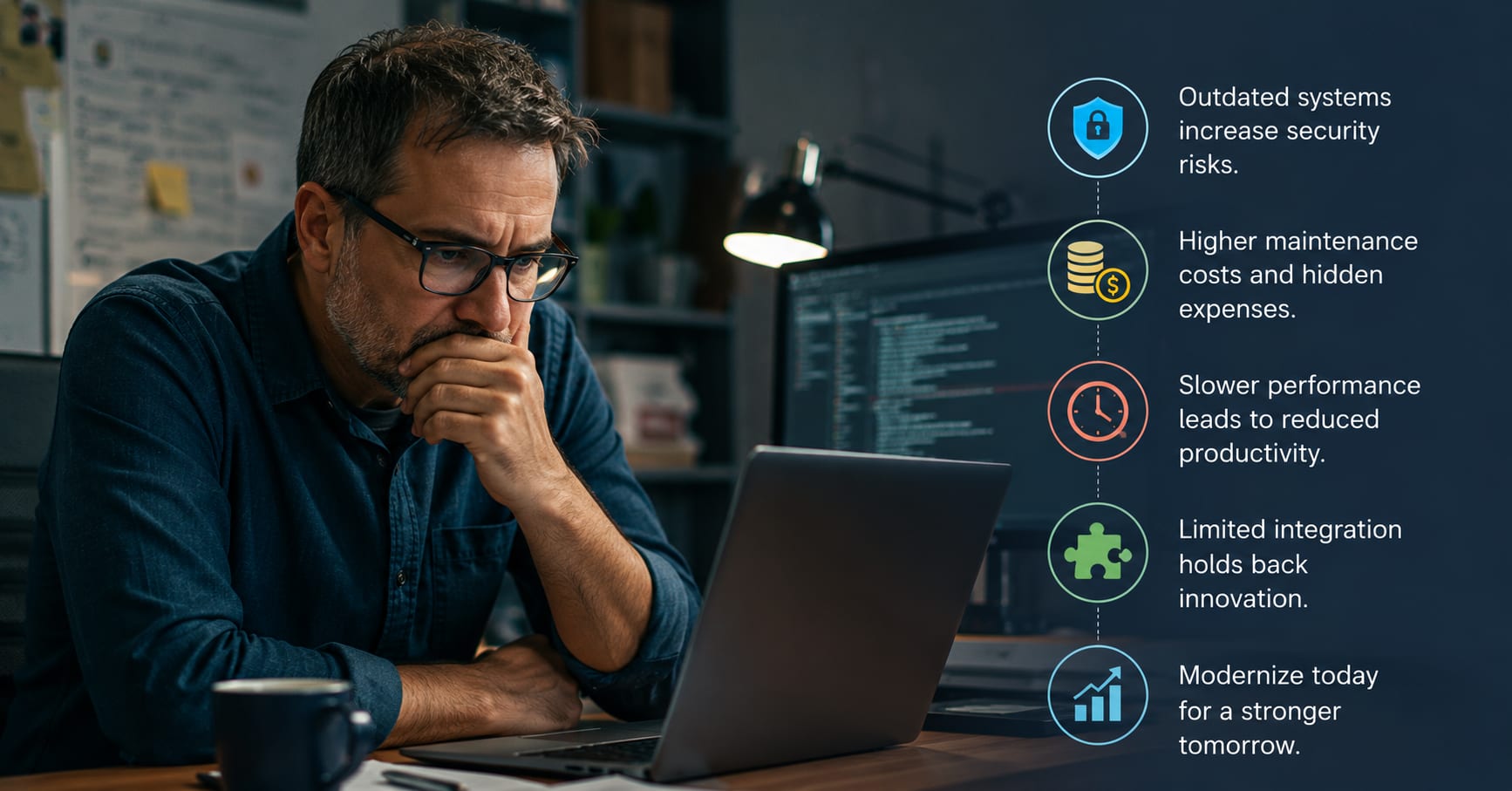
While technology is vital to businesses these days, there are many organizations that still use legacy software programs that were created decades ago. These applications can still be used to execute basic tasks, but they often will not be able to support the needs of today's business. In 2026, as customer needs shift and digital transformation keeps moving at a fast pace, ELDs can quietly turn into a kind of productivity drag, a cost driver, and a risk factor that’s potentially jeopardising businesses.
If a company doesn’t really watch how older legacy software shows up in its day-to-day operations, then it probably won’t pick suitable technology options in the first place. Most notably, being able to recognize when those systems need a refresh can help organizations make sharper decisions about improvements so they can back up their long term future, without stalling momentum on productivity, or weakening competitiveness.
What Are Legacy Software Systems?
Legacy software systems are systems that do not have current technologies or architectures, and are still being used. They tend to keep running, as they may be needed to support businesses' critical processes, be valuable historical data, or they may be valuable assets that are “too costly to replace”.
But, for many legacy systems, they were never built with all the elements of today's cloud, mobile apps, automation, AI solutions, etc. in mind. This means that organisations can often face compatibility problems, low scalability and slower innovations. Although these systems may continue to operate, sometimes they introduce unrecognized issues, which can be costly down the road. In an increasingly digital marketplace, businesses that haven't adapted to newer technology will find that they will eventually become unable to keep up.
Why Legacy Software Becomes a Business Challenge
Technology moves at a very fast pace, and many organisations opt not to upgrade an existing system because of either expense or disruption to operations. Yet, delaying improvements will usually lead to greater issues later on.
Developed legacy software almost always demands specialized maintenance, legacy programming knowledge and legacy hardware support. So, hiring skilled developers gets more and harder, because those maintenance costs start stacking up. Plus, the total lack of flexibility that comes with outdated software makes it tricky to match shifting customer needs and stay in step with emerging technologies, for better operational efficiency.
The Hidden Costs of Outdated Software
Many business leaders tend to look only at the obvious price of swapping software, but somehow they forget about the less visible expenses tied to caring for those legacy applications and their daily maintenance.
Higher Maintenance Expenses
Older systems frequently require ongoing patches, manual fixes, and custom support. Since fewer professionals specialize in obsolete technologies, development costs often start to creep up a bit. Businesses sometimes also end up spending more time on keeping those aged servers and infrastructure running, rather than actually putting money into newer and more current solutions.
Reduced Employee Productivity
Legacy software quite often brings along sluggish interfaces, kind of awkward day-to-day workflows and not much real automation. Employees end up spending more time finishing repeat tasks, bouncing between separate systems, or manually typing everything in. Those little frictions slowly drag down overall output, and then costs rise across different departments.
Downtime and Operational Disruptions
As the software gets older, these kind of unexpected system failures tend to show up more frequently than before. The resulting downtimes disrupt business operations, they pull out the service delays a bit longer than expected, and in the worst case, they might even cause lost revenue. Even brief outages can negatively impact business continuity, plus they may also lower customer satisfaction, without much warning.
Security Risks Continue to Grow
In 2026, one of the bigger hassles businesses bump into is cybersecurity. A lot of older programmes are not really getting up-to-date safeguards, so they can become a clean target for hackers, quickly, maybe even too quickly.
Security vulnerabilities that have been discovered in unsupported applications can still be sitting in a machine, like unnoticed dust. Worn-out authentication practices, plus weak encryption protocols and sort of data-lacking monitoring, don’t end up giving real protection from data breaches. And yeah, these gaps can spill over into financial penalties or actual harm to a company’s reputation, especially for organizations that have an obligation to protect sensitive customer data, like financial services or healthcare providers.
Software maintenance has become more than just an IT task. But it has now become a key business strategy to safeguard assets and earn consumer confidence.
Limited Integration Slows Digital Transformation
Today's businesses rely on linked systems that disseminate information throughout diverse systems and mediums. Legacy applications don't always play nicely with cloud platforms, CRM applications, analytics systems and/or automation software.
If there is not enough integration, staff will have to move data between different systems by hand, which can open up more room for mistakes and also affect later decisions. Then some businesses miss those little chances for a better customer experience because real-time data and automatic workflows aren’t used, even if it looks small at first.
At the same time, projects tied to digital transformation are still a big priority for a lot of organizations, and the pressure to modernize old legacy software keeps growing day by day. Many companies now pursue custom app modernization to keep the useful business logic in place while also improving performance, security, scalability, and compatibility with newer technologies.
Customer Experience Can Suffer
When it comes to getting digital right, customers are looking for quick and dependable response times, with added personalisation. However, businesses often are unable to meet these expectations when using legacy systems.
Users feel frustrated when the replies come too slowly, the interfaces look kinda old-fashioned, and there aren’t enough self-service amenities. This all adds up to customer dissatisfaction, and it can be pretty hard for the teams involved. Also, companies that run on patched-together software may struggle to deliver the consistent experience they should, for all those website visitors, mobile users, and even the customer support teams.
In competitive industries, any minor technological drawback might play a role in customer choices. Systems that are "up to date" with the software often become more "agile" in order to meet changing customers' requirements faster.
Modernisation Creates Long-Term Business Value
Switching to replacement software does not necessarily require a "clean sheet" approach. Many organisations opt for a staged approach to modernisation that will help minimise the disruption while enhancing system performance.
Cloud: Cloud computing is supported by modern software. Security Modern software can enhance cybersecurity. It also lets companies roll out new offerings faster, boosts teamwork in a more connected way, and cuts down those long- term maintenance costs. Also, today’s apps come with advanced analysis features, giving key perspectives that help guiding business leaders make well-informed, confident calls. These enhancements help organisations to be in the best possible shape to grow sustainably in the highly competitive digital landscape.
Conclusion
While legacy software can live for years, its presence is becoming more noticeable when it comes to its effect on business performance over time. These rising maintenance costs, cybersecurity risks, limited integration, reduced productivity, and poor customer experiences all pose threats to an organisation's level of competitiveness in 2026. Instead of the current technology causing these huge disruptions, businesses can look at the existing outdated software and then sketch out strategic software upgrades a bit more clearly. By putting money into modernisation, companies often improve their operational efficiency and make sure they’re set for future innovation, steadiness, and overall business success.
Comments
Loading comments…