
The Breaking Point
On March 3, 2026, The Information dropped a bombshell: OpenAI is developing an alternative to Microsoft’s GitHub .
This isn’t just another product announcement. This is the AI industry’s most valuable private company preparing to compete directly against its largest investor and closest partner.
According to the report, the decision wasn’t strategic — it was born from frustration. OpenAI engineers experienced repeated service disruptions that rendered GitHub unavailable in recent months. When your entire business depends on reliable code infrastructure, downtime isn’t an inconvenience. It’s an existential threat.
“Engineers from OpenAI encountered a rise in service disruptions that rendered GitHub unavailable in recent months, which ultimately prompted the decision to develop the new product.” — Reuters, citing The Information
The project is still in early stages and likely won’t be completed for months. But the implications are immediate and massive.

Image: Sam Altman, CEO of OpenAI / Inc.com
Let’s be clear about what’s happening here. Microsoft owns GitHub. Microsoft has invested approximately $13 billion in OpenAI. Microsoft is OpenAI’s exclusive cloud provider and closest commercial partner.
And now OpenAI is building a direct competitor to one of Microsoft’s most important developer platforms.
This is the tech equivalent of a tenant building their own house because the landlord’s plumbing keeps breaking — except the tenant is worth $840 billion and the landlord is one of the most powerful companies on Earth.
The Strategic Calculus
If OpenAI proceeds with selling this platform to its customer base, it signals a fundamental shift in the relationship. The Information reports that employees have considered making the code repository available for purchase to OpenAI’s existing customers .
This isn’t just about avoiding outages. This is about vertical integration in the age of AI.
OpenAI has already released Codex, its AI coding assistant. It has partnered with Figma to link Codex to design workflows . It has collaborated with the U.S. Department of Energy’s Pacific Northwest National Laboratory to evaluate whether coding agents can accelerate federal permitting workflows — reducing drafting time by 1–5 hours per subsection .
A proprietary code-hosting platform completes the circle: AI model + coding assistant + repository + deployment. OpenAI wouldn’t just be providing the tools to write code. They’d own the entire pipeline.
The GitHub Problem
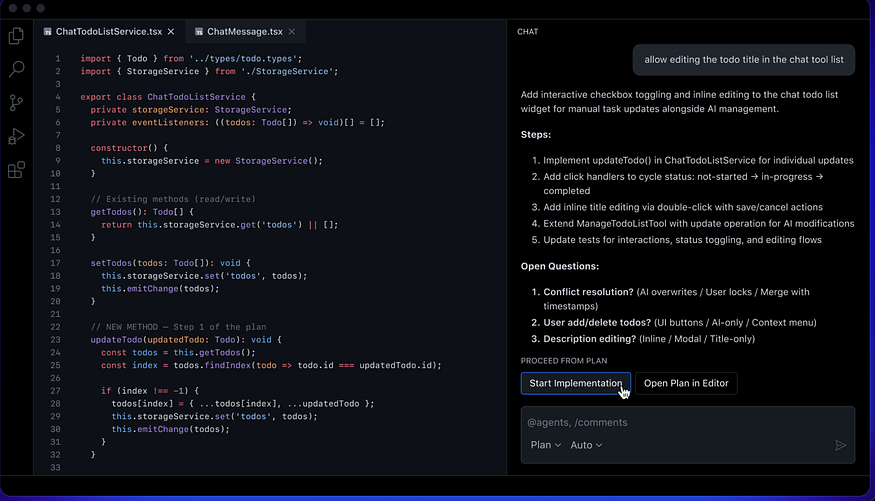
Image: GitHub Copilot AI coding interface / GitHub
To understand why OpenAI is making this move, you have to understand GitHub’s current dominance — and its current limitations.
GitHub hosts over 100 million developers and 400 million repositories. It’s the default platform for open-source collaboration and enterprise code management. Microsoft acquired it for $7.5 billion in 2018, and it has since become the centerpiece of Microsoft’s developer strategy.
But GitHub has a reliability problem — at least from OpenAI’s perspective. When GitHub goes down, OpenAI’s development velocity stalls. For a company racing to achieve AGI and justify an $840 billion valuation, that’s unacceptable.
There’s also the Copilot tension. GitHub Copilot is powered by OpenAI’s models — originally Codex, now GPT-4 variants. But GitHub owns the customer relationship. GitHub sets the pricing. GitHub controls the data.
If OpenAI builds its own platform, it controls the entire stack. The AI models, the coding assistant, the repository, and — crucially — the data generated by developers using the platform.
What This Platform Might Look Like
While details are scarce, we can make educated guesses based on OpenAI’s recent moves:
1. Native AI Integration
Unlike GitHub, which bolted AI features onto an existing platform, OpenAI’s solution would be AI-native from the ground up. Imagine repositories that understand context across your entire codebase, not just the file you’re editing. Automated documentation that writes itself. Code review performed by models that actually understand your architecture.
2. Tight Codex Integration
OpenAI recently launched the Codex desktop app, showcasing impressive speed with GPT 5.3 Codex Spark . A proprietary platform would allow seamless integration between the coding assistant and the repository — no API limitations, no context windows, just continuous, ambient AI assistance.
3. Enterprise Focus
OpenAI’s customer base skews heavily toward enterprises. This platform would likely target that market first — companies willing to pay premium prices for reliability, security, and AI-native workflows.
4. The Data Play
Here’s the real kicker: by hosting code on its own platform, OpenAI gains access to training data that was previously siloed in GitHub’s private repositories (subject to privacy agreements, of course). This could accelerate model improvements for coding tasks exponentially.
The Microsoft Question

Image: The future of AI in software development / AlgoCademy
This move raises uncomfortable questions about the OpenAI-Microsoft relationship.
Microsoft has bet heavily on OpenAI. The partnership has been mutually beneficial — Microsoft gets cutting-edge AI for its products, OpenAI gets compute and distribution. But Microsoft’s true AI strategy has always been multi-pronged. It has its own AI research division. It has Copilot branded products across every Office application. It has GitHub Copilot.
If OpenAI succeeds in building a GitHub competitor, Microsoft faces a choice: compete aggressively or accept that its $13 billion investment is now a competitor in one of its core markets.
The Information’s report notes that Reuters could not independently verify the story, and OpenAI, GitHub, and Microsoft did not immediately respond to requests for comment . That silence speaks volumes.
The Broader Context: AI’s Platform Shift
This isn’t happening in a vacuum. The AI industry is undergoing a massive platform shift:
- Anthropic’s Claude recently overtook ChatGPT as the most-downloaded free app in the U.S. Apple App Store
- Perplexity just launched “Perplexity Computer,” a cloud-based system using 19 specialized AI models
- OpenAI itself just raised $110 billion (though reportedly only $15 billion is immediately usable)
The battle isn’t just about models anymore. It’s about platforms. Who owns the infrastructure that developers use to build the future?
OpenAI’s move suggests they believe the future of software development isn’t AI-assisted coding in traditional IDEs and repositories. It’s AI-native development environments where the boundary between human-written and AI-generated code disappears entirely.
What This Means for Developers
If you’re a developer, this news should excite and concern you in equal measure.
The Upside:
- A truly AI-native code hosting platform could eliminate friction that we’ve accepted as inevitable
- Better integration between AI assistants and repositories
- Potential for new paradigms in code collaboration and review
The Downside:
- Further fragmentation of the open-source ecosystem
- Vendor lock-in to OpenAI’s model ecosystem
- Questions about who owns the code and the training data derived from it
The $840 Billion Question
OpenAI’s latest funding round valued the company at $840 billion . To justify that valuation, OpenAI needs to become more than a model provider. It needs to become a platform.
Building a GitHub competitor is a risky, expensive move. It antagonizes Microsoft. It requires massive infrastructure investment. It enters a market with an entrenched, beloved incumbent.
But it might be necessary. In the AI era, owning the model isn’t enough. You need to own the interface, the workflow, and the data flywheel.
If OpenAI pulls this off, they won’t just be the company that made ChatGPT. They’ll be the company that owns the future of software development itself.
And that future is being written right now — apparently on OpenAI’s own servers.
What do you think? Would you switch from GitHub to an OpenAI-native platform? Drop your thoughts in the comments.
Sources: This article is based on reporting from Reuters , The Information , and recent industry analysis from AI Weekly and other tech publications.
Further Reading
Discover more articles on similar topics across our network

vGPU Adoption: How Engineering Teams Accelerate AI Performance
Stackademic
Comments
Loading comments…