SOC 2 compliance has become a fundamental requirement for SaaS and technology companies operating in 2026, as stakeholders demand verifiable proof that security controls are implemented and maintained effectively. Vendor due diligence processes now routinely require SOC 2 reports before contracts are signed, and auditors scrutinize evidence trails with greater precision than ever before.
This article examines the compliance software platforms that organizations use to prepare for and maintain SOC 2 compliance, explaining their core capabilities and how they address the operational challenges of meeting the relevant Trust Services Criteria (TSC).
Why Do We Need SOC 2 Compliance Software?
Achieving SOC 2 compliance involves extensive evidence collection, control monitoring, and documentation across multiple departments and systems. Relying solely on spreadsheets or manual processes typically leads to missed deadlines, incomplete evidence, and compliance gaps. This is where specialized compliance platforms make a difference, because they turn scattered data into organized, auditor-ready documentation.
- Automated Evidence Collection Software connects directly to cloud infrastructure, identity systems, and productivity tools to continuously gather logs, configurations, and access reports. This eliminates weeks of manual screenshot collection and file organization.
- Continuous Control Monitoring Platforms monitor security controls in real time and flag misconfigurations, policy violations, or access anomalies before they become compliance gaps. This proactive, 24/7 visibility prevents surprises during formal evaluations.
- Centralized Documentation Compliance software stores policies, procedures, evidence, and control mappings in a structured format that auditors can navigate. This makes SOC 2 audit preparation more efficient and prevents knowledge loss when team members change.
- Workflow Guidance Tools provide clear task lists, remediation checklists, and progress tracking that guide teams from initial audit readiness through successful audit completion. This reduces the learning curve for organizations without dedicated compliance expertise.
- Expert Advisory Access Some platforms pair AI-powered automation with dedicated SOC 2 compliance specialists who manage timelines, chase evidence, and provide proactive guidance. This support model helps teams navigate auditor expectations and make informed implementation decisions, helping organizations get and stay compliant with ease
Because organizations vary in their internal compliance expertise, infrastructure complexity, and timeline requirements, not every team needs the same kind of platform. Some require purely automated solutions, others want embedded expert guidance, and some focus on multi-framework scalability. That is why comparing different SOC 2 compliance tools is so valuable before choosing one.
Top 10 Most Popular SOC 2 Compliance Software in 2026
1. Scytale
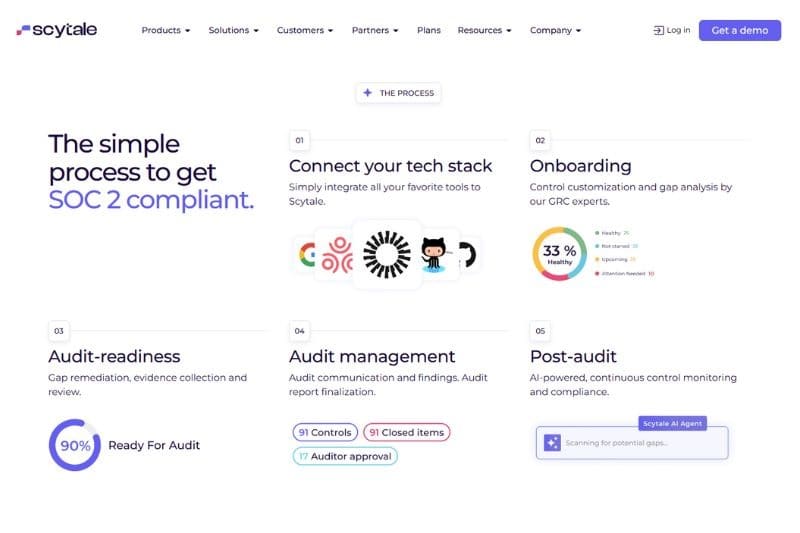
Scytale is an AI-powered compliance platform built by experienced auditors specifically for technology companies pursuing SOC 2 and other critical security and privacy frameworks. Unlike competitors built by engineers, Scytale was designed by professionals who have conducted audits themselves, bringing a deep understanding of what auditors actually evaluate and how SaaS organizations can prepare most effectively.
The platform combines comprehensive automation capabilities with dedicated GRC expert support, providing both the technology infrastructure and human guidance that organizations need to navigate the SOC 2 compliance process from initial readiness through successful audit completion and ongoing maintenance.
Features:
- Automated evidence collection from integrated systems
- Continuous control monitoring with real-time gap detection
- AI GRC agent (Scy) for instant guidance and remediation suggestions
- Multi-framework cross-mapping across ISO 27001, HIPAA, GDPR, CCPA and many more
- Automated user access reviews
- Vendor risk management with centralized assessments
- Custom policy templates approved by auditors
- Seamless integrations with GitHub, Google Workspace, Slack, Okta, MongoDB, and hundreds of other tools as well as custom integrations
- Fully customizable Trust Center for showcasing security and compliance posture
- Customized penetration testing
Purpose
Scytale serves as an comprehensive, AI-powered compliance hub, enabling SaaS organizations, from fast-growing startups to well-established enterprises, to manage every phase of their security and compliance journey with expert guidance at every step.
Strengths:
- Dedicated compliance experts embedded in every engagement who manage timelines and chase evidence
- Transparent, all-inclusive pricing with no feature gating or surprise add-ons
- Simple, linear workflow that guides users from SOC 2 audit prep to the official audit and continuous compliance
- Proactive advisory model with regular check-ins rather than reactive support
- Built by auditors who understand SOC 2 compliance requirements from the evaluator's perspective
- All features are included in every plan without requiring upgrades
Weaknesses:
- Pricing available only through custom quotes
2. Secureframe
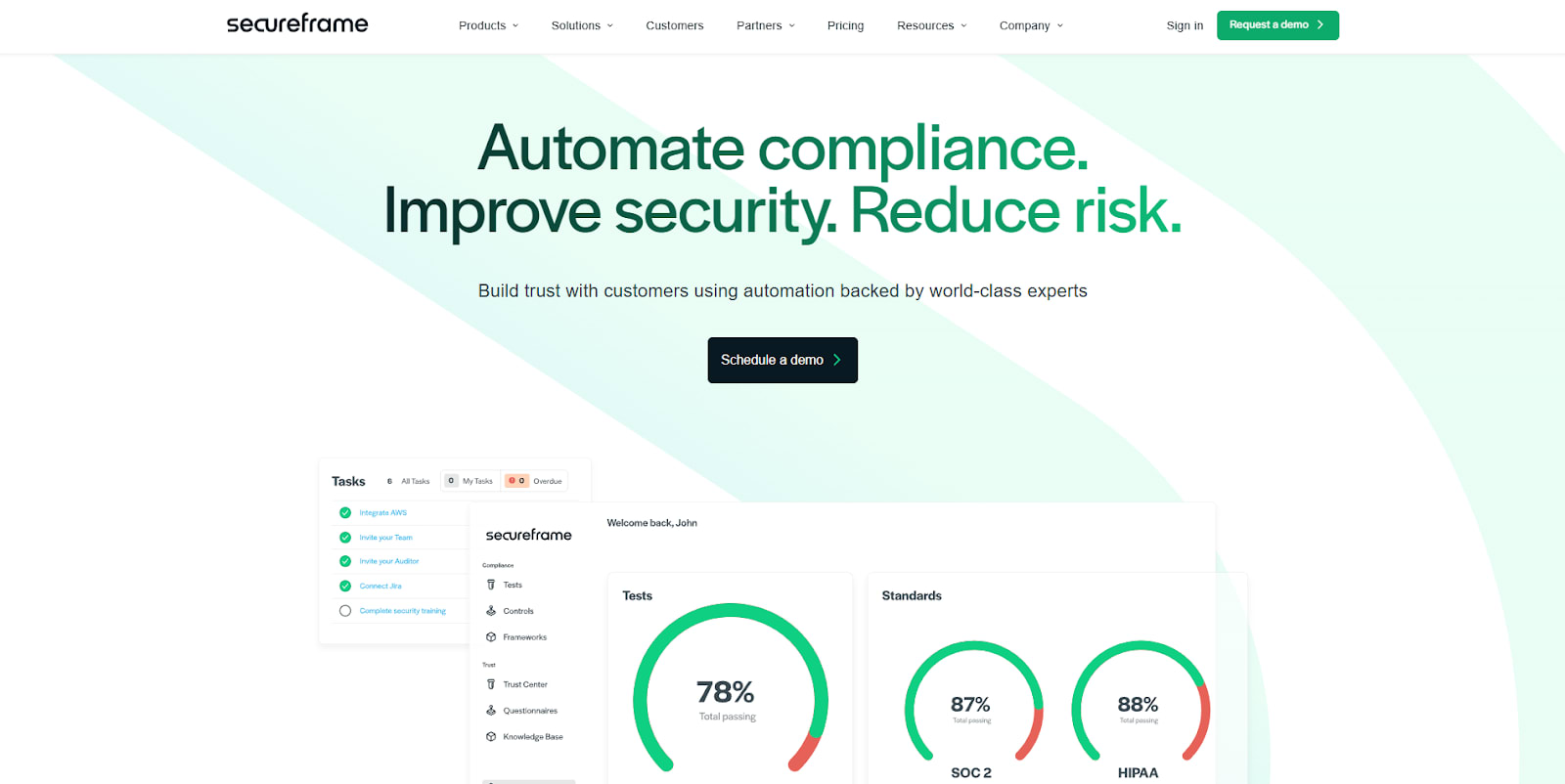
Secureframe is a compliance automation platform that helps companies achieve and maintain SOC 2 attestation through integrations with cloud infrastructure and business applications. The platform was developed to streamline the evidence gathering process and provide organizations with centralized visibility into their compliance posture across connected systems.
Features:
- Automated evidence collection from cloud services
- Compliance monitoring dashboards
- Policy and procedure templates
- Integration with common SaaS tools
- Audit management workflows
- Control mapping capabilities
Purpose
Secureframe automates compliance workflows to reduce the manual effort required for SOC 2 preparation and maintenance across connected business systems.
Strengths:
- Broad integration library covering popular cloud and SaaS platforms
- User-friendly interface with straightforward navigation
- Automated evidence gathering capabilities reduce manual work
- Dashboard visibility into compliance status
Weaknesses:
- Advisory support is limited compared to full-service platforms
- Some advanced features require higher-tier plans
- Reactive rather than proactive guidance model
- Additional frameworks may require upgraded pricing tiers
3. Sprinto
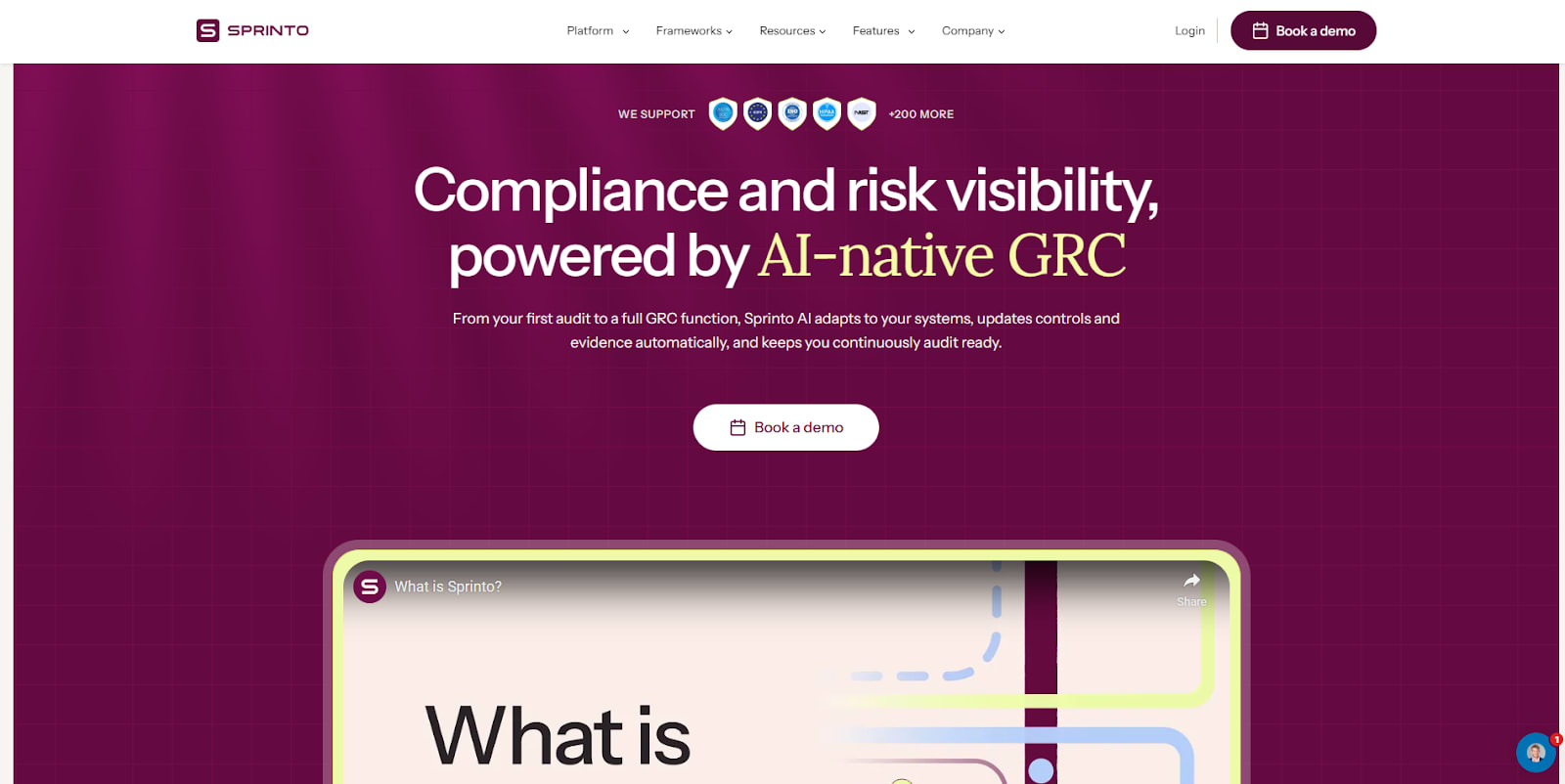
Sprinto offers compliance automation with support for multiple frameworks including SOC 2, ISO 27001, and GDPR. The platform was built to serve organizations seeking to manage several compliance frameworks simultaneously through a unified dashboard and shared control infrastructure.
Features:
- Native connectors for AWS, Google Workspace, and other infrastructure
- Multi-framework support with add-on pricing
- Automated security checks
- Compliance dashboard and reporting
- Risk assessment modules
- Evidence repository
Purpose
Sprinto provides automated compliance monitoring and evidence management across multiple security and privacy frameworks through integrated workflows.
Strengths:
- Extensive integration library with over 200 connectors
- Support for multiple compliance frameworks in one platform
- Automated workflow capabilities reduce manual tracking
- Real-time security check monitoring
Weaknesses:
- Additional frameworks sold as separate add-ons
- Advisory support operates on-demand rather than proactively
- Complexity may exceed what smaller teams require
- Premium features often gated behind higher pricing tiers
4. Scrut Automation
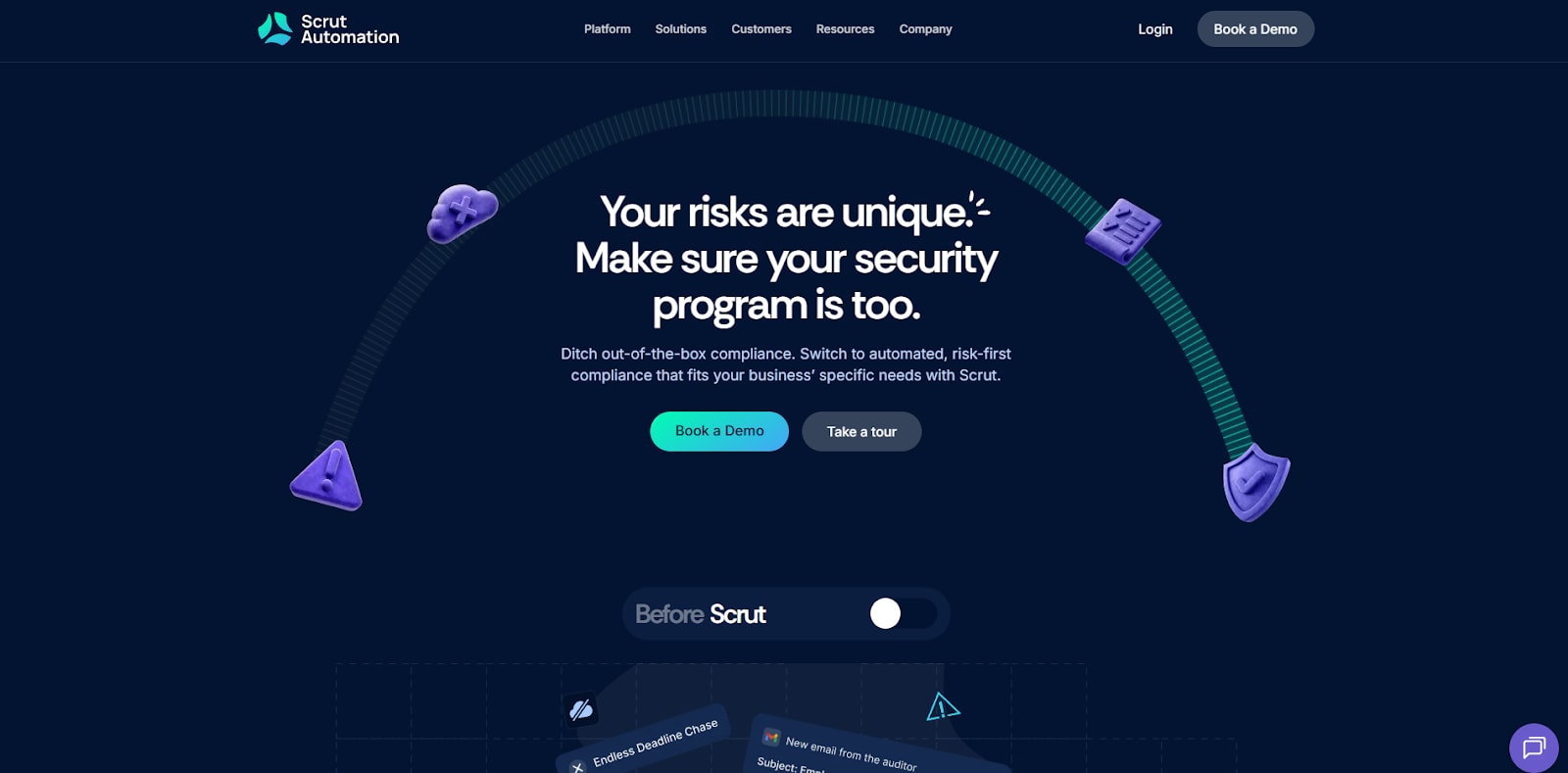
Scrut Automation focuses on continuous compliance monitoring with an emphasis on automation rates and integration depth. The platform was designed to provide organizations with ongoing visibility into control status rather than point-in-time compliance snapshots.
Features:
- Continuous compliance monitoring
- Automated evidence collection
- Risk management modules
- Integration with cloud and SaaS platforms
- Compliance reporting dashboards
- Control tracking workflows
Purpose
Scrut Automation maintains continuous visibility into compliance status through automated monitoring and evidence gathering across connected systems.
Strengths:
- High automation rates for evidence collection
- Real-time compliance monitoring capabilities
- Multi-framework coverage options available
- Integration depth across common platforms
Weaknesses:
- Feature functionality often gated behind higher pricing tiers
- Limited hands-on advisory support
- Complexity in navigation for first-time users
- Additional costs for premium modules
5. Delve
Delve provides compliance automation services with a focus on streamlining audit preparation through integrations and evidence management. The platform was developed to help organizations reduce the time investment required for compliance activities through automated workflows.
Features:
- Evidence automation capabilities
- Integration with business systems
- Audit preparation workflows
- Compliance tracking dashboards
- Policy management tools
- Control mapping features
Purpose
Delve reduces manual compliance effort through automated evidence collection and audit management tools across integrated business applications.
Strengths:
- Integration capabilities with common platforms
- Automated evidence workflows reduce manual gathering
- Audit preparation support streamlines readiness activities
- Centralized compliance tracking
Weaknesses:
- Less established in the market compared to larger competitors
- The advisory support model is reactive rather than proactive
- The feature set may be less comprehensive than alternatives
- Limited multi-framework capabilities
6. Thoropass
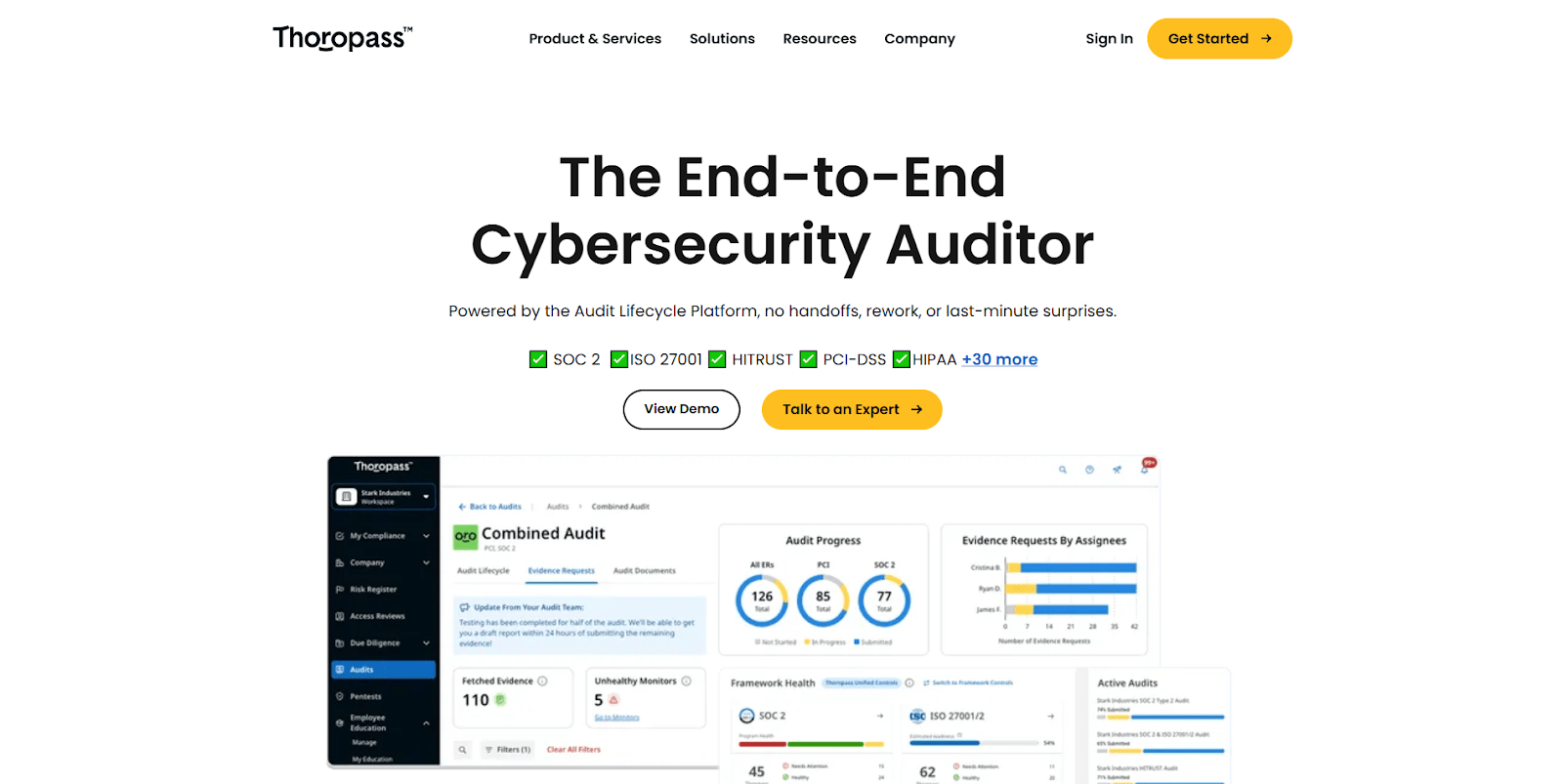
Thoropass combines compliance automation with access to audit services through partnerships with professional firms. The platform was built to create a more integrated experience between software-based preparation and the formal audit process itself.
Features:
- Compliance automation tools
- Embedded audit firm partnerships
- Evidence collection workflows
- Framework support for SOC 2 and ISO 27001
- Policy template library
- Control tracking capabilities
Purpose
Thoropass connects compliance automation with audit services to create an integrated path from preparation through formal attestation.
Strengths:
- Direct access to audit services through the platform
- Integration of automation and professional services
- Streamlined audit coordination reduces friction
- Combined software and audit offering
Weaknesses:
- Partner-based audit model may limit flexibility in auditor selection
- Pricing structure can become complex with bundled services
- Advisory touch points may be limited outside audit windows
- Less focus on ongoing compliance maintenance
7. Hyperproof
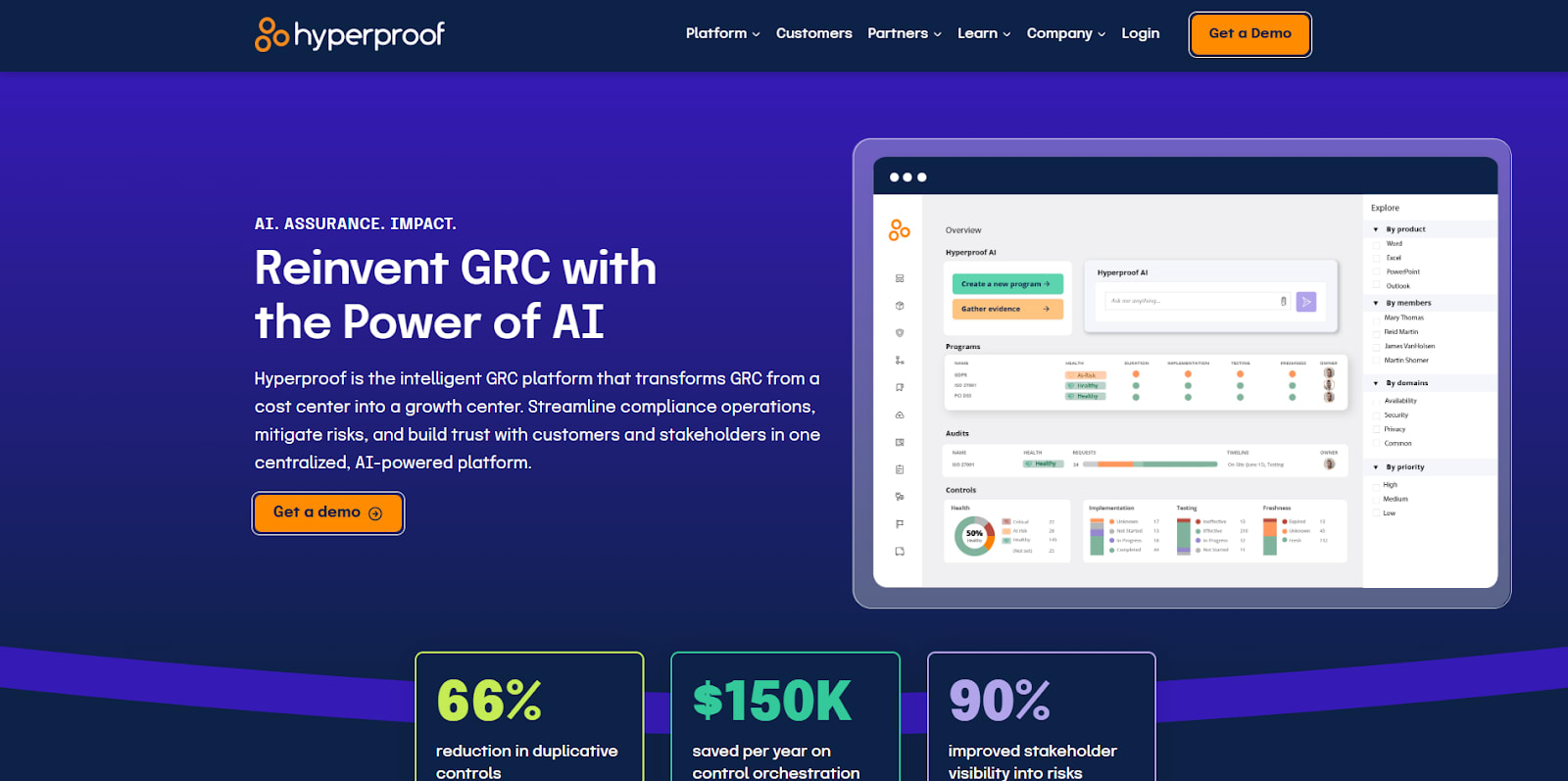
Hyperproof offers a compliance operations platform that extends beyond SOC 2 to support broader risk and compliance management needs. The platform was designed for organizations managing multiple regulatory requirements simultaneously across different business units.
Features:
- Compliance workflow automation
- Risk management capabilities
- Cross-functional collaboration tools
- Evidence collection and storage
- Framework support including SOC 2
- Task assignment and tracking
Purpose
Hyperproof provides a compliance operations center for organizations managing multiple frameworks and regulatory requirements through unified workflows.
Strengths:
- Broad compliance and risk management capabilities
- Collaboration features for cross-functional teams
- Workflow customization options for specific needs
- Multi-framework support in single platform
Weaknesses:
- Broader focus may introduce complexity for SOC 2-only use cases
- Advisory support less specialized in specific frameworks
- May require more configuration than purpose-built SOC 2 tools
- Learning curve for teams seeking simple solutions
8. Drata
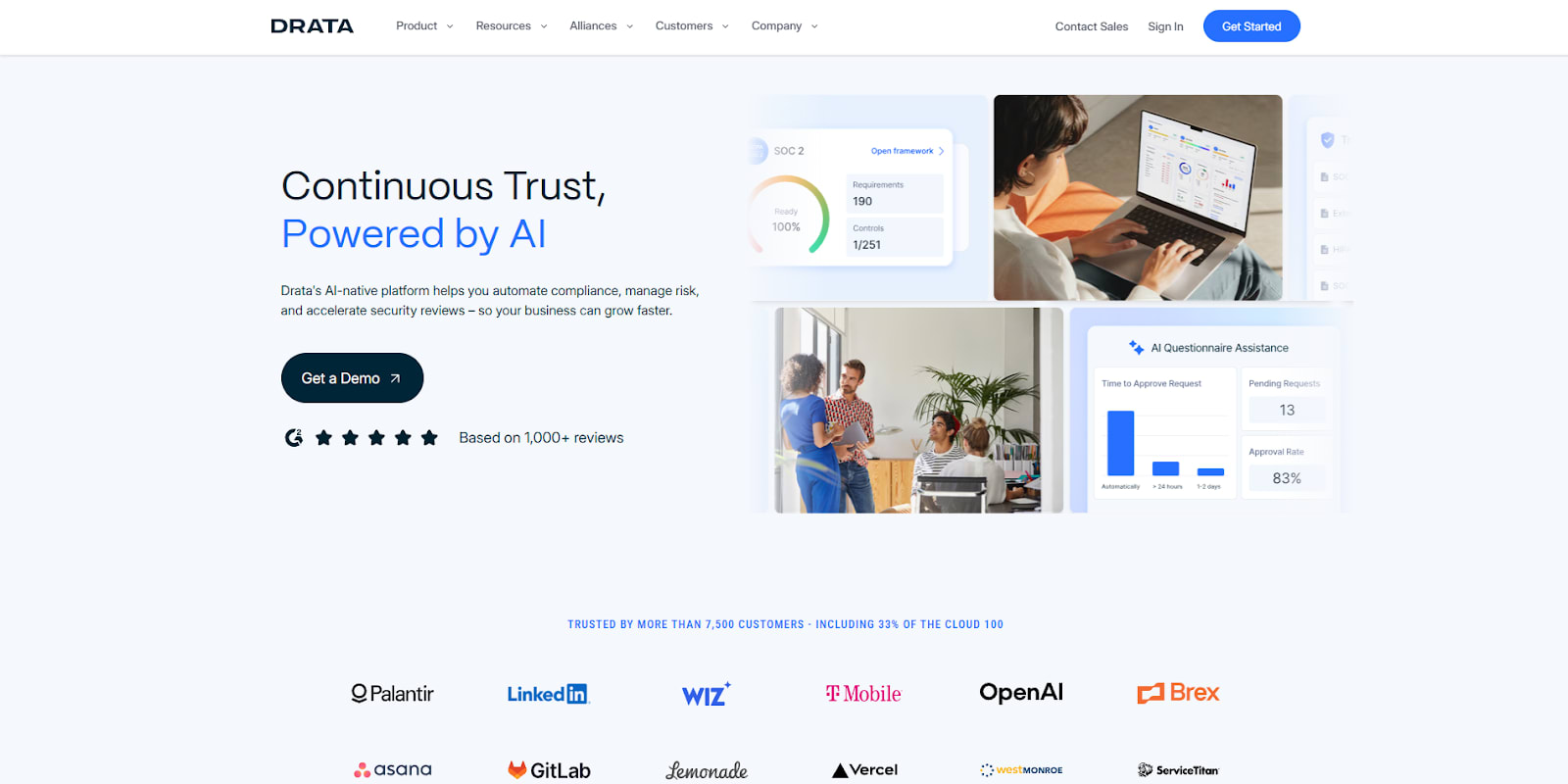
Drata is a compliance automation platform that markets high automation rates and extensive integration capabilities. The platform was developed to minimize manual compliance work through automated evidence collection from connected systems and continuous monitoring workflows.
Features:
- Automated evidence collection with claimed high automation rates
- Continuous compliance monitoring
- Multi-framework support with additional costs
- Integration with cloud infrastructure and SaaS tools
- Compliance dashboards
- Policy management templates
Purpose
Drata automates compliance workflows to reduce manual effort in achieving and maintaining SOC 2 compliance through connected integrations.
Strengths:
- Extensive integration library across popular platforms
- Automated evidence collection capabilities
- Multi-framework coverage available
- Real-time monitoring of control status
Weaknesses:
- Additional frameworks are sold at a high added cost
- The advisory model is reactive rather than proactive
- Feature gating is common on lower-tier plans
- Premium capabilities require upgraded pricing
9. Vanta
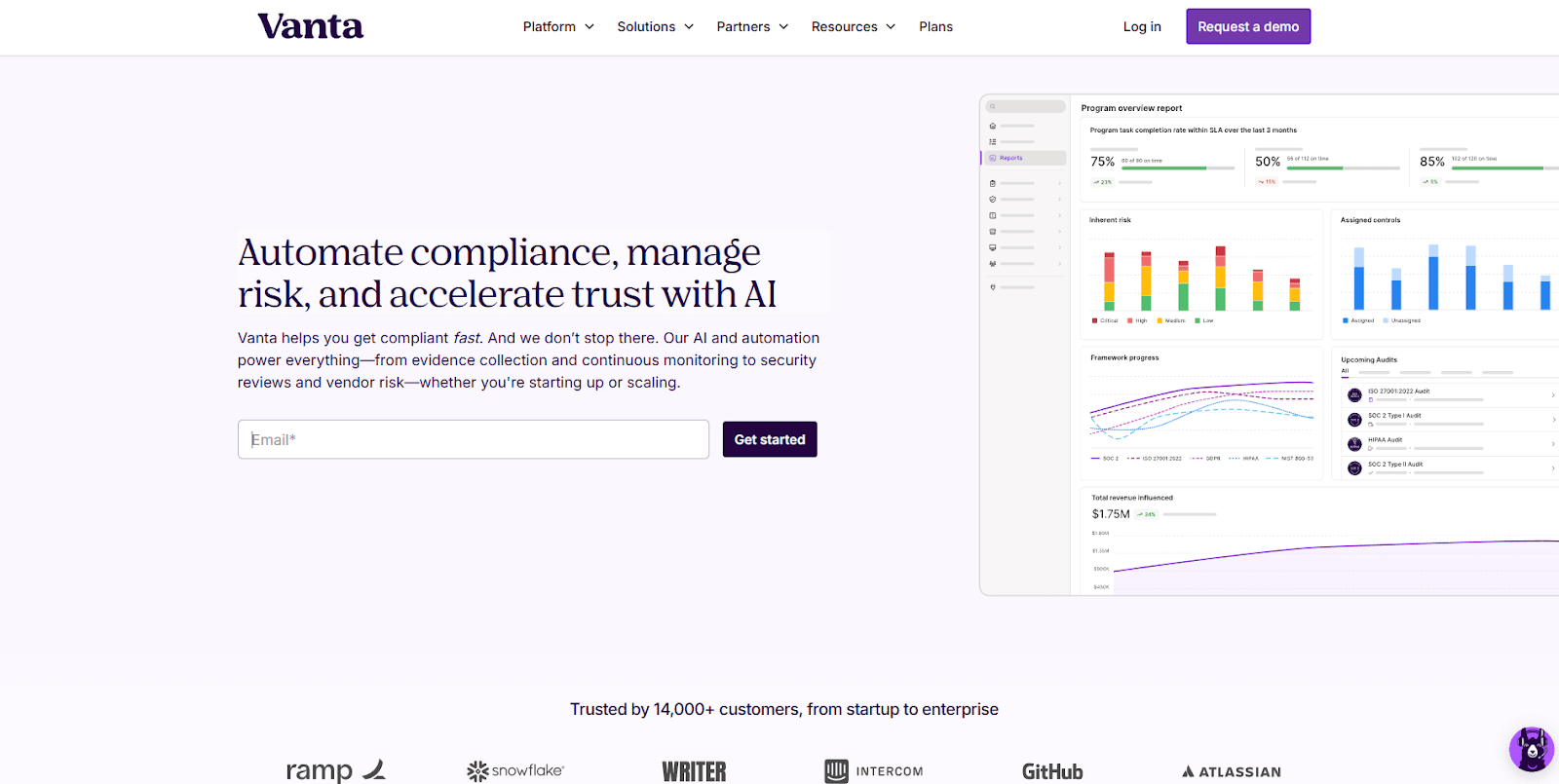
Vanta is one of the larger players in the compliance automation market, offering SOC 2 support alongside other frameworks. The platform markets itself as having the most integrations in the compliance software space and provides automated evidence collection across numerous business and infrastructure systems.
Features:
- Extensive integration library for evidence collection
- Automated compliance monitoring
- Multi-framework support with additional pricing
- Agency bundle with partner advisory services
- Trust center and security questionnaire automation
- Vendor risk assessment tools
Purpose
Vanta provides compliance automation with optional advisory services through partner arrangements for organizations seeking integrated compliance management.
Strengths:
- Large integration library spanning cloud, SaaS, and infrastructure tools
- Established market presence with a broad customer base
- Automated evidence collection capabilities
- Trust center functionality for external communication
Weaknesses:
- Advisory support through the "Agency" bundle does not include proactive weekly calls by default
- Additional frameworks require significant additional investment
- Penetration testing offerings are often limited to automated vulnerability scans
- Premium features are frequently gated behind higher pricing tiers
10. LogicGate
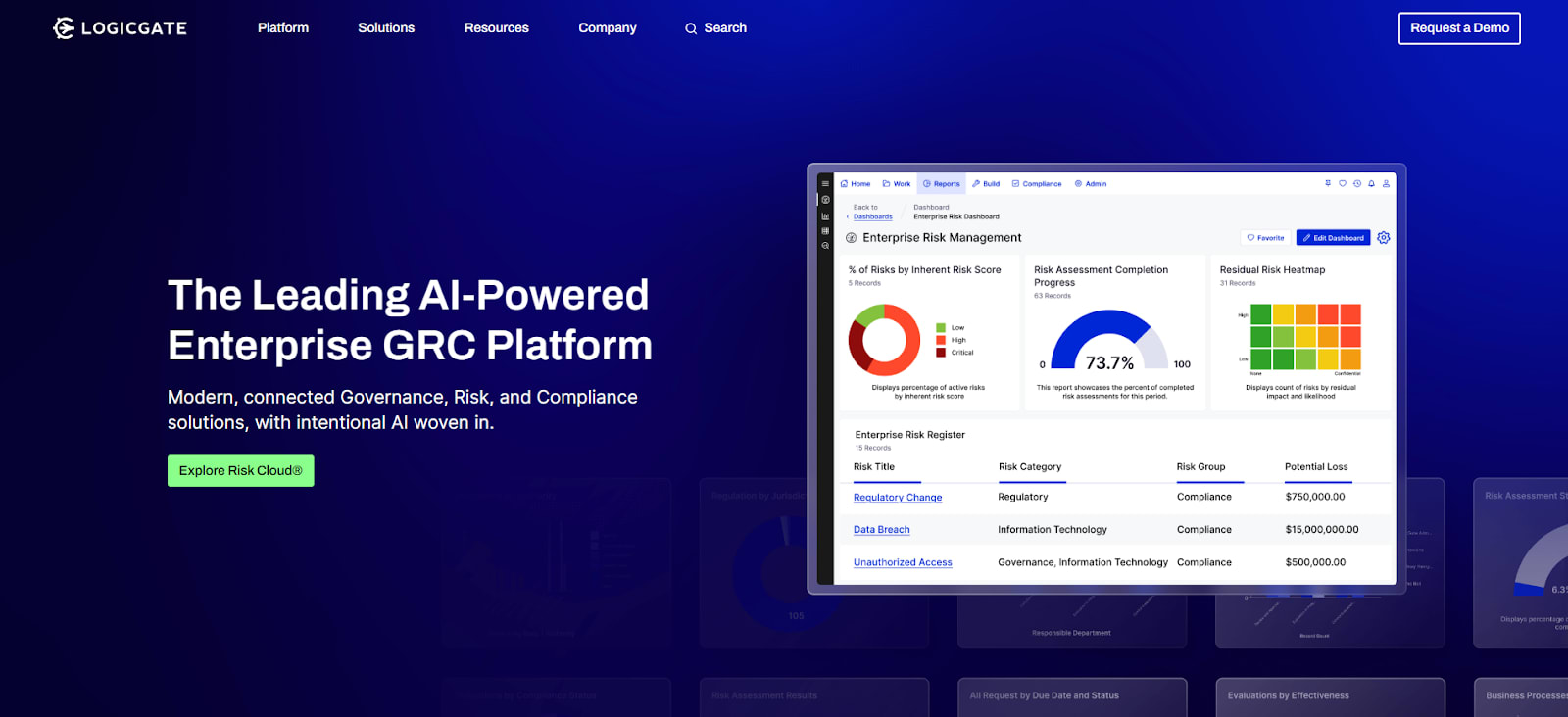
LogicGate offers a risk and compliance platform with workflow automation capabilities that extend to SOC 2 preparation. The platform was designed for organizations that need customizable compliance workflows integrated with broader governance and risk management processes.
Features:
- Customizable compliance workflows
- Risk management integration
- Evidence tracking capabilities
- Collaboration and assignment features
- Framework support, including SOC 2
- Reporting and dashboard tools
Purpose
LogicGate enables organizations to build custom compliance workflows integrated with broader risk management processes through configurable automation.
Strengths:
- Workflow customization and flexibility for specific needs
- Integration of compliance with risk management
- Collaboration features for distributed teams
- Configurable reporting capabilities
Weaknesses:
- Customization requirements may increase implementation time
- Less specialized in SOC 2 compared to purpose-built platforms
- Advisory support focused on platform use rather than compliance expertise
- May require technical resources for optimal configuration
Criteria for Evaluating the Best SOC 2 Compliance Software
Not every compliance platform is built for the same job. Some are better for evidence automation, others for expert guidance, and some focus on multi-framework scalability. To compare them in a fair way, we look at criteria that match the real problems organizations deal with when pursuing SOC 2 attestation:
- Evidence Collection and Automation – Does the tool integrate with existing systems to enable seamless, automated evidence collection?
- Continuous Monitoring Capabilities – Can it detect control gaps, misconfigurations, and policy violations in real time before they become compliance gaps?
- Audit Preparation and Readiness Support – Does it provide clear visibility into audit readiness with task lists and progress tracking?
- Scalability and Multi-Framework Support – Is it able to map controls across other key frameworks such as ISO 27001, HIPAA, or GDPRto avoid duplicate work?
- Workflow Clarity and Usability – Does the interface guide users through complex compliance processes with clear navigation and contextual help?
- Availability of Expert Guidance and Advisory Services – Can teams access dedicated compliance specialists who provide proactive timeline management and hands-on support throughout the SOC 2 compliance journey?
By looking at platforms through these lenses, it becomes clear where each one shines and where it might fall short. This makes the comparison practical and useful for organizations with different needs.
How to choose SOC 2 Compliance Software
The SOC 2 compliance software landscape in 2026 offers diverse approaches ranging from automation-focused tools to comprehensive solutions that pair technology with dedicated expert guidance. Selection decisions should align with internal expertise levels, timeline requirements, and expert support expectations. As compliance requirements and customer expectations continue to evolve, the ability to maintain continuous compliance around-the-clock rather than approaching it as a point-in-time activity becomes increasingly valuable across the SaaS industry.
FAQs about SOC 2 Compliance Software
What is SOC 2 compliance software?
SOC 2 compliance software helps companies prepare for, achieve, and maintain SOC 2 compliance by automating evidence collection, monitoring controls, managing policies, and guiding audit readiness. Top SOC 2 platforms like Scytale combine AI-powered automation with expert support to reduce manual work, increase operational efficiency, and speed up audit timelines.
What does SOC 2 compliance software automate?
Most SOC 2 platforms automate evidence collection from cloud infrastructure and SaaS tools, continuous control monitoring, user access reviews, vendor risk management and audit management. Advanced platforms also provide remediation workflows and continuous compliance tracking.
What features should SOC 2 compliance software include in 2026?
SOC 2 compliance software in 2026 should automate critical SOC 2 processes such as evidence collection and continuous control monitoring, and guide audit readiness. Key features include real-time gap detection, multi-framework control mapping, user access reviews, vendor risk management, and custom policy templates. Strong integrations and clear progress tracking are essential for maintaining continuous SOC 2 compliance.
Is SOC 2 compliance software worth it for startups?
Yes. SaaS startups often use SOC 2 software to offset limited internal compliance resources. Scytale provides customized policy templates, AI-powered automation, and access to dedicated SOC 2 compliance experts, helping early-stage teams achieve SOC 2 attestation faster and avoid audit delays that can block new business opportunities.
Can SOC 2 compliance software support multiple frameworks?
Many platforms support multiple frameworks alongside SOC 2. Scytale allows organizations to manage SOC 2, ISO 27001, HIPAA, GDPR, CCPA, and others using shared controls and evidence, reducing duplicate work and long-term compliance costs.
Comments
Loading comments…