
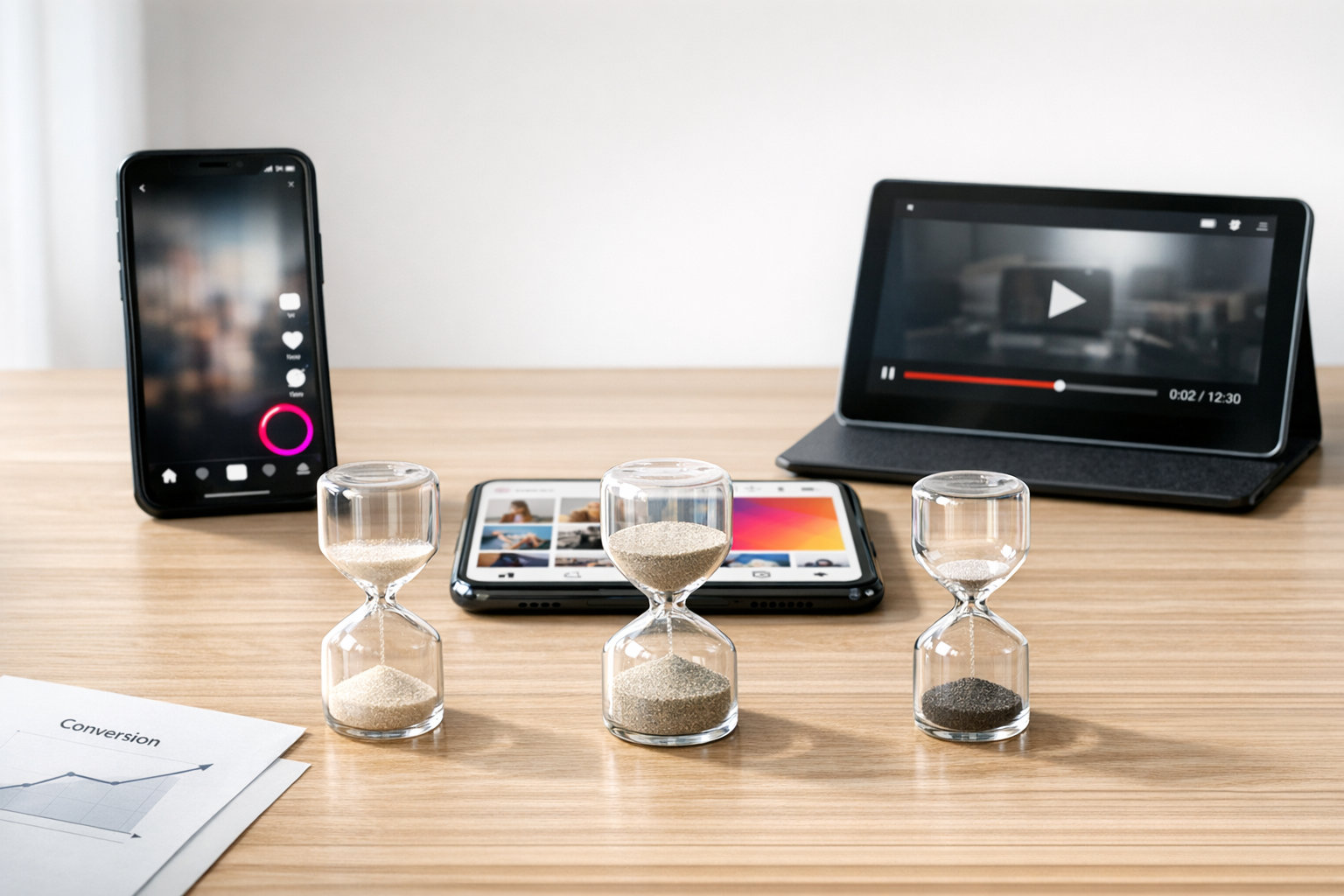
This article examines the differences in time-to-conversion across TikTok, Instagram, and YouTube influencer campaigns. It addresses the unique characteristics of each platform and how they influence conversion timing and measurement. Marketers and developers will learn which metrics matter and how to compare time-to-conversion performance when integrating data into analytics dashboards.
Time-to-conversion measures how quickly users take desired actions after exposure to influencer content, and it is a crucial performance metric for campaign analysis. As brands adopt multi-channel strategies, understanding the nuances of TikTok, Instagram, and YouTube allows marketing teams to optimize timing and platform selection. Kolsquare enables campaign managers to centralize metrics from each social network, supporting clearer comparisons and more insightful reporting. This article explores what drives time-to-conversion on each platform, how to analyze it, and the technical factors that affect cross-platform integration.
Understanding time-to-conversion and its significance
Time-to-conversion refers to the period between a user's exposure to an influencer's content and their completion of a target action, such as making a purchase or registering for a service. It serves as an indicator of both campaign urgency and user engagement depth.
The way users interact with content differs significantly between platforms. On TikTok, viewers often consume high volumes of content in short sessions, leading to swift engagement and sometimes rapid conversions. Instagram’s nature balances immediacy with discovery, while YouTube encourages longer, more in-depth content consumption, often resulting in delayed but higher-value conversions.
Comparing TikTok, Instagram, and YouTube time-to-conversion patterns
TikTok’s algorithm favors viral, bite-sized content that drives immediate emotional responses. Brands notice that product recommendations and calls to action on TikTok can yield conversions quickly, sometimes within hours, thanks to its trending format and direct links.
Instagram, with its Stories, Reels, and static posts, fosters repeated brand exposure. Time-to-conversion here can vary but typically falls between TikTok’s speed and YouTube’s longer cycle, as users often revisit profiles or engage with brands over several touchpoints before converting.
YouTube’s format, centered on long-form videos and community-driven content, means users often sit with product recommendations for days, revisiting or conducting further research before acting. While the platform's time-to-conversion is generally longer, it often brings higher purchase intent and value.
For campaigns spanning multiple platforms, these differing timelines necessitate carefully calibrated attribution windows to ensure fair and actionable comparisons.
Measuring and integrating time-to-conversion across platforms
To accurately capture time-to-conversion, marketers must align tracking methodologies across TikTok, Instagram, and YouTube. Implementing UTM parameters, pixel tracking, and unique promotional codes helps tie user actions to specific content and measure delays from view to conversion.
Centralized analytics dashboards must account for each platform’s data export frequency and granularity. While TikTok often reports engagement in real time, Instagram may require more manual export or third-party integration, which can affect metric freshness. YouTube’s API enables detailed tracking, but analyzing long-form content requires careful segmentation for meaningful interpretation.
Marketers rely on consistent definitions of conversion events and time-stamped engagement data to make fair comparisons. Automated workflows, platform APIs, and external solutions streamline the process, ensuring comprehensive, synchronized reporting.
Data partners like Kolsquare offer standardized integrations that allow brands to aggregate time-to-conversion data per platform without heavy custom engineering or manual reconciliation, enabling marketing teams to focus on strategy and optimization.
Optimizing campaigns for platform-specific time-to-conversion
Successful campaign design considers what motivates users on each platform to complete conversions and how quickly they do so. On TikTok, leveraging trends and time-sensitive calls to action maximizes rapid response. Instagram campaigns often benefit from sustained storytelling or product education spread over multiple posts and formats.
With YouTube, brands see results by creating comprehensive demonstrations, reviews, and influencer endorsements, accepting that conversions may trail initial exposure. Analytical models should therefore be adjusted to accommodate longer attribution windows, giving credit for actions that happen days after viewing content.
Adapting messaging and creative assets to fit each platform’s typical consumption habits directly influences the timeliness and rate of conversions. By tailoring measurement and campaign tactics, marketers can capitalize on the strengths of TikTok, Instagram, and YouTube to improve ROI and drive more predictable outcomes from their influencer strategies.
Comments
Loading comments…