Hiring overseas contractors can give businesses access to specialist skills, which promote long-term growth and flexibility. However, one of the biggest compliance risks when managing an overseas contractor is worker misclassification.
Worker misclassification can result in significant financial penalties, tax errors, and other legal complications. In addition, it can disrupt business operations and damage reputation, particularly if it affects multiple workers.
This article explores worker misclassification, four compliance mistakes that trigger misclassification, and how a contractor of record (CoR) provider could reduce the risk.
What Is Worker Misclassification?
Worker misclassification occurs when a business classifies someone as a contractor even though the nature of their working relationship means they should legally be considered an employee.
An employee works as part of the business, usually receiving a regular salary or wage and statutory benefits. Meanwhile, a contractor operates more independently and is required to invoice the business for their services and handle their own taxes.
Other differentiating factors include the business’s level of control, the working hours, the nature of the services provided, and the tools or systems used.
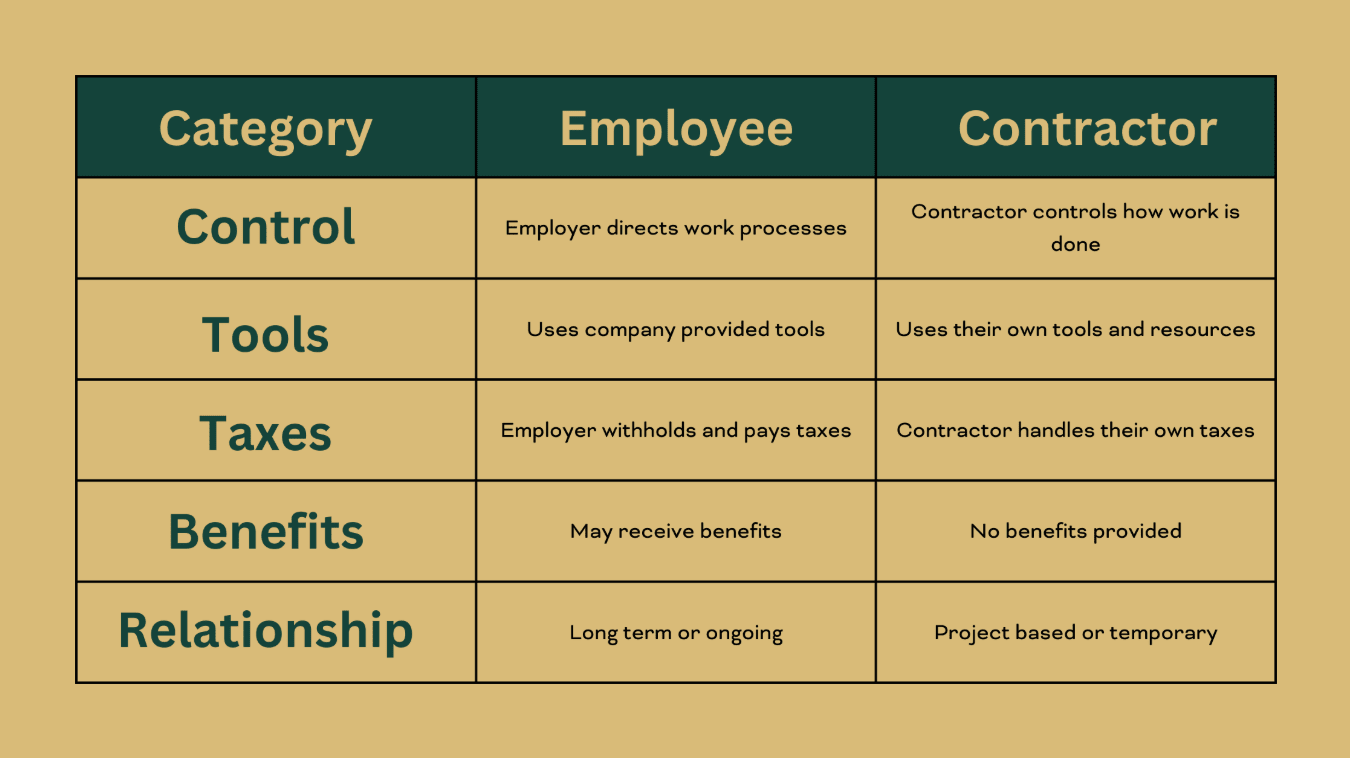
(Image Source: Hemisphere Consultants)
Hiring a contractor or signing an independent contractor agreement does not necessarily determine their legal status. Authorities may instead look at the working relationship in practice.
Four Misclassification Compliance Mistakes
The following four compliance errors are among the most common causes of misclassification, so they’re important to keep in mind when onboarding new employees:
1. Assuming Contractor Agreements Protect Against Misclassification
One common mistake is assuming that having a signed contractor agreement automatically protects your business from misclassification.
A contractor agreement is important, but authorities are more likely to consider the true nature of the working relationship.
For example, an overseas worker might sign a contractor agreement but be required to work fixed hours, report to a manager, and follow the same procedures as employees. Depending on the country's laws, these factors could indicate they are an employee, not a contractor.
To avoid worker misclassification, businesses should assess all factors of the contractor agreement, rather than relying solely on the contract's title.
2. Exercising Too Much Control Over Contractors
Independent contractors generally work independently. Whilst this doesn’t mean a business can’t set expectations or deadlines, exercising too much control over a contractor can increase the risk of worker misclassification.
For example, requiring a contractor to follow a fixed schedule, work exclusively for the business, use specific systems, and receive ongoing supervision could make them seem more like an employee.
To avoid worker misclassification, businesses managing overseas contractors should consider letting the contractor decide when, where, and how they work.
3. Hiring Contractors For Permanent Roles
Using overseas contractors for specific projects or specialist assignments is a great choice for many businesses. However, hiring someone as a contractor for an ongoing role that is central to the company's operations can create misclassification risks.
For example, a company might hire an overseas contractor to complete a short-term project. Once that project ends, the contractor’s agreement should end. The working relationship can look different if the same contractor continues working indefinitely for the business.
The longer and more integrated the working relationship becomes, the more important it is to reassess whether the contractor classification remains appropriate.
4. Ignoring Local Classification Rules
UK businesses should not assume that the local rules around worker classification, tax obligations, and invoicing are the same in other countries.
Each country has its own factors for determining whether someone is an employee or contractor. Some may place particular emphasis on control, pay arrangements, or integration into the business.
Before hiring an overseas contractor, businesses should better understand the rules that apply in the country where the individual actually performs their work. This can be particularly complex when a business hires contractors from multiple countries with different regulations.
Working with a contractor of record (CoR) provider is a great way to remain compliant, as they can have country-specific expertise.
Can a Contractor of Record Reduce Misclassification Risk?
Businesses that want to work with international contractors but are concerned about compliance issues may consider using a CoR provider.
A COR provider is a third-party service that legally hires contractors on behalf of a business and takes responsibility for onboarding, documentation, payments, compliance support, and other administrative tasks. This approach allows businesses to work with overseas contractors whilst reducing the risk of misclassification.
However, businesses should still assess whether the worker's independence and job responsibilities are genuinely suitable for contractor classification, as a CoR provider is not a guaranteed way to make the nature of the employment relationship compliant.
Managing Overseas Contractor Compliance
Overseas contractors can give businesses flexibility and access to specialised talent, but working relationships need to be assessed carefully on a continuous basis.
Businesses should either genuinely understand local classification rules or work with a CoR provider who can help manage administrative and compliance processes for overseas contractors.
By taking a proactive approach to worker classification, businesses can reduce compliance risks while building a global workforce that supports long-term growth.
Further Reading
Discover more articles on similar topics across our network



Comments
Loading comments…