Cloud computing stopped being just infrastructure a few years back. Today, it's the foundation for scaling products, running data workloads, and training AI models. But companies increasingly hit walls that aren't about tools or platforms. They struggle with implementation. You can buy all the cloud services you want, but if the architecture is wrong or the migration strategy doesn't exist, nothing works.
The market is flooded with contractors. Most of them handle basic setups, lift-and-shift migrations, and cookie-cutter deployments. That's fine if your needs are simple. But if you're dealing with complex systems, distributed architectures, or regulatory constraints, the options shrink fast. We looked at dozens of providers and picked four that actually know how to build complicated cloud systems from scratch.
Why Cloud Projects Fail More Often Than Expected
The technology works. AWS, Azure, and Google Cloud are mature, stable, and well-documented platforms. The failures aren't usually the cloud's fault. They're architectural. Companies start building without a clear strategy, pick services because they sound cool, and discover too late that their design doesn't scale or costs spiral out of control. Migration complexity gets underestimated constantly. Moving data and applications sounds straightforward until you hit dependencies nobody mapped.
Look at any post-mortem for a failed cloud initiative, and the same patterns appear. According to our data, the most common reasons cloud initiatives fail include:
- Lack of clear cloud architecture from the start;
- Underestimating migration complexity and costs;
- Poor integration with existing on-premise or legacy systems;
- Weak DevOps practices and missing automation;
- Ignoring security requirements and compliance from day one.
A good partner flags these risks before you sign anything. If they don't, run.
What Actually Makes a Cloud Development Company Reliable
There's a difference between a team that writes code and a team that owns outcomes. The reliable ones think in systems. They ask questions about traffic patterns, failure modes, data consistency, recovery time objectives. They don't just ask what stack you want to use. They ask what problem you're solving and why.
When we evaluate providers, we ignore the marketing pages and look at track records. Engineering teams that have recovered from production outages, migrated petabyte-scale data sets and untangled legacy spaghetti are the ones worth talking to. When evaluating providers, these factors matter the most:
- Ability to design cloud-native systems that actually scale;
- Hands-on experience with AWS, Azure, or GCP, not just certifications;
- Proven delivery in complex, multi-system environments with real constraints;
- Strong DevOps and automation capabilities, not afterthoughts;
- Long-term support approach and willingness to fix what they broke.
These criteria filter out the agencies that build quick MVAs and disappear. The companies below made the cut.
Top Cloud Development Companies Worth Considering in 2026
We picked these based on actual projects, not marketing claims. They work with Canadian clients but operate globally. Some focus on enterprise, others on mid-market. What they share is engineering depth. They don't outsource architecture decisions to junior developers. They take responsibility. Here they are.
1. Euristiq

Euristiq operates in the space where systems get complicated. They're not a shop that cranks out basic CRUD apps. Their clients come with messy problems: legacy systems that need modernization, data pipelines that break at scale, compliance requirements that make standard approaches impossible. Euristiq cloud development provider has built a reputation on handling the stuff other teams avoid. Enterprise, deep-tech, high-stakes infrastructure. The kind of work where mistakes cost real money.
Engineering Depth Behind Complex Cloud Systems
The difference shows in how they approach architecture. Most teams jump to coding. Euristiq spends time on design, thinking through failure scenarios, data flows, scaling bottlenecks. They've done enough migrations to know what breaks. According to our analysis, their core engineering capabilities include:
- Design of cloud-native architectures from scratch for demanding workloads;
- Migration and modernization of legacy systems without data loss;
- Infrastructure optimization and performance tuning when costs get out of hand;
- DevOps automation and CI/CD implementation that actually deploys;
- Integration with AI, IoT, and data platforms where complexity compounds.
If your project involves multiple systems, regulatory scrutiny, or unpredictable scaling, this is the team to call. They don't do simple.
Where This Team Delivers the Most Impact
SaaS companies hitting growth ceilings. Enterprise teams stuck with decade-old architectures. High-load systems that buckle under traffic. Euristiq works best where standard solutions fail and off-the-shelf advice doesn't apply. They're expensive, probably. But cheaper than rebuilding after a failed migration.
2. Adastra
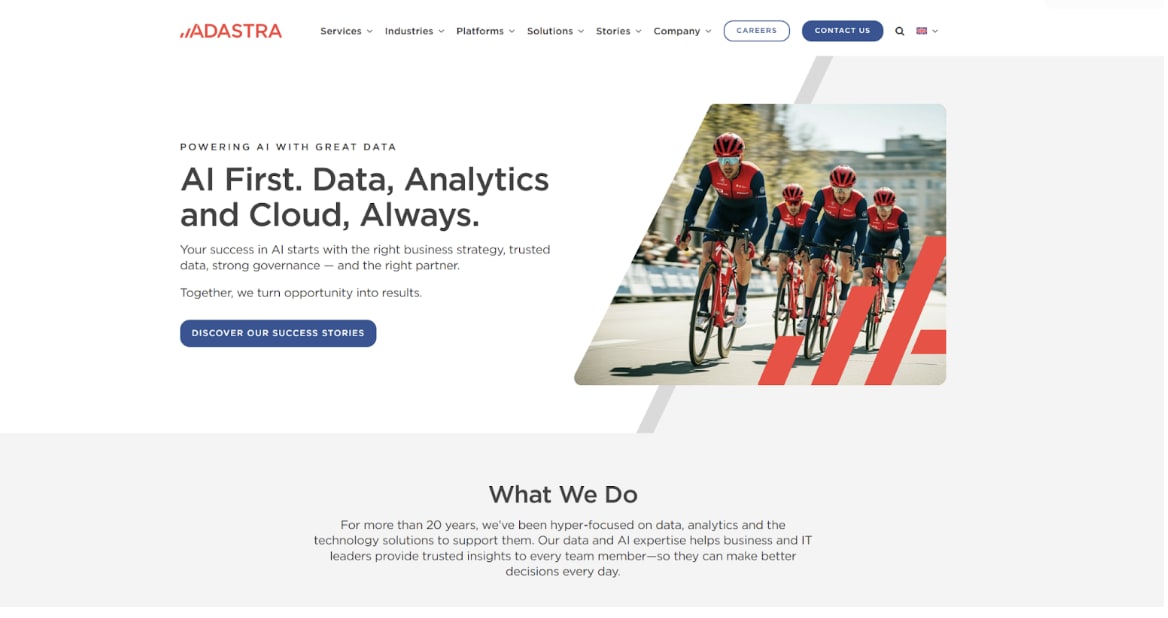
Adastra comes from the data world and it shows. Their cloud practice grew out of data warehousing, analytics, and governance. That means when they talk about cloud, they're thinking about where the data lives, how it moves, who can access it, and what regulations apply. Enterprise clients like that. Banks, telecoms and large retailers are organizations with compliance teams and audit trails. Adastra speaks their language.
How Adastra Combines Cloud and Data Strategy
The integration of cloud and data isn't an afterthought for them. It's the starting point. They ask about data lineage, retention policies, reporting requirements before they pick cloud services. This matters more as companies get fined for data mishandling. Their key areas of expertise include:
- Cloud strategy and data architecture designed for regulatory environments;
- AI and advanced analytics integration that uses actual company data;
- Enterprise-scale cloud transformation with minimal business disruption;
- Data governance and compliance solutions that satisfy auditors.
For companies where data is sensitive, regulated, or the primary asset, Adastra makes sense. They won't treat your data like a generic workload.
3. Gravit-e Technologies
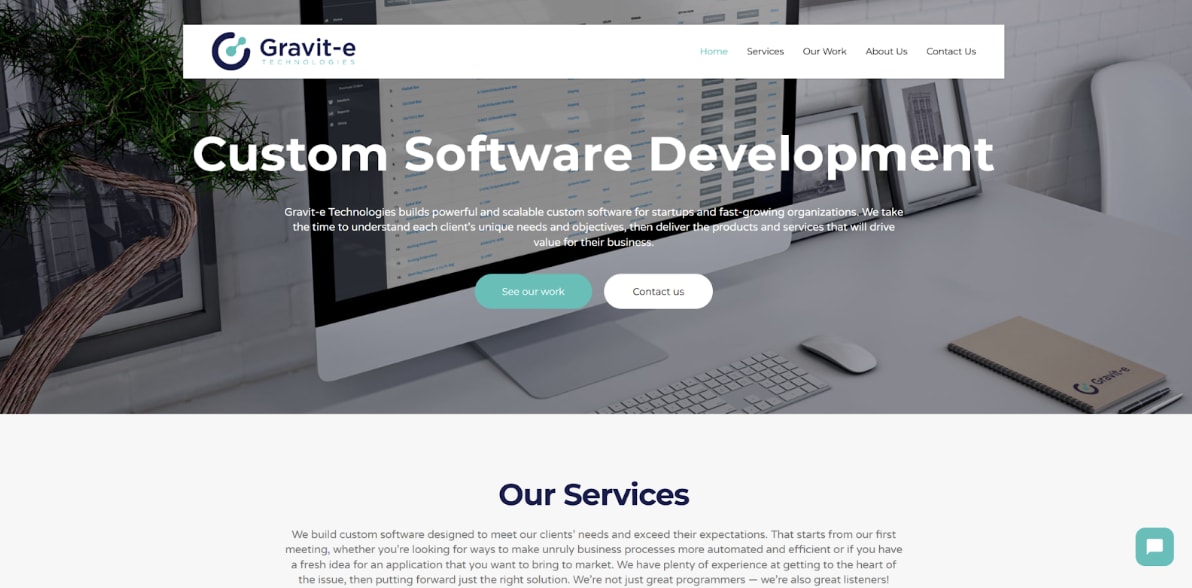
Mid-size, Canadian, focused on getting things done without heroics. Gravit-e builds custom cloud applications for companies that need reliability over innovation theater. They're not chasing the latest serverless fad unless it solves an actual problem. The work is solid, the team communicates, and they don't overengineer solutions. For medium-sized businesses with specific requirements, that's often exactly what works.
Reliable Custom Development Without Overengineering
The temptation in cloud development is to build everything distributed, event-driven, microserviced to death. Gravit-e pushes back when it doesn't make sense. They've seen enough projects collapse under their own complexity. According to clients we spoke with, their main strengths include:
- Custom cloud application development that matches actual business needs;
- Backend systems and integrations that don't break with every update;
- Scalable infrastructure setup without unnecessary frills;
- Long-term product support and maintenance, not just handoffs.
If you're growing, have specific requirements, and want a partner that stays, Gravit-e is worth the conversation.
4. Denologix
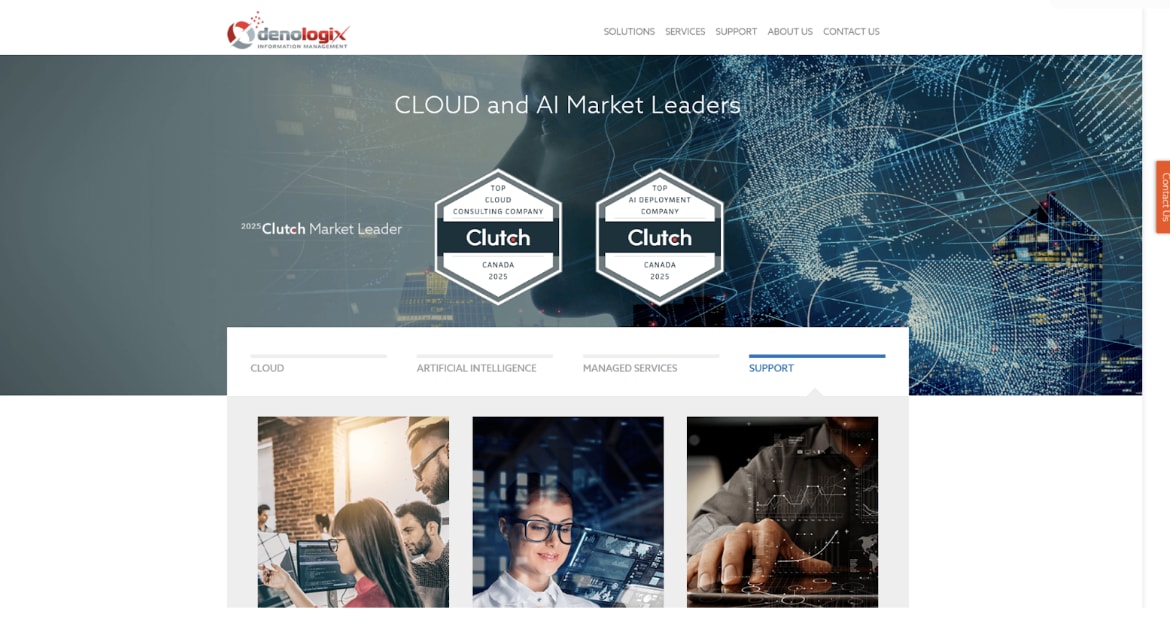
Denologix sits at the intersection of cloud and business intelligence. Their background is in data platforms, reporting infrastructure, and analytics systems. That means when they build cloud solutions, they're thinking about how data flows from source to dashboard. Enterprise clients with complex reporting needs tend to gravitate toward them.
Building Cloud Solutions Around Data Infrastructure
The architecture starts with the data. Where it comes from, what format it's in, who needs to see it, how fast it changes. Denologix builds the cloud infrastructure to support those requirements, not the other way around. Their key capabilities include:
- Cloud integration and consulting for data-heavy environments;
- Business intelligence and analytics systems that actually perform;
- Enterprise data platforms with governance built in;
- Scalable reporting infrastructure for operational and strategic needs.
If your business runs on reports, dashboards, and data-driven decisions, Denologix builds what you need. The cloud is just how they deliver it.
Final Thoughts
Cloud development isn't simple anymore. The platforms offer infinite options, and infinite options mean infinite ways to make mistakes. Good partners reduce that risk. They've made the mistakes already, learned the lessons, and know what breaks. For complex systems, Euristiq stands out. For data-heavy work, Adastra and Denologix deliver. For straightforward custom development, Gravit-e works. Pick based on your problem, not their website.
Further Reading
Discover more articles on similar topics across our network

Comments
Loading comments…