
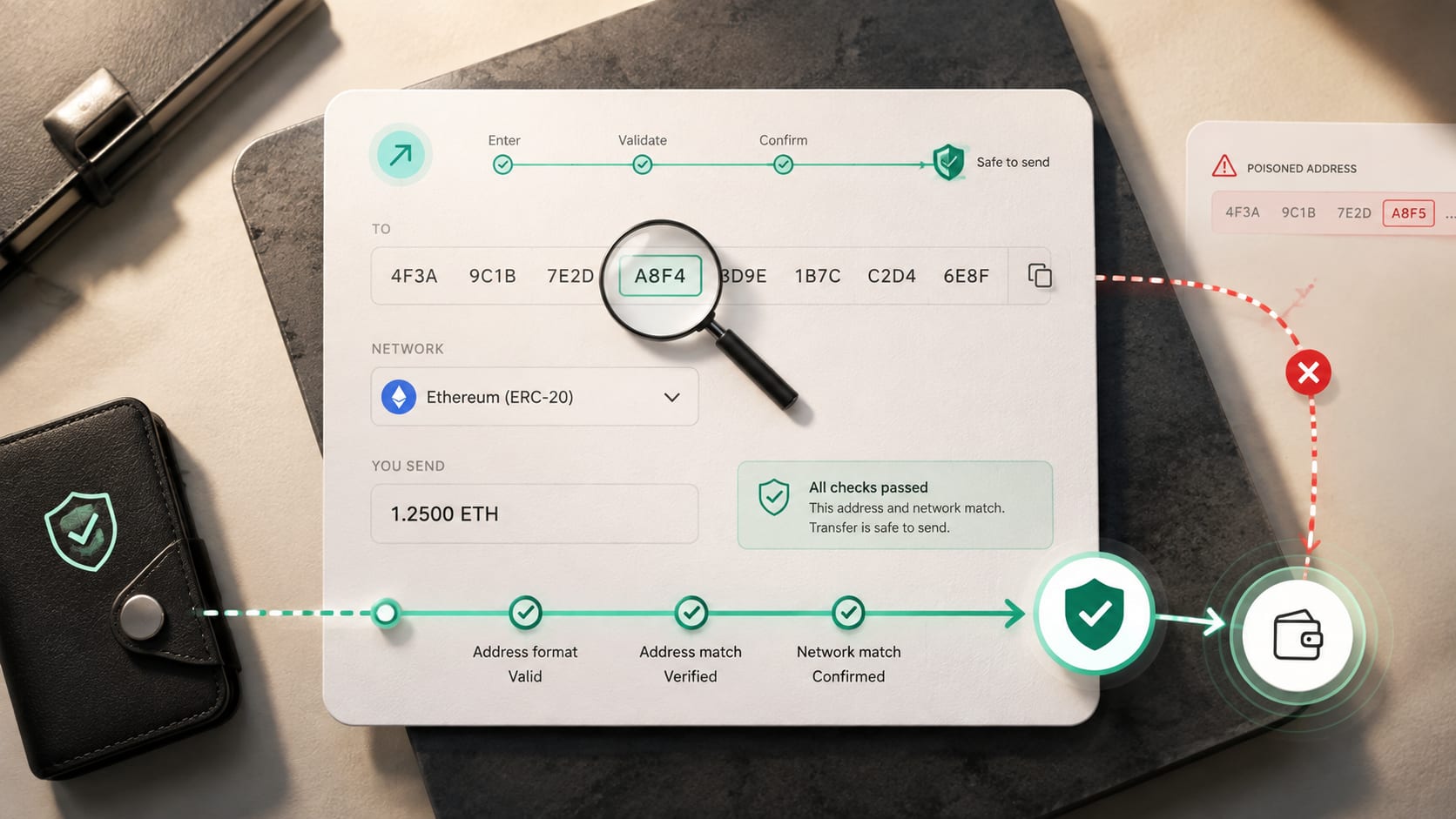
A cryptocurrency deposit form may look like a thin layer between an application and a wallet. In practice, it is the last place where the product can help a user catch a costly mismatch before a transaction is signed. The interface has to keep the asset, network, destination address, and amount aligned. If one changes between address retrieval and approval, the blockchain may accept the transfer, even though the application cannot use it as intended. Good crypto deposit address security therefore begins with the form, not with a warning shown after broadcast.
A 2025 USENIX study of blockchain address poisoning measured 270 million attack attempts, targeting 17 million potential victims across Ethereum and BSC. The researchers associated 6,633 incidents with at least $83.8 million in losses. The attack exploits an ordinary interface habit: users often select a destination from recent transaction history and compare only the first or last few characters. An attacker can place a similar-looking address in that history, turning a familiar shortcut into a route to the wrong recipient.
Treat the Destination as One Transaction
A deposit address only makes sense when read alongside the other details that define the transfer. The same asset label can appear on more than one network, while an address may be valid in format yet still belong to the wrong destination or an expired session. Once the wallet broadcasts the transaction, those separate choices become one irreversible instruction. The interface should therefore keep the asset, network, receiving address, and amount visible together until the user has compared the destination generated by the application with the transaction the wallet is preparing to sign.
That relationship becomes especially important when cryptocurrency is used to fund an online casino account. The transfer does not move directly into a game. It first has to travel over the supported network, reach the address created for the correct account, and be detected as the expected asset before the casino balance can change. A confirmed blockchain transaction and a credited casino deposit are therefore separate events. The network records that value reached an address, while the receiving system still has to identify the payment and associate it with the intended account.
Before sending funds to mbitcasino, the user should return to the active casino deposit session, rather than copying an address from an earlier transfer or wallet history. The asset selected in the casino account must match the asset being sent, and the network shown beside the deposit address must match the network chosen in the wallet. The full destination should then be compared at the signing stage, particularly after it has passed through the clipboard.
The amount also needs to remain visible, so the final wallet approval reflects the intended deposit. Once broadcast, a transaction hash and a clear pending state help distinguish an active transfer from one that was never submitted. That distinction matters during casino deposits because an unchanged playable balance may tempt the user to send the payment again, even though the first transaction is still waiting to be detected or confirmed.
The safest verification order follows the transaction itself. Identify the asset, confirm the network and contract where relevant, retrieve the address from the current deposit session, and then compare the complete set of values before signing. A later account message cannot recover funds sent to an incorrect destination, while a familiar ticker or previously used address cannot establish that the present transfer is correct.
Match Each Aspect to a Control
Advice to “check the address” leaves the implementation undefined. Product teams need to decide what the user sees, what the application compares, and how each failure is tested.
The user should not have to infer whether two identical tickers refer to the same token. A QR code reduces manual typing, but it does not establish trust by itself. A compromised page can display the wrong code, and malware can interfere elsewhere in the process. The stronger pattern is comparison across independent surfaces: the address generated by the application, the value shown by the wallet and, where available, the destination displayed by a separate signing device.
Know Where Interface Protection Ends
Even a careful confirmation screen cannot secure an already compromised endpoint. In June 2026, outlets have documented crypto-clipper malware that monitored clipboard contents and substituted cryptocurrency addresses. Some replacements preserved familiar characters from the original value, directly weakening checks based only on a prefix or suffix. The same campaign also used screenshot capture and remote code execution, showing why a visual comparison cannot compensate for a device under attacker control.
All of that demonstrates that the deposit form still has a clear and useful job. It should make the complete transaction visible, detect inconsistencies the application can observe, name each state accurately, and make confirmation difficult to skip. The practical boundary is simple: the interface cannot guarantee a clean device, but it can prevent convenience features from quietly overriding the user’s intended destination.
Further Reading
Discover more articles on similar topics across our network


Comments
Loading comments…