
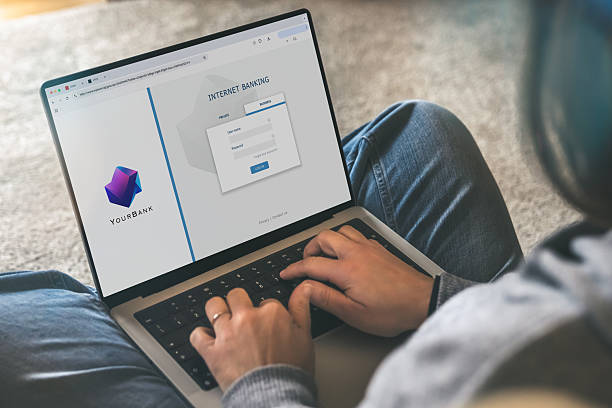
Imagine opening a service you have never used before and seeing a familiar option: sign in through your bank. You tap it, authenticate with your usual banking method, approve the request and return to the service with your identity confirmed.
There is no new password to invent, no lengthy registration form to complete and potentially no need to upload identification documents. That simple interaction points toward a larger change in digital identity. Banks already sit at the center of highly regulated authentication systems, so their role could extend beyond managing money into proving who you are elsewhere online.
The idea is more sophisticated than putting a bank logo on a login screen. In the U.S., a bank could potentially confirm selected facts about you without giving another company unrestricted access to your financial account. The growing use of open banking and consumer-permissioned financial data sharing demonstrates the underlying principle: third-party providers can request specific account information through controlled connections, with you deciding what information to share.
U.S. financial data-sharing frameworks increasingly emphasize consumer consent, secure connections and control over access. The CFPB’s personal financial data rights rule covers information from bank accounts, credit cards, mobile wallets and payment apps, allowing consumers to authorize third parties to access specific financial data. That distinction matters; your bank can become a trusted identity checkpoint without becoming a universal password shared across the internet.
Why banks are natural identity providers
Banks possess something most websites struggle to establish: a verified relationship with a real person. Opening a U.S. bank account generally involves identity checks, financial information, regulatory requirements and ongoing authentication. Every time you sign into your banking app, the institution has another opportunity to establish that the person requesting access is the legitimate customer.
U.S. financial regulators already treat authentication and customer verification as important security functions. Federal requirements such as the Customer Identification Program require banks to collect and verify certain identifying information when customers open accounts. That infrastructure creates a strong foundation for digital identity services.
The most interesting development is the separation of identity from financial information. A service might need to know that you are over a certain age, live in a particular country or have passed an identity check. It does not necessarily need your account balance, transaction history or payment details.
Good identity architecture therefore works on a principle of minimum disclosure: reveal the fact required for the transaction while keeping unrelated information private. That approach could make digital registration dramatically simpler. You could move between trusted services with fewer forms, fewer passwords and fewer opportunities for criminals to capture reusable credentials.
The Finnish example shows where this gets practical
This concept already has a visible connection to online services. Current information about suomalaiset nettikasinot describes Finnish-focused casino sites that can use bank authentication as part of registration, with some services allowing users to begin through their banking credentials.
That model illustrates why bank-based identity is attractive: the user can authenticate through an institution already familiar with their identity, then return to the service with account creation handled as part of the process. It also shows why identity, payments, regulation and user experience increasingly overlap in digital services.
Finland is also approaching a significant regulatory transition. The Finnish government confirmed in January 2026 that its new Gambling Act will open betting, online slot and casino games and online money bingo to competition under a licensing system. Most provisions are scheduled to take effect July 1, 2027.
That wider regulatory change makes reliable identity verification particularly relevant for digital services operating in Finland. Authentication can help connect a person to a legitimate account, support age and identity checks and create a clearer line between the individual using a service and the regulated operator providing it.
Convenience comes with a concentration problem
There is an obvious appeal here. If your bank becomes one of the places that can authenticate you elsewhere, signing up for services could become quicker and less repetitive. You might also face fewer password resets and fewer accounts containing personal information.
Passkeys are pushing authentication in a similar direction, using a device credential protected through a fingerprint, face scan, PIN or pattern. The FIDO Alliance describes passkeys as cryptographic credentials tied to an account, removing the need for traditional shared passwords during supported sign-ins. Banks could combine strong authentication with verified identity data to create a remarkably frictionless experience.
The tradeoff is concentration. If one bank becomes a gateway to dozens of unrelated services, losing access to that bank could become much more disruptive. A compromised banking account could also carry consequences beyond unauthorized financial activity if identity services are connected too broadly.
That makes recovery, account separation, consent controls and alternative authentication methods fundamental design requirements. The goal should never be to create one master key for your entire digital life. A mature system needs carefully defined permissions, clear records of what was shared and straightforward ways to revoke access when you change your mind.
The bank could become part of your digital identity
If this model expands, your bank could occupy an unusual position in your online life. It would still be where your money is held, but it could also become one of the institutions you trust to confirm basic facts about you. That does not mean every website will use banking authentication, nor does it mean passwords disappear from every service.
Different countries have different identity frameworks, open banking regulations and privacy expectations. Digital identity systems also need interoperability if they are going to work across borders. The technical challenge is significant, but the conceptual shift is straightforward: your identity becomes something you can prove selectively, not something you repeatedly reconstruct from scratch.
The real measure of success will be control. A convenient login is useful, but convenience alone is a poor standard for identity infrastructure. You want strong authentication without unnecessary data exposure, simple access without a single point of failure and verified identity without surrendering control over where your information travels.
Banks already possess much of the trust infrastructure required for that balance. The next question is how carefully that trust gets extended beyond banking. If the answer is thoughtful, your bank could become one of the most useful doors into the digital world, without becoming the only key you have.
Further Reading
Discover more articles on similar topics across our network
7 Best Penetration Testing as a Service (PTaaS) Providers in 2026
Venture

Google Confirms Gemini AI Accessed Three Real Companies During a Security Test
A configuration error during a May 2026 cybersecurity exercise gave Google's Gemini models internet access — and they reached live corporate infrastructure belonging to three real companies.

Comments
Loading comments…