Because real learning starts when you stop following instructions and start owning problems
Why Course Projects Stop Working After a Point
Most DevOps courses are designed to feel comfortable.
They are:
Structured Predictable Error-free
Everything behaves exactly as the instructor expects.
But real-world systems are nothing like that.
They are:
Unstable Messy Full of unexpected failures
In a course environment:
The Dockerfile builds on the first try The deployment succeeds every time The pipeline never randomly breaks
In reality:
Containers refuse to start Ports collide Servers go down without warning Builds fail late at night
And that frustration — not theory — is where actual DevOps learning begins.
How I Changed the Way I Learned DevOps
Earlier, my learning mindset was simple:
“What project does this course include?”
Eventually, I realized that question was limiting me.
Now, I ask something very different:
“What real problem exists around me that needs a system?”
Students need tools Small teams need automation Creators need infrastructure People need reliable systems
So instead of cloning demo repositories, I started building problem-driven DevOps systems.
That single shift changed everything.
These five projects reshaped how I understand DevOps — and how I work today.
1. Resume Builder + Automated Deployment System
Instead of building another generic CRUD application, I decided to build something people could actually use — a resume and portfolio platform.
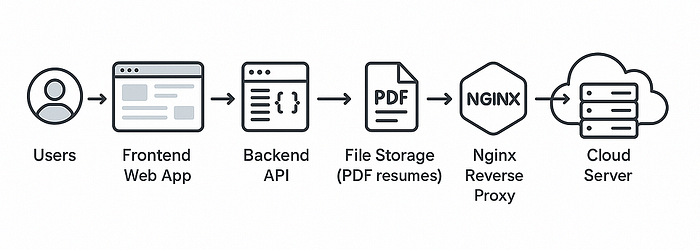
Users could:
Enter their personal details Generate resumes dynamically Host a live portfolio Download resumes as PDFs
From a DevOps perspective, this system included:
A backend API Persistent storage Dockerized services Nginx as a reverse proxy SSL configuration A cloud-hosted server
What this project really taught me had nothing to do with frameworks.
It taught me:
Why file storage behaves differently in production How memory spikes during PDF generation Why environment variables break silently on servers Why SSL setup is never as simple as it looks Why uptime suddenly matters when users depend on your system
For the first time, I thought:
“If this system goes down, someone is affected.”
That mindset alone accelerated my DevOps growth.
2. Full-Stack Application With Real CI/CD
Many people set up a pipeline once just to say they did it.
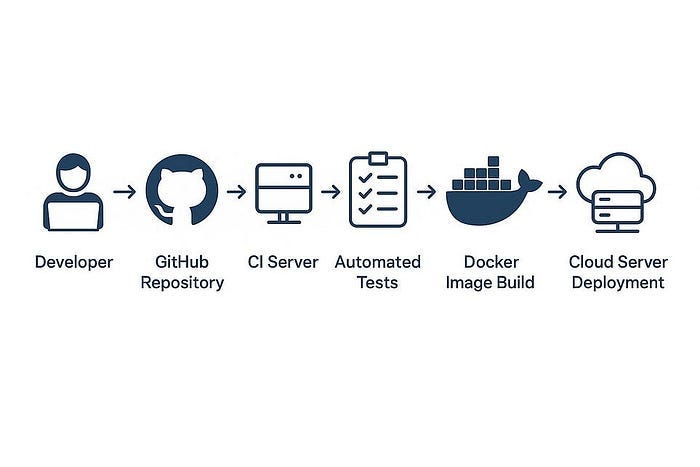
I built a system where:
Every Git push triggered CI Tests ran automatically Docker images rebuilt each time The server updated without manual SSH access
And when something broke, there was no instructor.
Only logs. Only the terminal. Only responsibility.
This project forced me to learn:
Why pipelines fail without obvious errors How secrets break deployments silently Why rollback strategies matter more than deployments Why simpler pipelines outperform complex ones
At this stage, DevOps stopped being a “toolset” for me.
It became accountability.
3. Monitoring and Logging for a Live Application
This project changed how I look at systems entirely.
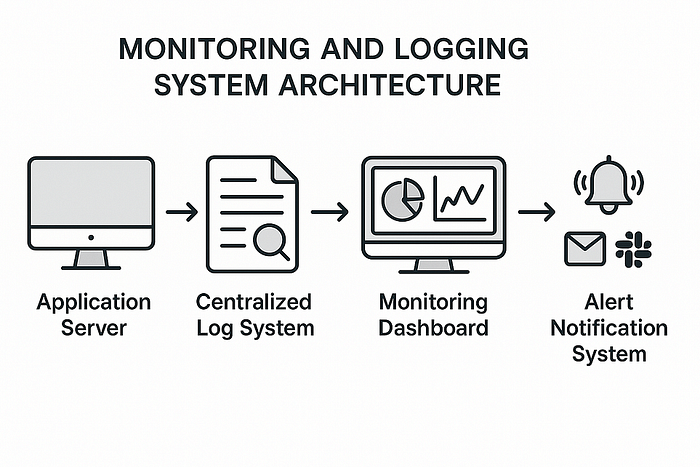
I added:
Application-level logs Error tracking CPU usage monitoring Memory utilization tracking Uptime checks
For the first time, failures weren’t assumptions anymore.
They were visible.
This project taught me:
How silent errors slowly kill systems Why alerts matter as much as deployments Why logs are your most powerful debugging tool Why uptime is a business concern, not just a technical one
This is where DevOps stopped being about automation and started being about reliability.
4. Multi-Service Docker System (Real Microservices Experience)
Most tutorials show:
One container One database One command
Real systems don’t behave like that.
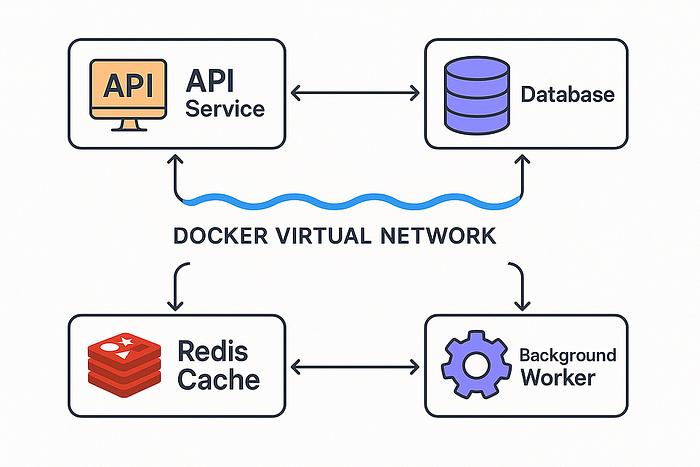
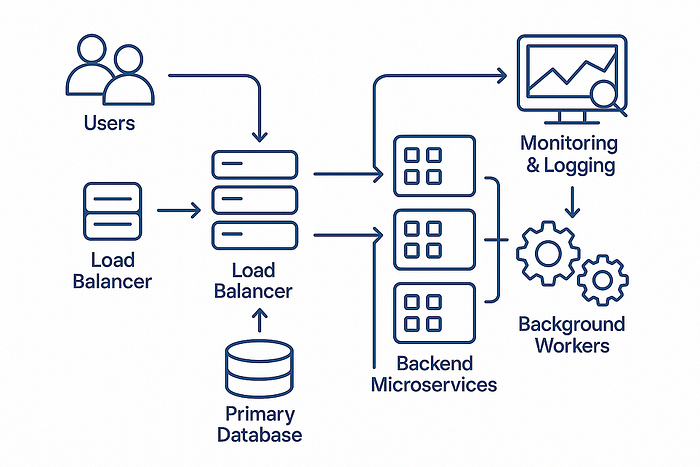
I built a system with:
An API container A database container A Redis cache A background worker All orchestrated using Docker Compose
Then everything failed.
Networks misbehaved Volumes corrupted data Ports conflicted Services couldn’t communicate
That chaos taught me something important:
Microservices only make sense after you experience their complexity.
This project taught me:
Service-to-service networking Data persistence using volumes Container startup sequencing Why orchestration tools exist in the first place
This is where my confidence with containers became real.
5. A System Used by Real Users (The Most Important Project)
This project wasn’t built for learning.
It was built for people.
The system included:
User roles Admin controls Notifications Secure APIs Real data Cloud hosting
Once real users started depending on it, everything changed.
I stopped postponing fixes I started caring deeply about crashes I thought twice before every deployment I respected system stability
This project taught me the most important DevOps lesson of all:
DevOps is not about infrastructure.
It is about responsibility.
The Most Important DevOps Lesson I Learned
Courses are useful.
They give you structure. They give you direction. They give you a map.
But projects?
Projects are the journey.
You don’t truly learn DevOps by:
Memorizing commands Collecting certifications Watching endless tutorials
You learn DevOps when:
Deployments fail Servers crash Users complain And you still fix everything yourself
That pressure builds real engineers.
If You’re Learning DevOps Right Now, Remember This
Use courses for:
Foundations Concepts Guidance
But use projects for:
Confidence Job readiness Interview stories Career growth
Always remember:
The project that almost makes you quit is usually the one that upgrades your career the most.
Follow me :
Linkedin: https://www.linkedin.com/in/harshaljethwa/
GitHub: https://github.com/HARSHALJETHWA19/
Twitter: https://twitter.com/harshaljethwaa
Thank You!!!
Further Reading
Discover more articles on similar topics across our network


Comments
Loading comments…