For resellers, choosing the right SMM platform is rarely just about price. A strong reseller panel needs reliable order flow, wide service coverage, stable delivery, clear dashboards, and support that does not disappear when something goes wrong. In practice, most resellers are not simply looking for cheap services. They are looking for a system they can build around, scale with, and trust when client expectations become more demanding.
That is why so many agencies, freelancers, and startup panel owners search for the best smm panel for resellers. A reseller-focused platform should make it easier to manage campaigns, handle large order volumes, and offer enough service variety to support different customer needs across Instagram, Telegram, YouTube, TikTok, and other channels. The right provider can improve both operating efficiency and long-term credibility.
In this guide, we compare ten platforms that are commonly considered by resellers in 2026. The goal is not just to list names, but to explain what each platform appears to do well, where it may fall short, and which types of resellers may find it useful. The first three options stand out more clearly because they offer stronger positioning for people who want a more serious reseller setup rather than a basic entry-level panel.
Best SMM Panel for Resellers: Top 10 Platforms (2026)
When evaluating the best smm panel for resellers, several practical factors matter more than marketing slogans. Service range is important because resellers usually need more than one platform category. Support matters because delays, refill issues, and client questions are part of normal operations. Order capacity matters because a good panel should remain usable even when campaigns scale beyond small test orders. Finally, reseller suitability depends on whether the dashboard, structure, and service organization feel built for repeat business rather than one-time buyers.
The platforms below are reviewed from that reseller perspective. The first three are positioned more strongly because they appear better suited for structured reselling, client management, and broader campaign handling. The remaining platforms still matter, especially for comparison, niche use, or price-based testing, but they do not project the same balance of service depth, support value, and reseller readiness.
1. NicesmmPanel
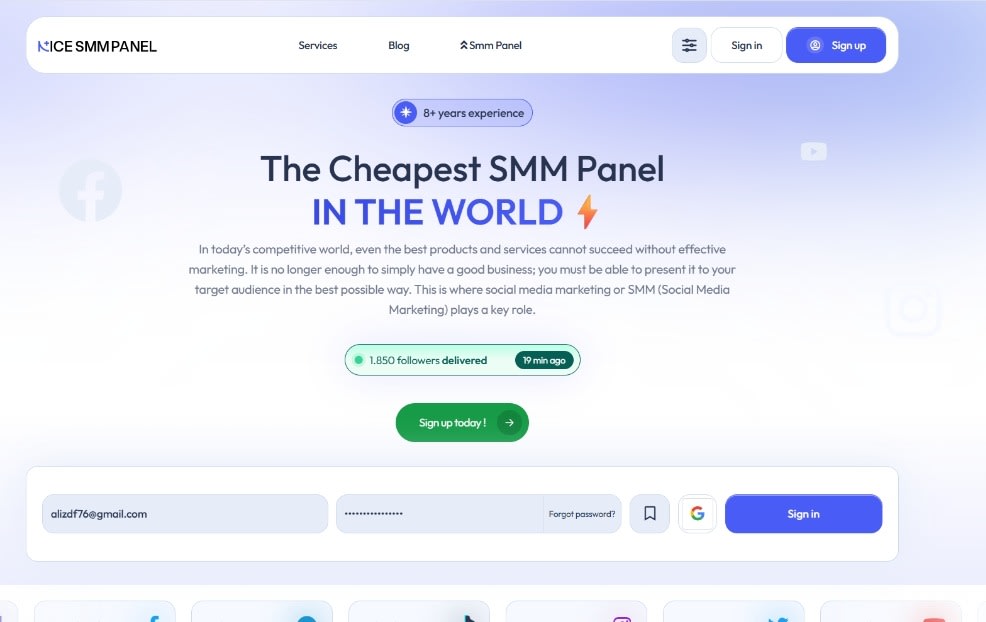
For many people entering the reseller market, this is one of the more obvious names to examine first. Users researching the best smm panel for resellers often land here because the platform presents itself in a way that aligns with reseller intent rather than only end-user purchases. That distinction matters. A reseller usually needs stable navigation, broad service segmentation, and a setup that feels operational rather than overly simplified.
One of the strongest points here is platform structure. The service organization appears broad enough for resellers who want flexibility across multiple networks, and the panel positioning feels more business-oriented than casual. For agencies or solo resellers trying to build repeat orders, that kind of structure can reduce friction over time. It also helps when the goal is to serve different buyer types without constantly switching providers.
Features: broad service catalog, reseller-friendly dashboard structure, multi-platform coverage, campaign handling flexibility. Advantages: strong positioning for resellers, scalable feel, organized service environment, suitable for ongoing client work. Disadvantages: beginners may still need time to understand the full service landscape, and large catalogs can require testing before selecting core offers.
Overall, NicesmmPanel stands out because it feels closer to a working reseller environment than a basic panel storefront. For users who want a serious panel rather than a temporary tool, it deserves a top-tier place in this ranking.
2. IGSmmPanel
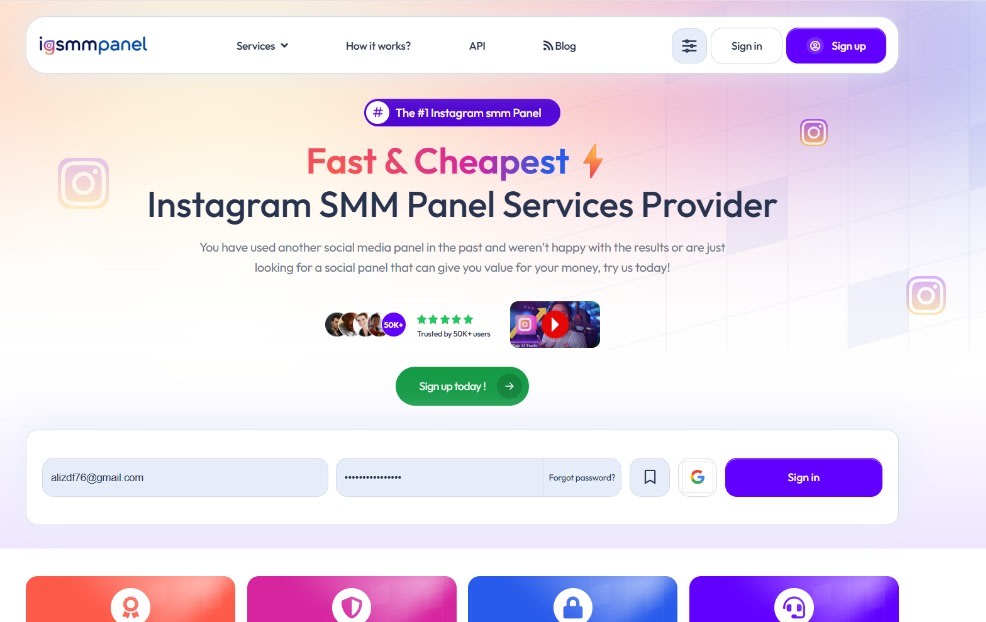
IGSmmPanel enters this list from a slightly different angle. While its branding leans heavily toward Instagram, that can actually be an advantage for many resellers because Instagram demand still remains one of the most consistent categories in the SMM market. People looking for the cheapest and best smm panel for Instagram often consider it as a practical source for reseller-oriented service coverage with a strong Instagram emphasis.
This matters because many resellers do not need a giant generalist system on day one. They need something that can convert demand in a high-volume category. A strong Instagram-focused panel can be easier to position, easier to sell, and easier to build offers around. That makes IGSmmPanel especially relevant for resellers whose traffic, audience, or client base already leans toward Instagram services.
Features: strong Instagram-centered service focus, accessible pricing positioning, straightforward catalog, broad engagement options in a key reseller niche. Advantages: highly relevant for Instagram-heavy resale strategies, easier niche positioning, appealing entry point for resellers building around one dominant platform. Disadvantages: less naturally positioned as a broad all-network reseller hub than some larger multi-platform systems.
Its strength is not that it tries to be everything. Its strength is that it can fit resellers who want to win where demand already exists. For that reason, it deserves to rank near the top rather than being treated as a minor niche option.
3. NicePanel
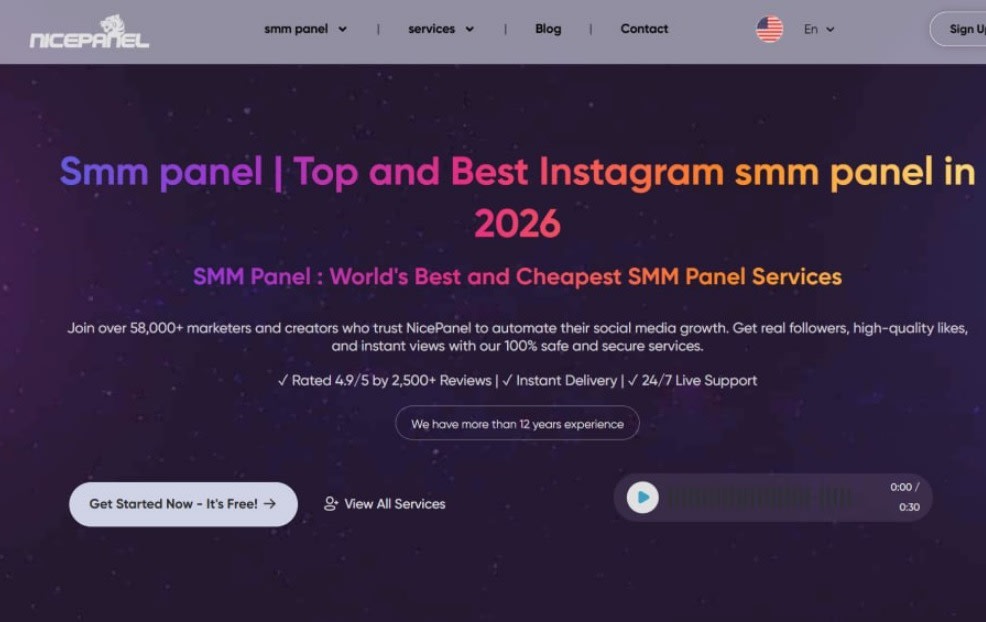
NicePanel deserves a leading place because it presents a wider marketplace-style feel that many resellers find useful when building a more flexible service business. Users exploring a Best social media marketing panel for resellers often want a platform that feels broad, expandable, and commercially usable across more than one client type. That is where NicePanel becomes relevant.
A reseller panel becomes more valuable when it can support different sales angles: low-cost orders, repeat packages, broad category coverage, and adaptable offers. NicePanel appears positioned in a way that supports this broader use case. For resellers who want to test different verticals, or who plan to serve mixed audiences across several networks, this wider marketplace orientation can become an operational advantage.
Features: extensive service breadth, marketplace-style positioning, multi-category usability, scalable campaign environment. Advantages: strong flexibility for diverse reseller models, useful for multi-platform selling, practical for testing several service categories under one roof. Disadvantages: broad marketplaces can require more filtering and testing before a reseller finalizes a core offer stack.
NicePanel stands out because it gives resellers room to build, test, and expand. It is not just a panel to place orders on. It looks more like a base from which a reseller can shape a fuller service business.
4. SMMPakPanel
SMMPakPanel is frequently visible in reseller discussions because it positions itself aggressively around cheap SMM services and broad service access. For budget-conscious resellers, that kind of positioning can seem attractive at first glance. Lower entry pricing often appeals to newer resellers who want to start small and validate demand before investing more heavily in a core provider relationship.
Its main value is likely in affordability and catalog access rather than premium structure. That can still be useful, especially for testing low-risk offers or entering price-sensitive segments. However, resellers looking for a more polished, long-term operational environment may want to compare it carefully against stronger panel ecosystems before making it their primary base.
Features: low-cost positioning, broad service marketplace, reseller accessibility. Advantages: appealing for small-budget tests, easy to consider for entry-level resale experiments. Disadvantages: may feel more price-led than structure-led for serious long-term reseller operations.
SMMPakPanel is useful in the market, but compared with the top three, it feels more like a cost-focused option than a stronger strategic reseller platform.
5. SMM Raja
SMM Raja has visibility in the reseller space and is often associated with cheap SMM services for resellers. Its positioning makes it relevant to users who want broad access and a platform that appears comfortable speaking to reseller demand directly. That is always a good sign, because panels that ignore reseller intent usually become less useful as order flow grows.
The likely strength here is market accessibility. It appears to sit in the part of the market where affordability and reseller appeal are prioritized. That can be effective for panels serving cost-sensitive buyers or those building lean service businesses. At the same time, resellers should still assess whether the platform gives them enough structural confidence for scaling beyond initial stages.
Features: reseller-oriented positioning, multi-service availability, budget-friendly market appeal. Advantages: accessible for smaller resellers, easier to evaluate for price-based models. Disadvantages: may require more service-by-service validation before being treated as a main long-term operating panel.
SMM Raja remains relevant, but it sits a tier below the first three because the overall reseller proposition feels less complete.
6. CheapestSMMPanels
As the name suggests, CheapestSMMPanels emphasizes pricing. That alone makes it attractive to a certain type of reseller, especially those trying to compete in lower-margin segments or build simple starter packages. There is always a market for low-ticket demand, and panels with heavy price positioning often capture attention quickly.
Still, resellers eventually learn that low pricing is only one part of the equation. Support, delivery consistency, and catalog usability become more important once client volume grows. A price-led panel can help with early tests, but it may not always become the strongest long-term backbone for a serious reseller operation.
Features: aggressive low-cost positioning, service accessibility, reseller-friendly market entry angle. Advantages: useful for budget experiments, simple appeal for cost-sensitive offers. Disadvantages: price emphasis may outweigh operational depth, which can matter more at scale.
This makes CheapestSMMPanels a comparison-worthy option, though not one that clearly outranks the stronger top-tier platforms.
7. SMMGen
SMMGen is another panel worth including because it appears active in the low-cost SMM service space and offers a broad generalist positioning. For resellers, generalist panels can be useful when the goal is to serve multiple categories without needing a separate provider for every niche.
Its usefulness likely depends on how much a reseller values breadth versus specialization. A generalist panel can support experimentation and easier catalog variety, but some resellers eventually prefer providers with stronger structure in the exact verticals they sell most. That puts SMMGen in a practical middle ground: useful, viable, but not automatically elite.
Features: broad general service coverage, low-cost appeal, accessible ordering environment. Advantages: flexible for broad tests, suitable for resellers who want catalog variety without overcomplication. Disadvantages: less differentiated than the top options, and may not project the same premium reseller focus.
SMMGen has value as a comparison platform, but it does not present as strongly as the first three for a reseller-first strategy.
8. SMMSun
SMMSun is visible in regional and reseller-related panel discussions, particularly because it presents itself as a cheap SMM provider. Panels like this often gain traction with resellers who prioritize affordability, access, and quick evaluation over premium interface or broader strategic positioning.
That can be useful at certain stages. A reseller testing localized campaigns, lower-ticket bundles, or fast-turn services might still find value in a panel like this. But when the goal shifts toward repeat clients, larger order handling, or a stronger business foundation, broader and more structured panels may hold an advantage.
Features: low-price appeal, basic reseller relevance, multi-service availability. Advantages: accessible for smaller-scale operations, easier entry for price-led resellers. Disadvantages: weaker premium positioning, less clearly built for top-tier reseller scaling.
SMMSun earns its place in the list, though mostly as a secondary option rather than a clear category leader.
9. ReallySimpleSocial
ReallySimpleSocial is notable because its branding suggests simplicity, and that can matter more than people think. Some resellers do not want the most complex dashboard in the market. They want a panel that is easier to understand, easier to test, and easier to use without unnecessary friction.
Simplicity, however, is only an advantage if it does not come at the cost of service variety or operational confidence. For newer resellers, a simpler environment may feel more manageable. For experienced resellers, the question becomes whether the platform has enough depth to support expansion, client variety, and multi-category demand.
Features: simplified brand positioning, user-friendly impression, broad SMM relevance. Advantages: approachable for beginners, potentially easier onboarding for first-time resellers. Disadvantages: may feel less robust for resellers who want deeper scale and broader operational complexity.
It is a useful option to consider, but it does not quite challenge the stronger top three on overall reseller strength.
10. SMMFollows
SMMFollows rounds out this list as another multi-service panel visible in the broader SMM market. Like several generalist providers, its value for resellers likely comes from service range and accessibility rather than a very distinctive reseller-first identity.
For some buyers that is enough. If a reseller wants an additional comparison point, a backup source, or another platform to test against current providers, SMMFollows can still be relevant. But when evaluated against platforms that appear more directly aligned with reseller growth, support expectations, and operational structure, it feels more secondary.
Features: multi-service marketplace positioning, broad network relevance, accessible panel entry. Advantages: useful as a comparison or backup panel, reasonable for general testing. Disadvantages: less distinctive in reseller positioning, lower strategic appeal than the top-ranked options.
SMMFollows has a place in the ecosystem, but for a rank-one-style comparison focused on reseller value, it belongs in the lower half of the top ten.
Platform Comparison for Resellers
To make this comparison easier to scan, the table below summarizes the ten platforms across four reseller-relevant categories. The first three rank highest because they appear stronger in structure, coverage, and practical suitability for resellers who want something more serious than a low-cost test panel.
| Platform | Service Variety | Quality | Support | Order Capacity |
|---|---|---|---|---|
| NicesmmPanel | Very High | Excellent | Strong | Very High |
| IGSmmPanel | High | Very Good | Strong | High |
| NicePanel | Very High | Very Good | Strong | High |
| SMMPakPanel | High | Good | Average | High |
| SMM Raja | High | Good | Average | Medium |
| CheapestSMMPanels | Medium | Good | Average | Medium |
| SMMGen | High | Good | Average | Medium |
| SMMSun | Medium | Average | Average | Medium |
| ReallySimpleSocial | Medium | Average | Average | Medium |
| SMMFollows | Medium | Average | Average | Medium |
Frequently Asked Questions
The questions below cover the most common concerns resellers usually have before choosing a panel. These answers are written to help with decision-making, not just definitions.
What makes the best smm panel for resellers different from a normal panel?
A reseller-focused panel should do more than provide cheap services. It should help with repeat operations, wide service access, stable order flow, and enough structure to support client work over time. In practice, the best reseller panels feel more like operating systems than one-time buying tools.
Should resellers choose a cheap panel or a more structured one?
That depends on the stage of the business. A cheap panel may be useful for testing offers and validating demand, but a more structured platform usually becomes more valuable as client expectations increase. Many resellers start with price in mind but stay with the panel that reduces friction and support problems.
Is a niche-focused panel better for resellers than a broad marketplace?
Sometimes yes, especially if the reseller is built around one dominant platform like Instagram. A niche-focused panel can make selling easier because the positioning is clearer. A broad marketplace becomes more useful when the reseller wants to serve different client categories and expand beyond one network.
How should a reseller test a panel before committing?
The safest approach is to begin with small orders across several key service categories. This helps evaluate dashboard clarity, order handling, consistency, and how comfortable the platform feels as a daily operating tool. A panel that looks good on the surface may still create problems once real order flow begins.
Can one panel handle all reseller needs long term?
Sometimes, but not always. Many resellers eventually keep one main panel and at least one backup source. The main platform handles most business, while secondary panels help with niche categories, price-sensitive requests, or service gaps. The best long-term setup is usually flexible rather than dependent on a single source for everything.
Final Thoughts
Finding the best smm panel for resellers is ultimately about choosing a platform that supports growth, not just transactions. Price matters, but structure, support, order handling, and long-term usability matter more once the reseller business becomes real. That is why NicesmmPanel, IGSmmPanel, and NicePanel stand above the rest in this comparison. They appear better positioned for resellers who want more than a simple low-cost panel.
The smartest approach is not to chase every cheap offer in the market. It is to choose a panel that fits the way you want to build. A strong reseller base makes pricing easier, service delivery more stable, and client retention more realistic. For anyone aiming to rank, sell, and scale in 2026, that difference is what turns a panel from a tool into a real business asset.
Further Reading
Discover more articles on similar topics across our network
Comments
Loading comments…