Most businesses know what they need their software to do. The hard part is turning that idea into something real without months of development, endless backlogs, or heavy technical debt.
That is where low-code comes in.
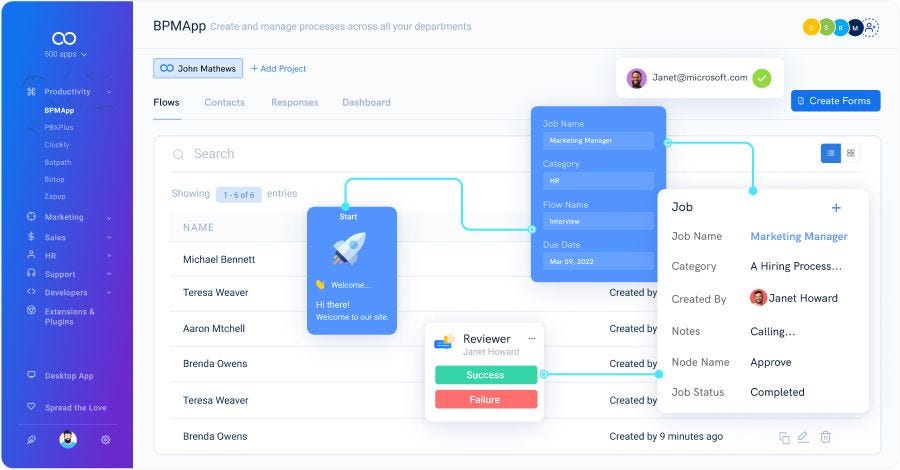
Jitterbit helps teams move faster by making application development simpler, clearer, and more accessible. Instead of starting from scratch, teams can design, build, and launch custom applications using a visual, logic-first approach that keeps the focus on the business problem, not the code.
With a modern low code app builder organizations can respond to change quickly, reduce dependency on hard-to-find developers, and deliver tools that actually match how people work.
What a Low-Code App Builder Really Solves
Traditional development often slows innovation. Requirements change, timelines stretch, and by the time an app launches, the original need has already evolved.

A low-code app builder flips that model.
Instead of writing everything line by line, teams work with visual components, reusable logic, and built-in integrations. Business users can participate in shaping the app, while IT maintains control, security, and governance.
This approach is especially valuable for internal tools, operational workflows, and customer-facing portals where speed and flexibility matter most.
Why Teams Choose Jitterbit
Jitterbit stands out by combining application development with integration and automation. That means apps are not built in isolation. They connect directly to the systems teams already rely on, from CRMs and ERPs to databases and APIs.

Using Jitterbit’s low-code application development platform teams can:
- Build custom apps without starting from a blank page
- Automate workflows across systems and departments
- Adapt applications as business needs change
- Reduce development cycles from months to weeks or days
The result is software that feels tailored, not generic, and evolves alongside the business.
Designed for Real-World Use
Low-code is not just about speed. It is about clarity.
Jitterbit’s App Builder emphasizes readable logic, visual rules, and structured data flows. This makes applications easier to maintain, easier to update, and easier for teams to understand long after the original build is complete.
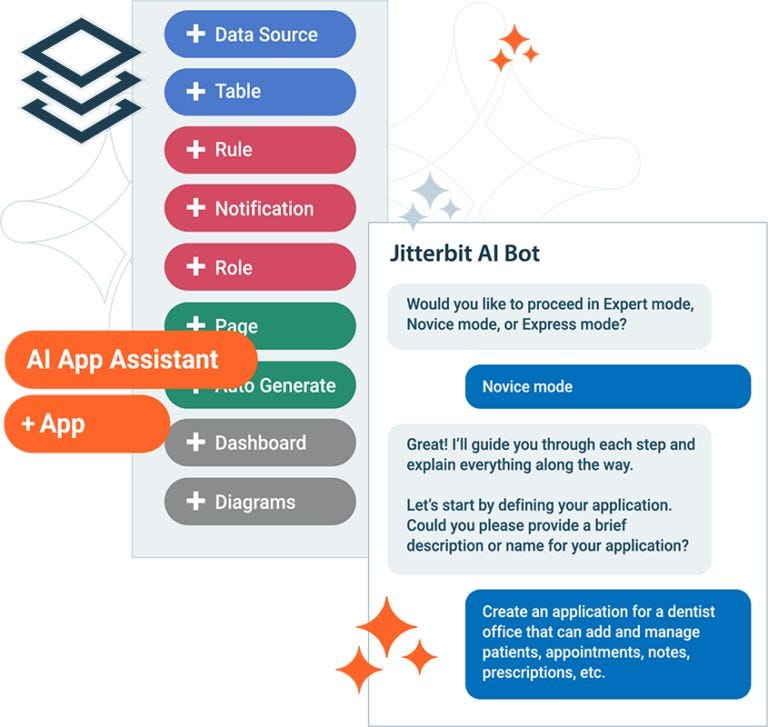
For organizations that want control without complexity, a low-code app builder provides a practical middle ground between rigid off-the-shelf tools and fully custom development.
A Smarter Way to Build What You Need
Businesses should not have to choose between moving fast and building well. With the right platform, they can do both.
Jitterbit gives teams the ability to create applications that fit their workflows, connect their systems, and scale with confidence. It is a straightforward, flexible approach to app development that keeps technology aligned with real business goals.
For teams looking to build better tools without unnecessary friction, low-code offers a clear path forward.
Frequently Asked Questions
Common questions about this topic
Comments
Loading comments…