
By Sosin Vitalii, iOS Senior Software Engineer in the FinTech industry
Abstract
This article explores the phenomenon of explainable engineering—an approach in which complex technical decisions are systematically translated into clear and understandable language for product teams, management, and clients. It demonstrates that an engineer’s ability to explain architecture, constraints, and risks has a direct impact on decision-making speed, planning quality, and the competitiveness of a digital product. The article analyzes key principles for working with technical complexity: structuring communication, using models and metaphors, visualization, reliance on data, and alignment of language across teams. It concludes that explaining complex systems in simple terms is not “simplification for the sake of simplification,” but a distinct engineering competency that increases a specialist’s value and reduces the cost of mistakes in a product.
Keywords
explainable engineering; IT communication; system architecture; product development; technical debt; engineering thinking; cross-functional teams.
Introduction
Modern digital products are built on increasingly complex architectures: distributed systems, microservices, message queues, cloud infrastructure, and integrations with external services. Within teams, this leads to a growing volume of technical information that must be taken into account with every decision.
At the same time, a significant share of key decisions is made at the intersection of engineering and business: product managers set priorities, marketing defines expectations for timelines and functionality, and financial managers evaluate the economics of changes. When the engineering side of this dialogue sounds like a set of incomprehensible terms, the product begins to evolve blindly.
Explainable engineering addresses this problem. Its goal is not to “simplify” technology, but to ensure that the technical picture of the world is understandable to those who make decisions about the product. This makes it possible to build realistic plans, weigh risks, and see where architecture strengthens the business—and where it constrains it.
1. Why the Ability to Explain Is an Engineering Competency
Traditionally, engineers are evaluated based on code quality, architectural decisions, and their ability to work with complex systems. However, in the context of sophisticated products, it is no longer enough to understand a solution internally — it is equally important to communicate the logic behind decisions to other roles.
Explanation becomes part of engineering responsibility for several reasons:
- Decision-making is distributed. Architectural changes depend on product strategy, budget constraints, and legal considerations. Without clear technical context, decisions are often made based on intuition or political priorities rather than informed analysis.
- The cost of mistakes is increasing. Incorrect estimates of effort or architectural risk can lead to missed releases, reputational damage, and budget overruns.
- Engineering complexity affects UX. Performance, reliability, and platform limitations are directly experienced by users, even though they are not always obvious to non-technical stakeholders.
As a result, an engineer’s ability to translate complexity into understandable models becomes a tool for risk management and an investment in product quality.
2. Principles of Explainable Engineering
2.1. Structuring Information
The first principle is avoiding an uninterrupted stream of technical details. Effective explanations are built in layers:
- Context: what business problem the system solves;
- Model: which components the solution consists of;
- Details: what impacts timelines, risks, and cost;
- Conclusions: what options are available and how they differ.
This structure allows the audience to stop at the appropriate level of depth: executives may need only an understanding of options and risks, while architects require implementation details.
2.2. A Shared Language Across Roles
Engineering terminology is essential within technical teams, but when working with product and management, it is critical to provide a “translation” into business language:
- instead of “200ms latency” — “the page loads in 0.2 seconds, which feels instantaneous to the user”;
- instead of “single point of failure” — “if this component fails, the entire service stops.”
The goal is not to eliminate technical terms, but to supplement them with interpretations that are clear to non-engineers.
2.3. Visualization as a Mandatory Tool
Sequence diagrams, architecture diagrams, and simple request lifecycle flowcharts help address two key challenges:
- Reducing cognitive load: visual models handle complexity better than text alone;
- Aligning understanding: all participants discuss the same representation rather than different mental models.
Visualization is especially important when discussing integrations, dependency chains, and potential failure points.
3. Explaining Constraints and Risks
Engineering positions are sometimes perceived as “this can’t be done.” In explainable engineering, the framing changes: instead of “impossible,” it becomes “within the current architecture, this would take N months and introduce the following risks.”
Working with constraints includes:
- identifying what exactly is the bottleneck — computation, database, network, or licensing;
- explaining available options: a temporary workaround, partial redesign, or phased migration;
- assessing the impact on other teams and timelines.
This approach shifts the conversation from conflict to collaborative problem-solving based on both engineering and business considerations.
4. Simple Metaphors Without Losing Accuracy
Metaphors often help create intuitive understanding, as long as they do not distort reality.
For example:
- a cache can be described as “a fast memory buffer between the user and a slow database,” rather than a “magic accelerator”;
- microservices can be explained as “a set of independent services, each with its own purpose and lifecycle,” rather than “just many small applications.”
A good metaphor:
- reflects the system’s key properties;
- highlights its boundaries (what the metaphor does not cover);
- does not create a false sense of simplicity where significant constraints exist.
5. Explanation Through Data
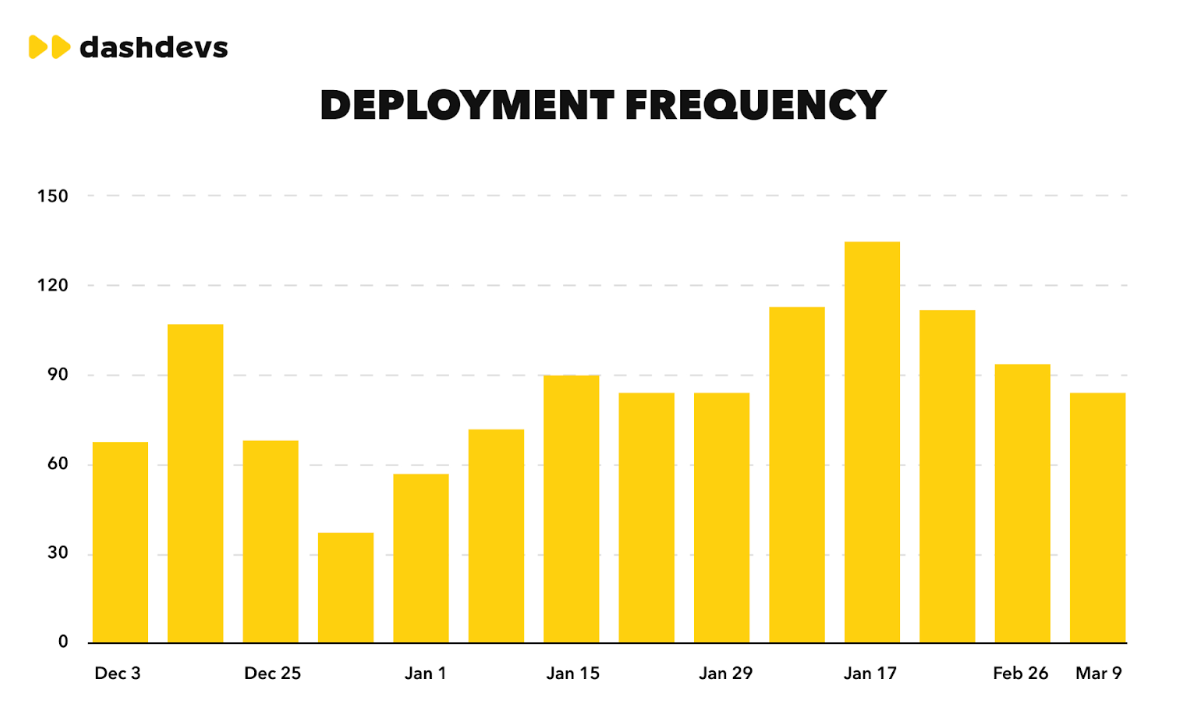
Arguments in discussions about technical decisions should be based not only on experience but also on measurements. An explainable engineering proposal includes:
- current metrics (response time, error rates, MTTR);
- projections under increased load;
- quantitative estimates of the impact of the proposed change.
For example, instead of the abstract statement “we need to optimize queries,” the explanation becomes:
- the current 95th percentile response time is 850 ms;
- under peak load, this metric increases to 1,300 ms;
- the target level for a comfortable user experience is no more than 500–600 ms;
- the proposed change is expected to reduce database load by 40%, which, according to projections, will bring the percentile back into an acceptable range.
Such explanations allow non-engineering roles to perceive technical decisions as a business component rather than as “internal engineering details.
6. Teaching the Team an Explainable Approach
Explainable engineering cannot be the responsibility of a single individual. It becomes part of team culture when:
- diagrams and visualizations are used by default in team discussions;
- documentation includes sections “for management” with concise summaries of key ideas;
- technical leaders help engineers develop the skill of presenting complex topics clearly in 3–5 minutes;
- the practice of internal talks and “technical reviews” involving product specialists is encouraged.
As a result, conflicts related to timeline expectations decrease, the need to address technical debt and infrastructure work becomes easier to justify, and product strategy aligns more closely with the real capabilities of the architecture.
Conclusion
Explainable engineering is not an attempt to “simplify” the profession, but a way to make its impact visible and manageable. When complex decisions are supported by clear models, metaphors, and data, product and management decisions become more balanced, and risks more transparent.
An engineer who can not only design systems but also explain them to other stakeholders becomes a key mediator between technology and business. In an environment of growing digital product complexity, this combination — deep technical expertise and the ability to communicate clearly — defines a new quality of leadership in engineering.
Sources
- Forsgren N., Humble J., Kim G. Accelerate: The Science of Lean Software and DevOps. - IT Revolution Press, 2018.
- Google Cloud. 2023 Accelerate State of DevOps Report. - Google Cloud, 2023.
- Puppet. State of DevOps Report 2023. - Puppet, 2023.
- Harvard Business Review. Why Technical Teams Need Better Communication, Not Just Better Tools. - HBR, 2022.
- ThoughtWorks. Technology Radar, Vol. 29. - ThoughtWorks, 2024.
Frequently Asked Questions
Common questions about this topic
Comments
Loading comments…