Working on a web-based business nowadays can be daunting. A major challenge can be attracting potential customers because of the millions of products and services competing to attract attention.
Low web traffic, dropped sales, or failed ad campaigns are common issues. Hence, in the absence of the correct approach, the marketing budget soon drains.
Paid search marketing is a way to solve this issue because it places the brand in front of individuals who are directly searching to buy a product or service like the brand. It also provides an opportunity to be targeted precisely and monitor its outcome, unlike traditional advertising, where every dollar spent has no clear purpose.
This strategy has the potential to generate instant traffic, higher conversion rates, and get information to optimize subsequent campaigns. This article explores what paid search marketing is, highlights its key benefits, and shows how to use it effectively to drive traffic and grow your business.
What Is Paid Search Marketing?
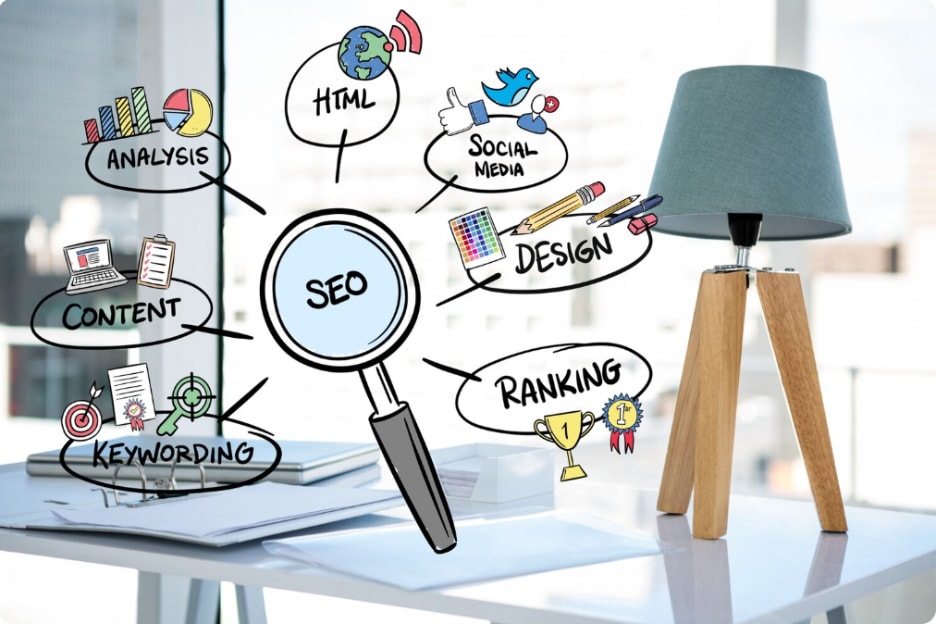
Paid search marketing or search engine marketing (SEM) is a form of digital advertising where a business pays to have advertisements appear on the search engine results pages (SERP). Paid search provides instant visibility to target audiences, unlike organic search, where the positioning of content and backlinks is used to rank web pages.
When people search for a particular keyword, your advertisement will be at the top or bottom of the search results, and your brand will be exposed immediately. For example, an Amazon marketing agency can use paid search campaigns to promote products to buyers searching for relevant items.
This approach ensures that your message reaches people already interested in your offerings, increasing the likelihood of conversions.
Difference Between Paid and Organic Search
It is important to know the difference between a paid and organic search. Organic search is based on the quality of the content, authority of the websites, and best practices in SEO to achieve rankings in the long run.
Paid search eliminates these processes and offers a faster outlook, but demands further investment. The two approaches are complementary to one another.
Organic search may be used as a long-term credibility measure, whereas paid search causes immediate traffic. Combining these strategies can maximize reach and strengthen the overall digital presence.
Key Benefits for Businesses
Paid search marketing has quantifiable benefits, which is why it is a better option to use when a company needs rapid development:
- Targeted Reach: Advertisements can be location, device, time, and even audience behavior specific
- Control Over Budget: No expense is incurred unless the user visits the advertisement, allowing precise spending control
- Immediate Results: Paid campaigns deliver leads and traffic immediately when they are launched
- Measurable Performance: Analytical tools can give insight into the clicks, impressions, and the ROI, enabling continuous optimization.
Published reports indicate that paid search is among the rapidly expanding avenues of digital marketing because of its accuracy and quantifiable effect.
How Paid Search Marketing Works

1. Keyword Selection and Targeting
Any paid search campaign is based on keywords. Companies have to determine the words that would be entered by prospective customers upon looking into a product or service.
With the assistance of tools like Google Keyword Planner, SEMrush, or Ahrefs, one can find high-traffic and low-competitive keywords. Effective campaigns use both popular terms and long-tail keywords to target users with high purchase intentions.
Moreover, there are targeting options that enable an advertiser to narrow down on who views the advertisements. They can filter by geography, language, device, or audience interests.
An example would be a company that sells eco-friendly home products that tend to show ads to the most fitting consumers, such as those in a particular city who search for a sustainable kitchen tool.
2. Ad Creation and Quality Score
To make the campaign successful, it is crucial to create good advertisements. Paid search ads usually have a headline, description, web address, and other extensions in the form of site links or call buttons.
Quality matters; search engines assign a quality score depending on relevance, click-through rate, and landing page experience. Higher scores reduce cost-per-click (CPC) and improve ad positioning.
An excellent advertisement delivers value in a short period, connects with the user, and aligns with a keyword intent. Visual elements or rich snippets can further increase engagement, especially on platforms like Amazon or Google Shopping.
External resources like Google Ads Help provide guidelines for maximizing ad effectiveness.
3. Bidding Strategies and Campaign Optimization
Paid search marketing operates on an auction model. Advertisers bid on selected keywords, competing to have their ads displayed when audience search for those terms. Bidding strategies vary depending on goals:
- Manual CPC Bidding: Set a maximum cost-per-click for each keyword
- Automated Bidding: Allow the platform to adjust bids based on campaign goals, such as maximizing conversions
- Target ROAS or CPA: Optimize return on ad spend or cost per acquisition, focusing on profitability
Campaign optimization is an ongoing process. Monitoring performance, testing advertisement variations, and adjusting bids to ensure your investment drives the best possible results. Tools like Google Analytics and SEM platforms provide actionable insights to refine targeting, ad copy, and landing pages.
Conclusion
Paid search marketing is a robust tool for businesses seeking immediate visibility and measurable results. Understanding the fundamentals, focusing on keyword targeting, ad creation, and bidding strategies, brands reach the right audience at the right moment. Combining paid search with organic strategies enhances long-term growth while delivering short-term traffic and conversions.
The actionable takeaway is to start by identifying high-intent keywords, craft compelling ads that match user needs, and continuously optimize campaigns. This approach ensures your advertising budget translates into real, trackable business outcomes.
Comments
Loading comments…