
Photo: amgun | Shutterstock
In cloud infrastructure, patching used to be a quiet, back-end task, automated, scheduled, and often ignored. But as enterprise systems evolved into compliance-driven, always-on environments, that mindset no longer applies.
In managing infrastructure for data-intensive industries such as financial services and healthcare, it is crucial to recognize how even the slightest misstep, including poor patching, timing, lack of control, or misalignment with workflows, can trigger downtime, audit failures, or SLA breaches.
Patching is no longer a technical checkbox; it's a strategic discipline for keeping systems resilient under pressure. That's why Oracle's granular maintenance scheduling, especially in Exadata Cloud Infrastructure (ExaCI) and Exadata Cloud@Customer (ExaCC), wasn't built for convenience. It was built to address a real-world challenge: updating critical infrastructure without sacrificing performance or compliance.
It's the outcome of intricate engineering, modular architecture, resilient APIs, and automation hooks that enable smarter, risk-aware operations where compliance, performance, and uptime are protected without compromise.
Meeting the Real-World Demands of Modern Patching
For enterprises running mission-critical workloads, whether in banking, healthcare, or telecom, uptime isn't optional. The cost of disruption is simply too high. That's why flexible, intelligent patching strategies are vital.
Take HSBC, for example. They adopted Exadata Cloud@Customer not just for speed or automation, but to address a delicate challenge: how to maintain regulatory compliance while adhering to the rigid timing of nightly batch windows. Oracle noted that updates were strategically timed to avoid interfering with critical operations such as end-of-day processing and financial close activities.
In the healthcare sector, IHH Healthcare used Oracle Exadata to run updates during off-peak windows, ensuring uninterrupted access to clinical systems across APAC's largest private hospital network. The result: zero patient system downtime and full audit compliance.
In telecommunications, Vodafone's partnership with Oracle introduced automated lifecycle patching that reduced manual overhead and enabled more predictable, auditable rollouts. These examples illustrate a broader shift: patching must minimize downtime while aligning precisely with day-to-day business operations.
How Enhanced Maintenance Controls Improve Patching
Modern patching demands precision, flexibility, and resiliency, not just faster execution. Oracle's Enhanced Maintenance Controls for Exadata Cloud Infrastructure and Exadata Cloud@Customer are designed to meet the demands of high-availability environments where even brief downtime can have critical consequences.
These controls let teams fine-tune patching schedules with confidence and adapt quickly when business needs shift.
Automation That Put Control Back in the User's Hands
The first iteration of Oracle's Granular Maintenance Support wasn't just about scheduling; it was about restoring control and visibility to users. It introduced essential automation capabilities, including rolling and non-rolling maintenance modes, the ability to pause and resume patching, and real-time progress tracking via OCI work requests.
These features gave enterprise administrators deeper insight into what was happening under the hood, while reducing operational uncertainty. By emphasizing visibility and flexibility, this phase laid the groundwork for the more advanced, policy-driven model that followed.
Operational Control for Regulated Environments
In tightly regulated industries, hands-on work with Exadata reveals a key insight: what may seem like a simple scheduling option is, in fact, a deeply engineered bridge between IT autonomy and business accountability. Admins can now:
- Insert custom scripts to manage traffic or capture snapshots
- Track patch progress through OCI work requests
- Pause or reschedule patches via UI or REST APIs
This level of orchestration, spanning snapshot capture, traffic redirection, and live tracking, bridges the gap between rigid compliance and flexible operations.
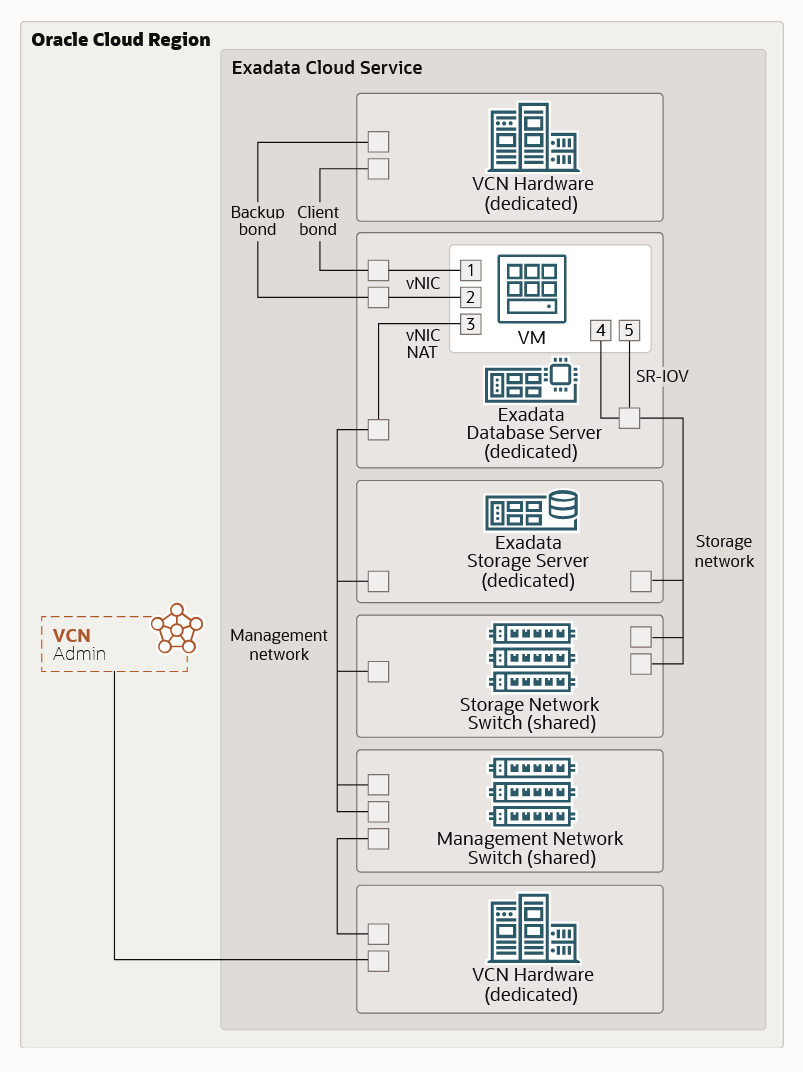
The infrastructure itself supports this level of precision. With isolated VM domains, dedicated vNICs, and segmented storage networks, you can patch individual components while keeping other layers active. It's a design that reduces disruption and safeguards uptime, exactly what large-scale, always-on operations demand.
Moving from Reactive to Policy-Driven Patching
One significant result of Oracle's architectural effort was the development of Maintenance Scheduling Policies, designed to bring structure and predictability to even the most complex patching environments. These policies function as a patching autopilot, enabling scalable governance while reducing manual oversight.
The underlying architecture was designed to support both rolling and non-rolling updates, with APIs that maintain UI and CLI parity. A validation layer, rollback hooks, and live status tracking were built in, and the system was iteratively tested across multi-region deployments to ensure resilience at scale.
With OCI configuration tools, teams can:
- Block updates during audits or fiscal close
- Set update schedules by application type
- Define fallback actions for failed scripts or conflicts
In addition to centralized policy control, Oracle introduced several automation enhancements that further improved operational flexibility:
- Pause automation to run pre- or post-maintenance actions before updates execute
- View and manage scheduled events via the ExaCC console, including update type, patch version, and maintenance method (rolling/non-rolling)
- Cancel in-progress maintenance when unexpected issues arise
- Automatically reschedule failed updates to the next available window without manual intervention
- Enforce maintenance window duration, pausing any overrun task and resuming it in a future window
For global teams managing hundreds of Exadata nodes, this centralized model ensures consistent, business-aligned updates. Oracle's policy-based approach lets cloud administrators define patching frequency, whether quarterly, monthly, or on demand, while managing blackout periods, automation controls, and key actions like pre-checks, notifications, and reboots via the OCI Console or REST API.
Policy-Based Scheduling for Scalable Maintenance

Photo: thanmano | Shutterstock
Oracle's Maintenance Scheduling Policies allow administrators to define and reuse structured patching strategies across their Exadata environments. These policies consolidate complex update timelines into unified, repeatable frameworks that align with compliance windows, internal SLAs, and business-specific requirements.
Rather than configuring patching preferences on a per-instance basis, cloud teams can attach infrastructure targets to shared policies, each preconfigured with start dates, preferred days, blackout periods, and enforceable maintenance durations as outlined in Oracle's official scheduling policy documentation. Policies also support multiple maintenance windows, allowing teams to break updates into smaller, manageable chunks across time.
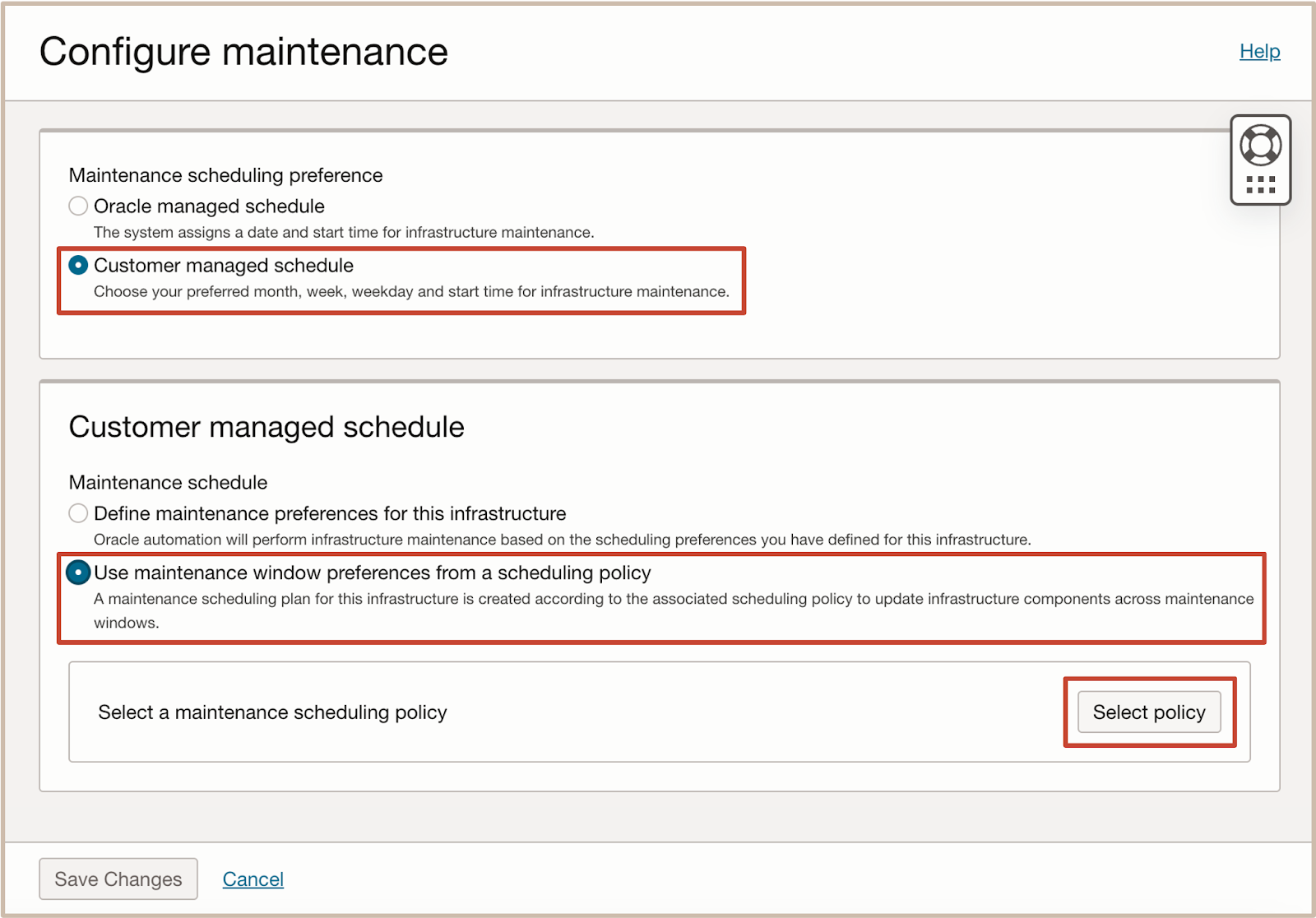
Through the OCI Console and Events Framework, administrators gain real-time visibility into scheduled and in-progress maintenance. They can monitor each update at the component level, receive notifications about execution stages, and pause, cancel, or reschedule maintenance actions mid-run when unexpected issues arise.
These capabilities elevate policy-based maintenance from a scheduling tool to a full orchestration layer. Combined with automation hooks, failure recovery, and flexible execution ordering, Oracle enables a proactive and resilient approach to infrastructure patching, built for modern enterprise demands.
Controlled Automation for Enterprise-Scale Patching
At enterprise scale, automation must be intelligent, not just efficient. Oracle's Fleet Update Concepts introduce a collection-based orchestration model that coordinates patching across multiple Exadata targets using structured maintenance cycles. These cycles are designed with built-in checkpoints, batching logic, and rollback support to maintain operational stability.
Beyond basic scheduling, Oracle enables developers and administrators to embed control scripts directly into each cycle. A technical blog highlights how teams can insert pre-patch validation steps, manage node-level sequencing, and preview maintenance timelines before execution. These capabilities help reduce risk and align updates with business-critical workloads.
This layered approach reflects a broader engineering goal. Automation must not only scale but also support workload safety, testing, and compliance. With scriptable hooks, visual planning, and policy-driven cycles, Oracle delivers automation that is reliable, predictable, and operationally aligned.
Engineering for Long-Term Resilience
Exadata's granular maintenance capabilities are not just built for today's operations; they're designed to evolve with enterprise workloads over time. By combining policy-based governance with infrastructure-aligned APIs, Oracle enables cloud teams to scale confidently across regions, environments, and service tiers.
This forward-compatible architecture also simplifies onboarding new applications and adapting to future compliance changes. Whether introducing new data residency rules or extending patch orchestration to additional fleets, administrators retain centralized control without rewriting workflows.
What began as a solution for uptime and audit readiness now serves as a foundation for ongoing system resilience, automation maturity, and cloud expansion.
Why Patching Strategy Impacts Compliance and Security
In regulated sectors, compliance is tightly bound to patch management. Whether it's CIS benchmarks, STIG, PCI-DSS, or HIPAA, missing patches equal audit risk.
A paper published on arXiv surveyed healthcare IT systems and found that automated patching significantly reduced breach exposure compared to ad-hoc remediation. Predictability matters not just for ops teams but also for auditors.
From a cloud architect's view, if you can't show consistent, timely patching, you'll struggle with SOC 2, ISO 27001, or internal security audits. Consistent patching isn't optional; it's a baseline requirement for regulatory compliance.
Lessons from the Field
Effective maintenance depends on precise timing, predictive planning, and robust control. In Exadata implementations across regulated industries, well-orchestrated patching is often the line between operational continuity and costly disruption. The best teams don't just automate their governance; they also optimize it. They align every update with business logic, compliance needs, and real-world workflows.
This includes involving Site Reliability Engineers (SREs) early in the design process, ensuring production-readiness through operational insight into failure modes, observability, and recovery. Equally critical is a modular architecture that separates components cleanly, allowing targeted updates, faster debugging, and future extensibility without overhauling the system.
They also embraced infrastructure-first API design, creating declarative, automation-ready interfaces that integrate easily with tools like Terraform, ensuring consistent and scalable deployment. Whether managing a single system or a regional fleet, now is the time to operationalize these capabilities. If resilience is your benchmark, policy-driven, developer-engineered patching must be your standard.
About the Author

Shashank Shivam is a cloud infrastructure specialist at Oracle and the lead developer behind Exadata's Granular Maintenance Scheduling. He architects resilient, compliance-ready systems for industries including finance, healthcare, and telecom. His work focuses on modular design, automation, and multi-region availability, helping enterprises maintain uptime during mission-critical operations.
References:
- Bednar, T., Mathew, P., & Alvarado, L. (February 3, 2023). Enhanced maintenance controls for Exadata Cloud Infrastructure and Exadata Cloud@Customer. Oracle Database Blog. https://blogs.oracle.com/database/post/enhanced-maintenance-controls-for-exadb-d
- Dissanayake, N., Jayatilaka, A., Zahedi, M., & Babar, M. A. (September 4, 2022). Improving database reliability with automated patching: A reinforcement learning approach. arXiv. https://arxiv.org/abs/2209.01518
- Fierens, P. (August 11, 2023). Exadata Fleet Update: Concepts and architecture. Oracle MAA Blog. https://blogs.oracle.com/maa/post/exadata-fleet-update-concepts
- Oracle. (April 16, 2024). IHH Healthcare selects Oracle Exadata Platform to improve operational efficiency and patient outcomes. https://www.oracle.com/apac/news/announcement/ihh-healthcare-selects-oracle-exadata-platform-2024-04-16/
- Oracle. (June 21, 2022). Vodafone partners with Oracle to accelerate technology modernization on Oracle Cloud Infrastructure. https://www.oracle.com/news/announcement/vodafone-partners-with-oracle-to-accelerate-technology-modernization-2022-06-21/
- Oracle. (September 4, 2024). Create a maintenance scheduling policy for Oracle Exadata Database Service on Cloud@Customer. https://docs.oracle.com/en/learn/exadb-maintenance-policy/index.html#task-1-create-a-maintenance-scheduling-policy-for-oracle-exadata-database-service-on-cloudcustomer
- Oracle. (May 28, 2024). Configure the network interfaces used by Exadata databases. https://docs.oracle.com/en/engineered-systems/exadata-cloud-service/ecsid/exadbd_netinterfaces.html
- Oracle. (November 29, 2022). Deploy on-premises database workloads on Oracle Cloud Infrastructure. https://docs.oracle.com/en/solutions/deploy-on-premises-db-oci/index.html#GUID-DBCC856D-7A8B-4E11-8F11-DB8FF7FDC425
- Oracle. (October 18, 2022). HSBC partners with Oracle to modernize and support customer experience innovation. https://www.oracle.com/news/announcement/ocw-hsbc-partners-with-oracle-2022-10-18/
- Oracle. (September 5, 2024). Exadata infrastructure maintenance scheduling policies. https://docs.oracle.com/en/learn/exadb-infra-msp/index.html
Comments
Loading comments…