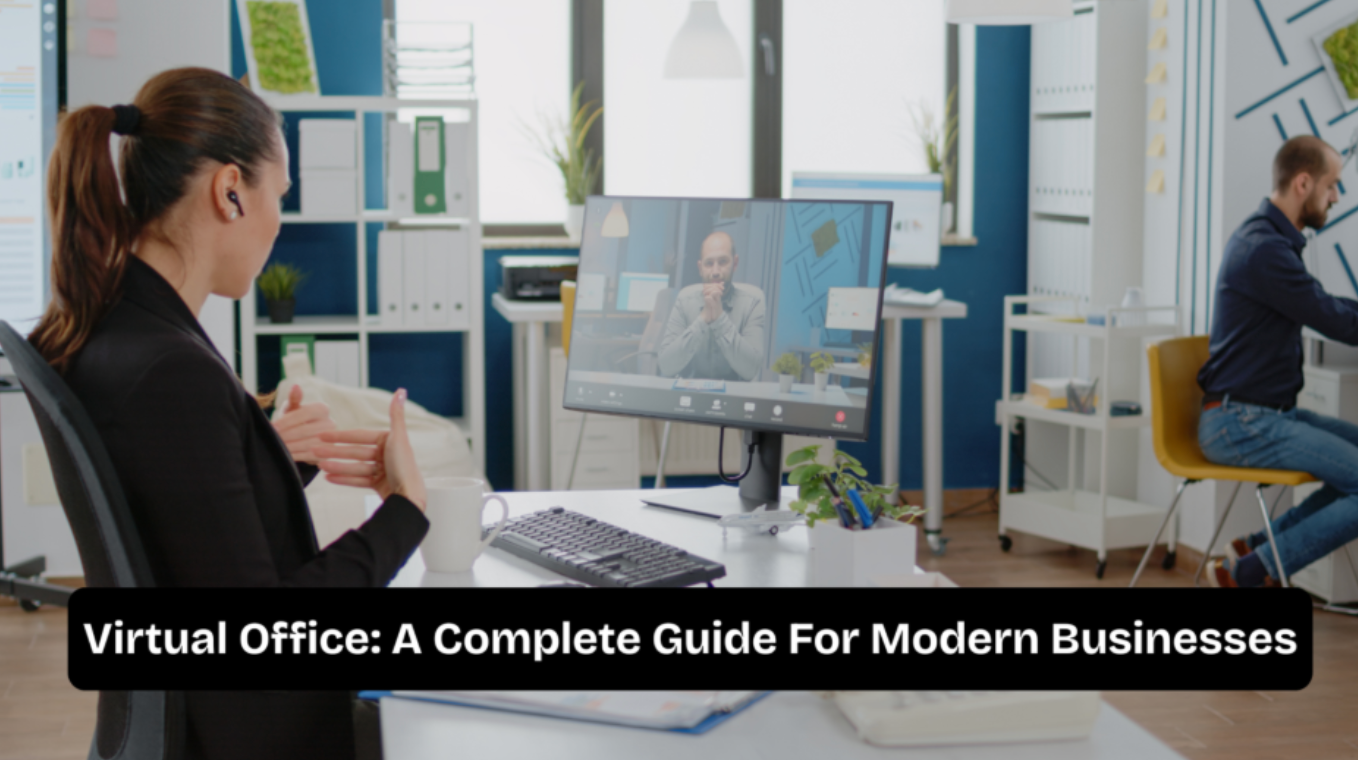
The current business world is gradually shifting towards smarter, more efficient means of doing business.
Meanwhile, the increase in costs of workspace and the development of new models of work push organizations to reconsider the traditional office designs. Besides, the business is supposed to be accommodating without losing its professional touch and complying with regulatory requirements. These expectations affect how companies operate, attract clients, and expand sustainably.
Consequently, virtual offices have come up as an effective and reliable solution. They are structured, credible, and free to operate without being restricted physically.
The article describes what a virtual office is, how it functions, and how it facilitates the long-term growth of a business in the modern, dynamic world.
What A Virtual Office Represents
The virtual office provides a registered business address and administrative services, without the need for a physical office. In simple terms, it helps companies work anywhere while remaining professional.
For example, if a company is being operated outside the UK but wants to expand its business in the UK, a virtual office UK structure is usually implemented to maintain a reliable presence on the ground without entering any long-term property contracts. In addition, this enhances flexibility while maintaining a stable business identity.
Also, a virtual office promotes daily business organization. It provides communication and administrative services to ensure things are organized and efficient. Thus, it serves as a long-term business base rather than a short-term substitute for physical offices.
How Virtual Office Functions

A virtual office provides a professional address for official documentation, company websites, and marketing materials. This address serves as the primary point for official correspondence and juridical letters. As a result, the business has a stable public image.
Then, mail-handling services enable efficient and effective communication. Mails are received safely and handled in a manner that suits the business. Document scanning, forwarding, and storage are digitally possible. As a result, valuable information is stored correctly and appropriately organized.
Simultaneously, call-handling services provide increased professional contact. Incoming calls are received under the company name and routed accordingly. This makes all client interactions professional and reliable. Consequently, this ensures that businesses have high standards of communication.
Furthermore, most virtual office solutions offer access to meeting rooms and workspaces when needed. This enables businesses to hold meetings or presentations within professional settings. Thus, remote operations retain their flexibility but allow in-person interaction where required.
Positive Effect On Company Operations
Cost efficiency is one of the most significant benefits of a virtual office. Conventional offices require rent, utilities, maintenance, and long-term engagement. On the contrary, a virtual office can save a lot of fixed costs, yet it does not cut vital services. This enables businesses to allocate resources more effectively.
More importantly, there is greater operational flexibility. Companies may expand into new territories without teams or setting up physical offices. As a result, growth becomes less disruptive and agile.
Additionally, the location is associated with the stability and credibility of the clients and partners. Thus, a virtual office enhances perception and does not inflate the cost of operations.
Moreover, it becomes easier to control compliance. Most areas require the use of a registered address to be officially communicated with and to make legal filings. Consequently, companies are conducting their activities safely within regulations without straying from their proximity.
Most Beneficial Businesses

Virtual offices are very useful for startups, particularly at the initial stages. They may receive professional representation without burdening already constrained budgets. This balance favors credibility and keeps financial discipline.
Moreover, virtual offices help companies enter new markets to gain local presence easily. Such a strategy mitigates risk and helps achieve gradual growth. As a result, market entry becomes easier and more strategic.
Virtual offices also enhance the presence of regional or satellite offices within established organizations. They assess new markets with minimal commitment rather than opening full branches. Thus, growth is monitored and evidence-based.
Features That Add Real Value
The right virtual office should be selected in terms of the quality of addresses. The familiar and respected site adds value to the business immediately. This enhances validity in any line of communication.
Then, it is necessary to have credible mail handling. Correspondence can be accessed digitally, enhancing response time and facilitating efficient decision-making. Precise handling processes provide accuracy and consistency.
It is also imperative that call management services demonstrate professionalism. Understandably, courtesy and consistency of communication build trust and reliability. This has a direct impact on client experience and brand perception.
Also, flexibility is served by access to meeting rooms. On-demand space enables companies to hold meetings or presentations without having to maintain office space. This aids professional interaction and expense management.
Lastly, transparent pricing results in future trust. Clearing the service terms and anticipating the costs facilitates planning. As such, feature selection based on business goals is essential to long-term value.
Future Of Business And Virtual Offices

With the rise of remote and hybrid forms of work, virtual offices are becoming increasingly popular. They enable businesses to be effective and provide a structure. This equilibrium is critical to the work atmosphere in the contemporary world.
In addition, computerized collaboration tools eliminate the need for everlasting physical offices. Nevertheless, businesses also need formal addresses, administrative assistance, and trusted communication channels; virtual offices fulfil these requirements quite well.
Moreover, sustainability has an effect on business decisions. Environmental responsibility is reflected in low commuting and decreased rates of physical infrastructure. Therefore, virtual offices can fit the current sustainability agenda.
In the prospectus, long-term success is characterized by adaptability. Companies with adaptable infrastructure are quicker to respond to business alterations and prospects. Virtual offices offer this flexibility and maintain professionalism. Hence, they are a long-term and strategic business solution.
Final Thoughts
The virtual office is a progressive innovation to contemporary business processes. It enables organizations to maintain a high professional presence while becoming more flexible and efficient.
It allows businesses to focus on growth, strategy, and client engagement without paying as much attention to physical constraints, as it lowers fixed costs and helps employees work remotely.
Furthermore, the virtual office also enhances long-term resilience by being easily adapted to the new market conditions and work models. It facilitates adherence, increases brand trust, and understanding of the operations.
A virtual office can be more than a tool; it can be a strategic resource that helps facilitate sustainable growth, make informed decisions, and expand business with confidence in an environment that is becoming more dynamic and competitive.
Frequently Asked Questions
Common questions about this topic
Comments
Loading comments…