
All articles
How to Use Input Masks to Validate Input in an Angular App
January 1, 2020

Personal Portfolio Using Angular 8 and Bootstrap
September 10, 2019
Difference between Constructor and ngOnInit in Angular.
December 1, 2012
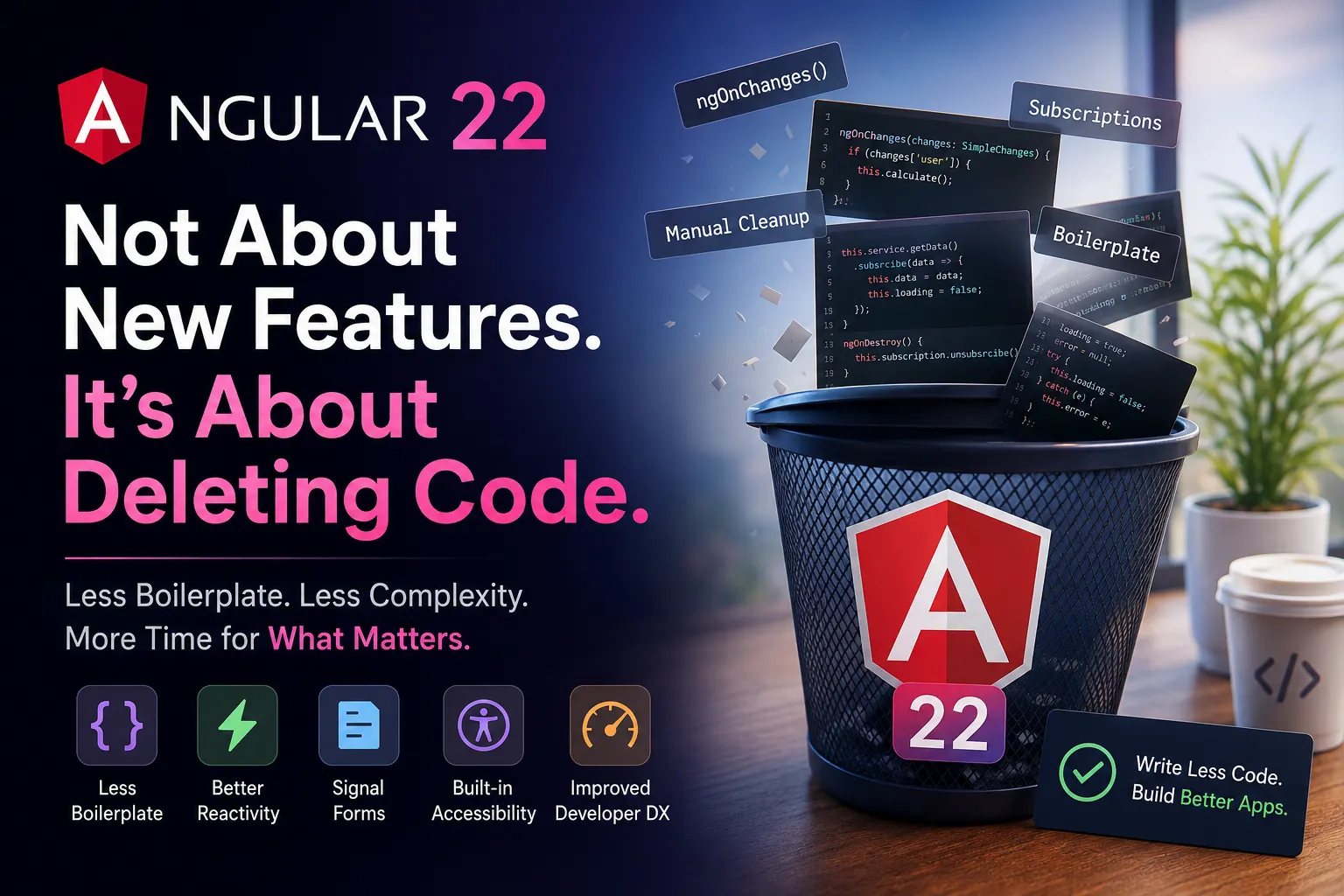
Angular is a batteries-included framework built for large, long-lived applications. This hub collects Angular tutorials, TypeScript patterns, and guides on components, signals, and state management from developers working on production apps.
68 articles · Updated July 7, 2026
Modern Angular has moved toward standalone components and signals — a much lighter developer experience than the NgModule era many tutorials still teach.
Hand-picked and latest articles from this topic.
Beginner-friendly guides to help you learn the fundamentals.
Curated tools, docs, and communities worth bookmarking.
Quick answers about this topic hub.
Yes — Angular remains a strong choice for enterprise applications where structure, tooling, and long-term maintainability matter. Recent versions have modernized the developer experience significantly with signals and standalone components.
AngularJS (1.x) is the original, now end-of-life framework. Angular (2+) is a complete rewrite based on TypeScript and components. When people say 'Angular' today they mean the modern version.
You'll encounter RxJS observables in Angular's HTTP client and router, so a working understanding helps. Newer signal-based APIs reduce how much RxJS you need for basic state, but it's still worth learning the core operators.